28 TV Wall Design Ideas For Stylish Living Rooms
Your TV wall is the first thing every guest notices when they walk into your living room. Yet most TV walls sit bare, awkward, and unfinished — just a black screen floating on a plain painted wall with visible cables dangling below. A well-designed TV wall changes that completely.
I’ve noticed that people spend thousands styling their sofas, rugs, and lighting while completely ignoring the one wall that gets the most daily attention. The TV wall deserves a real design strategy — not an afterthought. In my experience, styling the TV wall first actually makes every other decorating decision in the room easier and more cohesive.
Good TV wall design ideas solve three problems at once. They make the television look intentional rather than intrusive. They hide cables, equipment, and clutter that drain the room’s visual quality. Also add personality, texture, and warmth to what is often the largest single wall in the living room.
This article covers 28 distinct TV wall treatments — from floating wood slat panels and marble backdrops to gallery walls, hidden storage units, and coastal whitewash planks. Interior designers, home stylists, and experienced decorators consistently rely on these exact approaches to create living rooms that feel designed from every angle. Whether you rent or own, work with a large budget or a small one, you will find a practical and beautiful direction here that suits your space perfectly.
Floating Media Console Wall
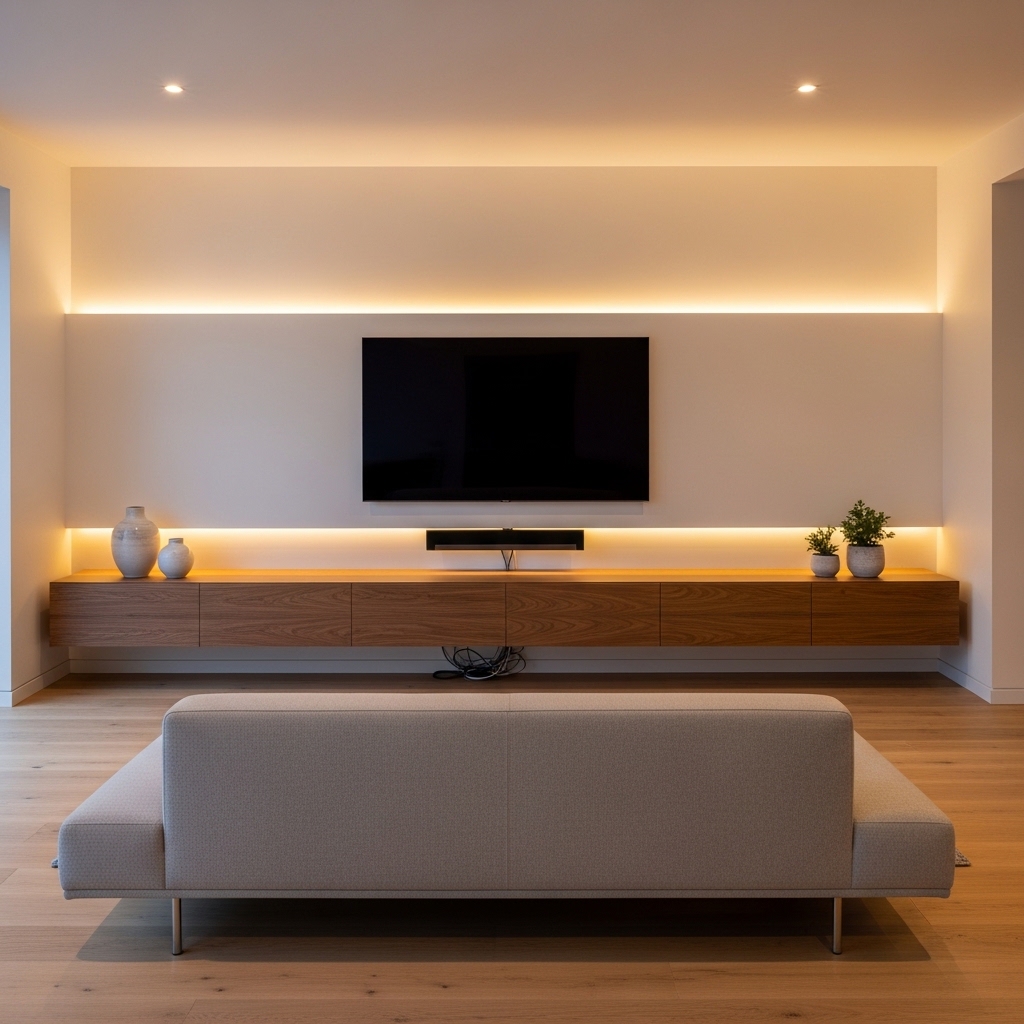
A floating media console wall is one of the cleanest and most popular TV wall design ideas for modern living rooms. The combination of a wall-mounted screen and a hovering console creates a strong horizontal line that makes the entire room feel organized and intentional. This setup works especially well in open-plan living areas where visual clutter competes with the overall design.
Hidden cable management is the detail that makes or breaks this look entirely. Exposed cords instantly undermine the clean aesthetic no matter how beautiful the console itself is. That’s why many interior designers treat wire concealment as the very first step before styling anything else on the wall.
- Hides cables for a clean finish
- Floating console creates airy visual space
- Works in modern and minimalist living rooms
- Warm LED lighting adds evening ambiance
- Easy to style with minimal accessories
Choosing the right console length matters as much as height placement. Your console should span at least two-thirds of the TV’s width for proper visual balance. I’ve noticed that undersized consoles make even a beautiful TV wall feel oddly proportioned and unfinished.
Warm walnut, white oak, and matte black finishes all work beautifully for floating consoles depending on your room palette. Walnut suits warm, earthy interiors. Matte black suits bold, high-contrast modern spaces. Either direction looks genuinely designed when paired with a wall-mounted screen and hidden wiring.
Full Wood Slat Backdrop
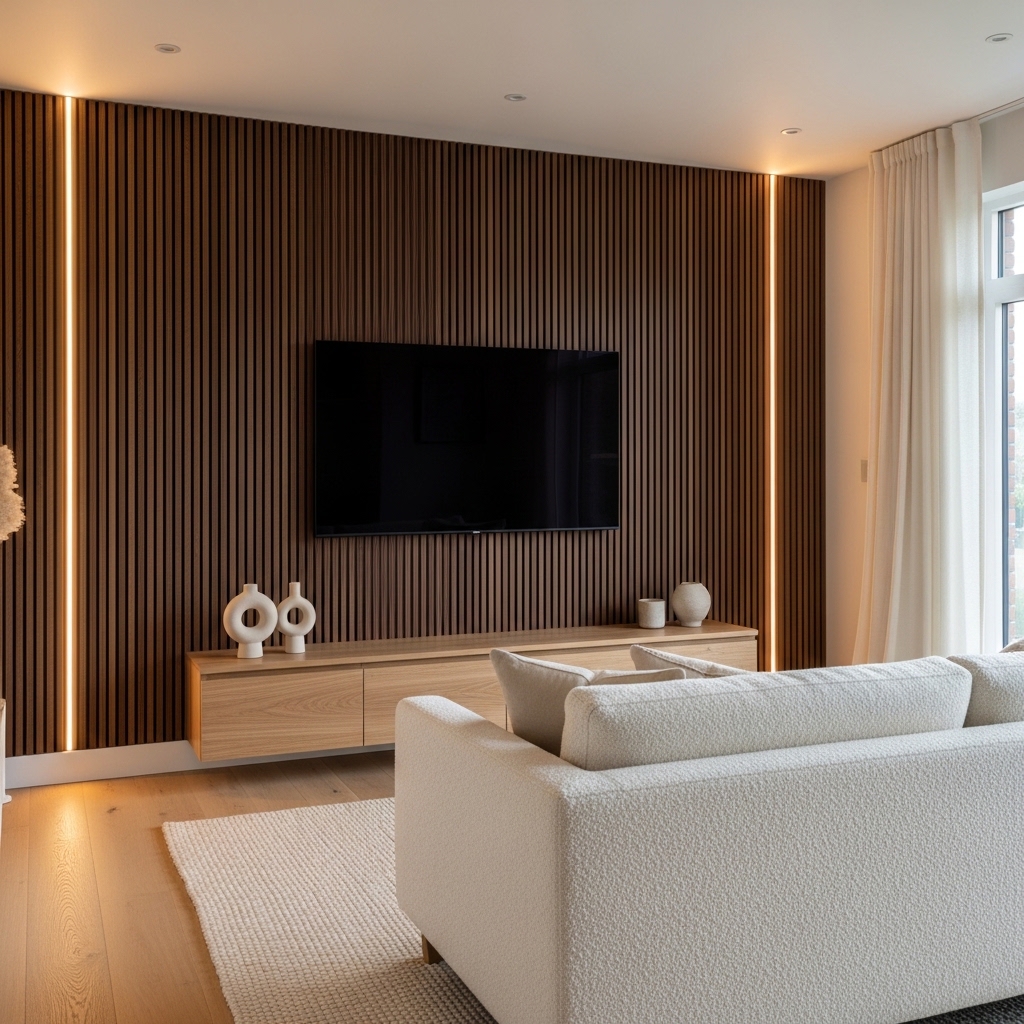
Vertical wood slat panels behind a TV create the warmest, most architecturally satisfying feature wall in modern home design. The natural grain and warm tone of the wood draw the eye directly to the screen while framing it as an intentional design choice rather than a functional box on a wall. This treatment suits Scandinavian, organic modern, and warm minimalist living rooms perfectly.
LED lighting tucked between the slats adds a second design layer that activates beautifully during evening hours. The soft glow filtering through the wood creates a cozy, cinema-quality atmosphere without any expensive equipment. I’ve seen this combination consistently earn the most saves and engagement across home interior platforms.
- Warm wood texture frames the TV naturally
- LED strips add cozy evening ambiance
- Works in Scandinavian and modern organic rooms
- Vertical lines draw the eye upward visually
- Suits both small and large living room walls
The depth of the slat panels also improves room acoustics noticeably. The ridged surface breaks up sound waves rather than reflecting them flatly across the room. This practical acoustic benefit is something most homeowners only discover after installation — and they always consider it a welcome bonus.
Walnut, white oak, and ash are the three most popular wood tones for this treatment. Darker walnut creates a moody, dramatic backdrop. Lighter ash keeps the room feeling bright and open. The choice depends entirely on whether your room needs warmth added or light preserved.
Built-In Shelving Unit
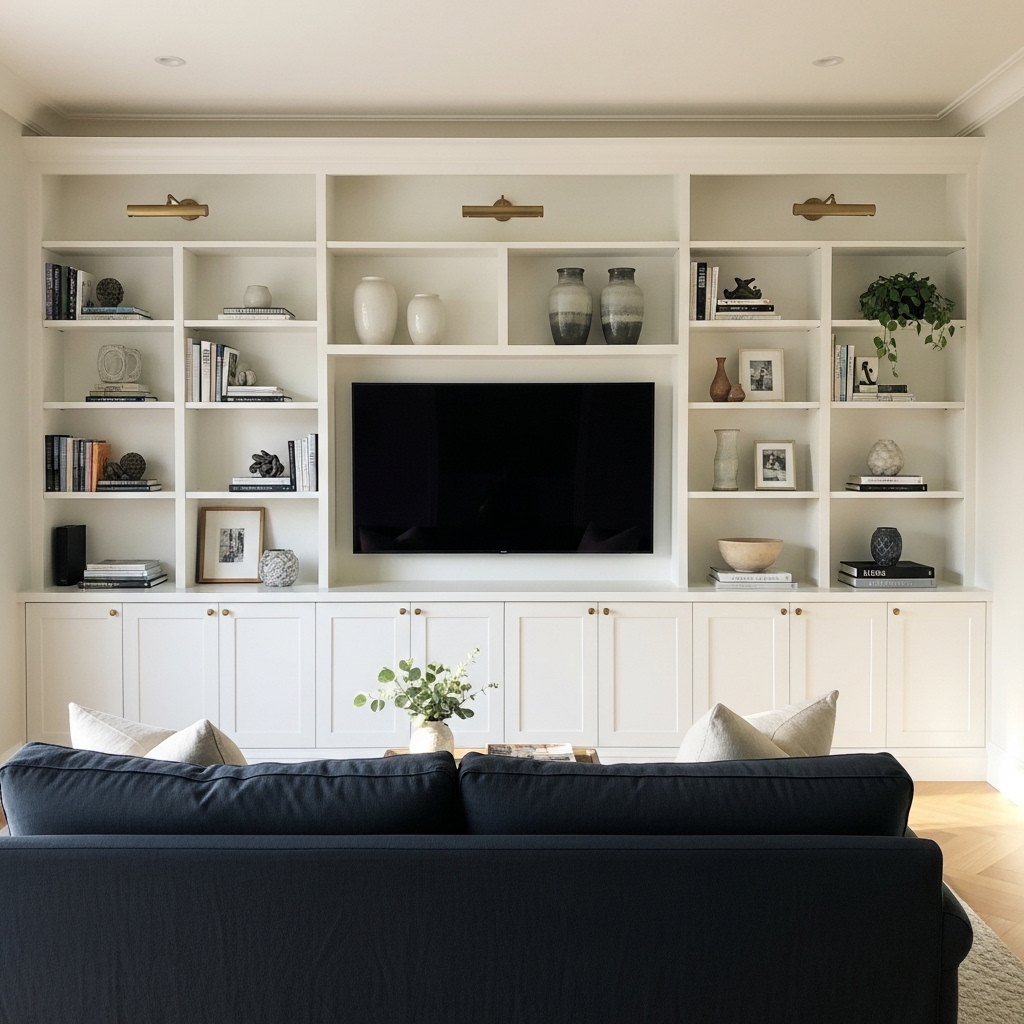
A floor-to-ceiling built-in shelving unit turns a TV wall into the most functional and visually complete feature in the entire living room. Recessing the screen into the central cabinet section integrates the television into the architecture of the room rather than treating it as an afterthought. This approach suits transitional, traditional, and classic American home interiors.
Built-ins also solve the storage problem that most living rooms struggle with daily. Lower cabinet doors hide media equipment, remotes, and cables out of sight completely. I’ve noticed that once families install a built-in TV unit, they consistently describe it as the single best home improvement decision they ever made.
- Integrates TV into room architecture naturally
- Lower cabinets hide media equipment and cables
- Open shelves display books, art, and plants
- Works in traditional and transitional living rooms
- Floor-to-ceiling height maximizes vertical space
Painting built-in units the same color as the surrounding wall creates a seamless, architectural appearance. The shelves and cabinets seem to grow from the wall itself rather than sitting against it. This technique is one of the most effective ways to make a room feel custom-designed without a complete renovation.
Brass hardware on cabinet doors adds a warm, classic detail that photographs beautifully against white or cream painted wood. Matte black hardware suits a more contemporary take on the same structure. Either hardware choice adds personality and makes the built-in feel finished rather than builder-grade.
Marble Slab Feature Wall
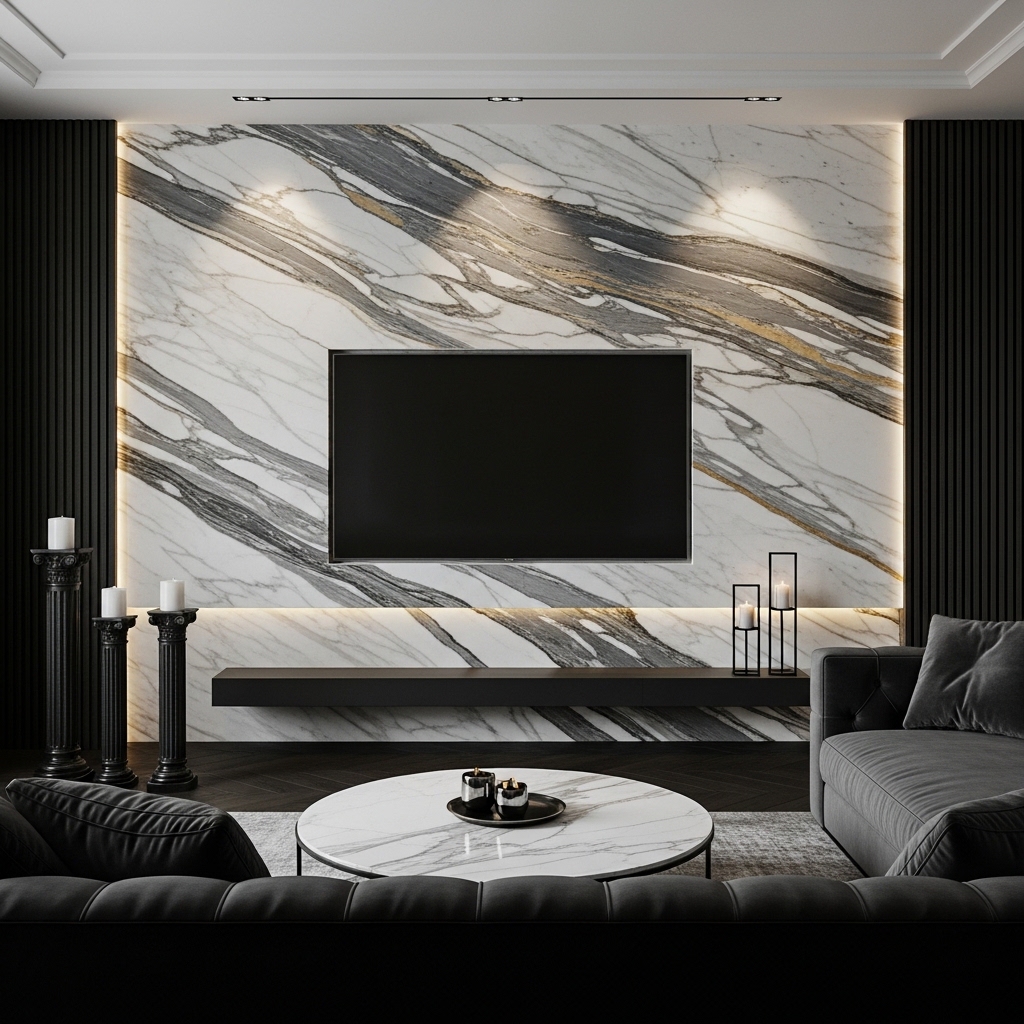
A marble slab feature wall behind a TV instantly signals luxury at a level that few other materials can match. The bold natural veining in genuine or large-format porcelain marble creates a one-of-a-kind backdrop that makes the entire room feel like a high-end hotel suite. This look suits contemporary luxury, modern glam, and sophisticated transitional living rooms.
Large-format porcelain marble tiles now replicate the appearance of genuine stone slabs with impressive accuracy at a fraction of the cost. A single full wall of porcelain marble costs significantly less than real stone installation while producing nearly identical visual results. That price-to-impact ratio makes this one of the most searched TV wall design ideas for upscale home renovations.
- Creates instant luxury hotel atmosphere
- Bold marble veining makes TV wall dramatic
- Porcelain tiles offer budget-friendly alternative
- Pairs beautifully with black and gold accents
- Works in glam, luxury, and modern interiors
Keeping accessories minimal on a marble TV wall preserves the stone’s visual dominance. One slim console, two tall candle holders, and a single ceramic object are enough. Adding too many pieces competes with the natural pattern of the marble and reduces its impact significantly.
Warm recessed lighting aimed directly at the marble surface brings out the depth of the veining beautifully. This lighting direction creates a soft glow across the stone that shifts as the light changes throughout the day. The result feels genuinely luxurious and carefully considered rather than simply expensive.
Dark Moody Accent Wall
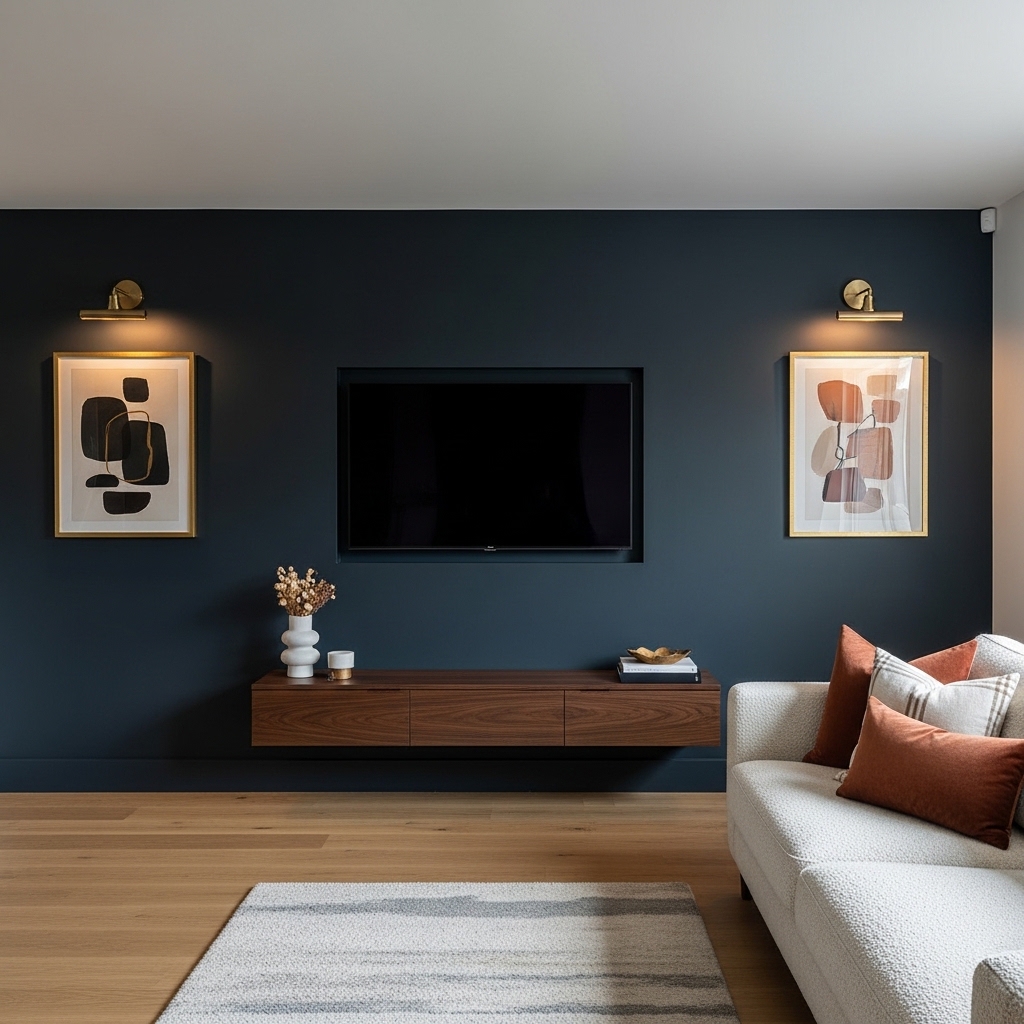
A deep charcoal or near-black accent wall behind a TV creates one of the most effective camouflage techniques in interior design. Dark TV screens visually disappear against a dark wall surface, making the television feel like a natural part of the wall rather than a dominant black rectangle interrupting a lighter space. This approach works beautifully in modern, moody, and bold living rooms.
Warm accessories like brass sconces, gold frames, and rust-toned pillows glow dramatically against dark walls in a way they never do against lighter surfaces. The contrast between deep charcoal and warm metallics creates a rich, editorial quality that looks genuinely designed. I’ve tried this approach in several room styling projects and the transformation is always immediate and striking.
- TV blends naturally into dark wall surface
- Warm brass accents glow against deep tones
- Creates editorial and moody living room feel
- Works with cream and rust colored furniture
- One paint coat achieves dramatic visual impact
Choosing a true matte finish rather than eggshell or satin is essential for this look. Sheen on a dark wall catches overhead light in unflattering ways and shows every brush mark. Matte paint absorbs light evenly and creates the deep, velvety surface that makes this accent wall style so compelling.
Extending the dark wall color onto the ceiling above the TV adds an enveloping, cocooning effect. This ceiling extension makes the room feel deliberately designed rather than simply painted. It takes only a few extra minutes during application and adds significant visual depth to the entire feature wall.
Shiplap Farmhouse TV Wall
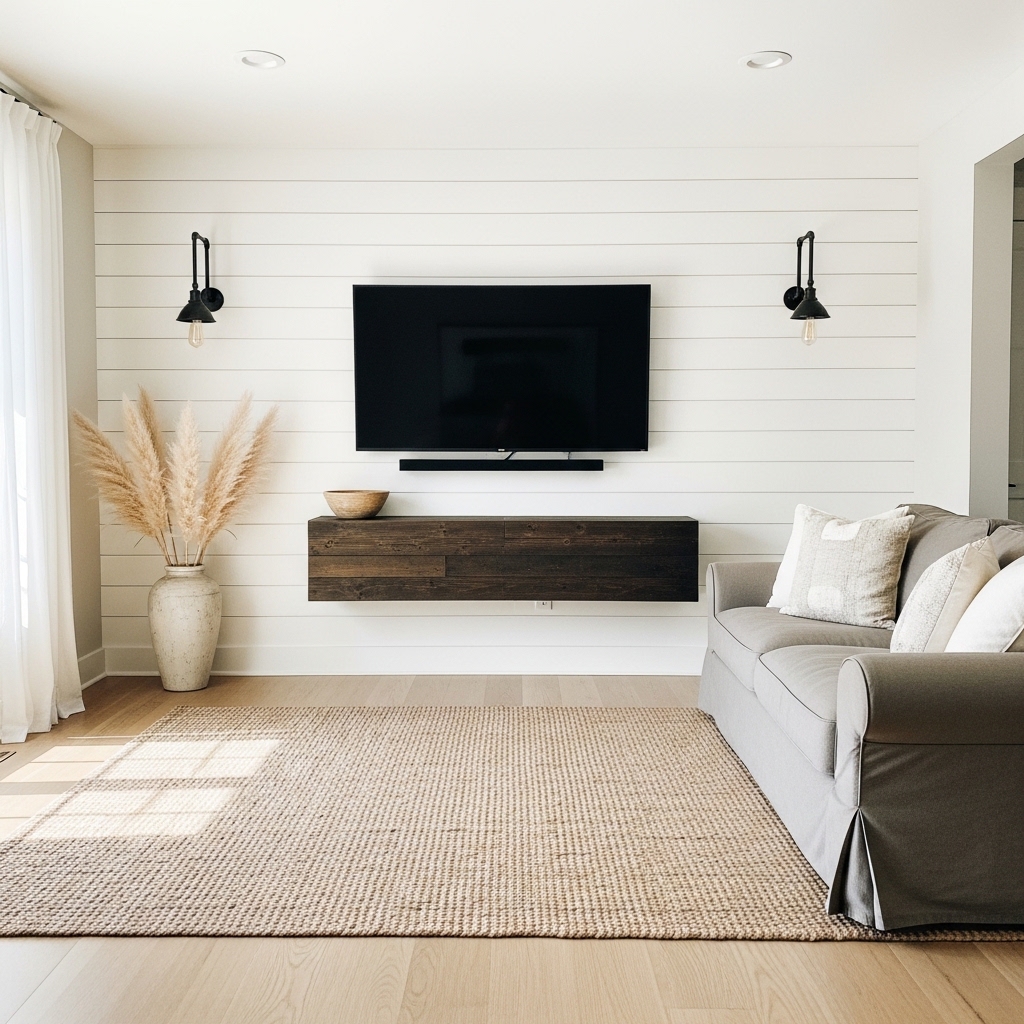
White shiplap behind a TV creates the quintessential modern farmhouse feature wall that feels simultaneously cozy and clean. The horizontal board lines add texture and architectural interest without competing visually with the screen. This treatment works beautifully in farmhouse, coastal cottage, and casual transitional living rooms across America.
The combination of white shiplap, dark stained wood, and black metal accents hits a specific sweet spot in modern farmhouse styling that has remained consistently popular for several years. Each material in that combination contrasts and complements the others in a way that feels balanced and intentional. That’s why many home stylists recommend this exact trio as a reliable starting point for a farmhouse TV wall.
- Horizontal boards add farmhouse texture naturally
- Dark wood console contrasts white shiplap beautifully
- Black metal sconces complete the farmhouse look
- Works in casual and transitional living rooms
- Natural light enhances white shiplap brightness
Painting shiplap boards in warm white rather than stark white prevents the wall from feeling clinical. Warm white tones like alabaster or antique white add softness that complements linen, wood, and natural fiber accessories far better than cool white does. This small color choice makes a noticeable difference in how welcoming the room feels.
Adding dried botanicals beside the console grounds the farmhouse aesthetic and brings organic life to the feature wall area. Pampas grass in a tall ceramic vase works particularly well because the neutral, feathery texture suits the relaxed farmhouse palette. This accessory costs very little and makes the whole wall feel styled and complete.
Fluted Panel TV Backdrop
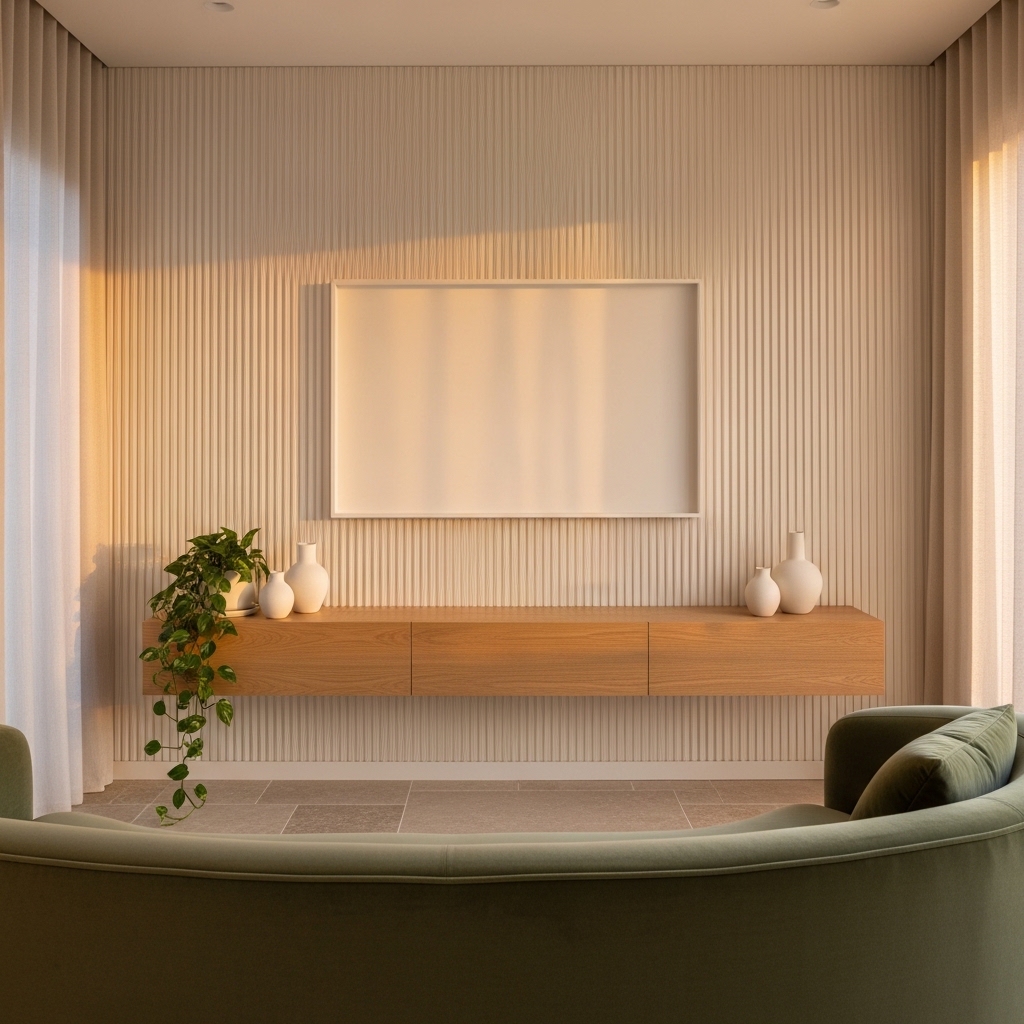
Fluted panel walls have quickly become one of the most sought-after TV backdrop treatments in contemporary interior design. The vertical ribbed texture creates a surface that catches light differently at every hour of the day, giving the wall a constantly shifting, sculptural quality. This treatment suits contemporary, minimalist, and organic modern living rooms particularly well.
The fluted surface also improves room acoustics by breaking up flat sound reflections across the wall. This acoustic benefit makes the TV-watching experience noticeably better in rooms with hard flooring and minimal soft furnishings. I’ve noticed that homeowners who install fluted panels consistently report that the room simply sounds better for watching films and listening to music.
- Ribbed texture creates shifting light and shadow
- Improves room acoustics for better TV sound
- Works in contemporary and organic modern rooms
- Sage green furniture complements off-white panels
- Slim oak console keeps the look clean and light
Fluted panels work in MDF, plaster, and pre-made peel-and-press systems. MDF painted in a wall-matching tone is the most cost-effective option for DIY installation. Pre-made fluted wall systems offer faster installation for those who prefer a ready-made solution without custom carpentry.
Keeping the panel color identical to the surrounding wall creates a seamless, architectural quality. The TV appears to float within a textured sculptural surface rather than hanging on a flat painted wall. This seamless approach is the detail that separates a considered design from a simple panel addition.
Recessed TV Niche
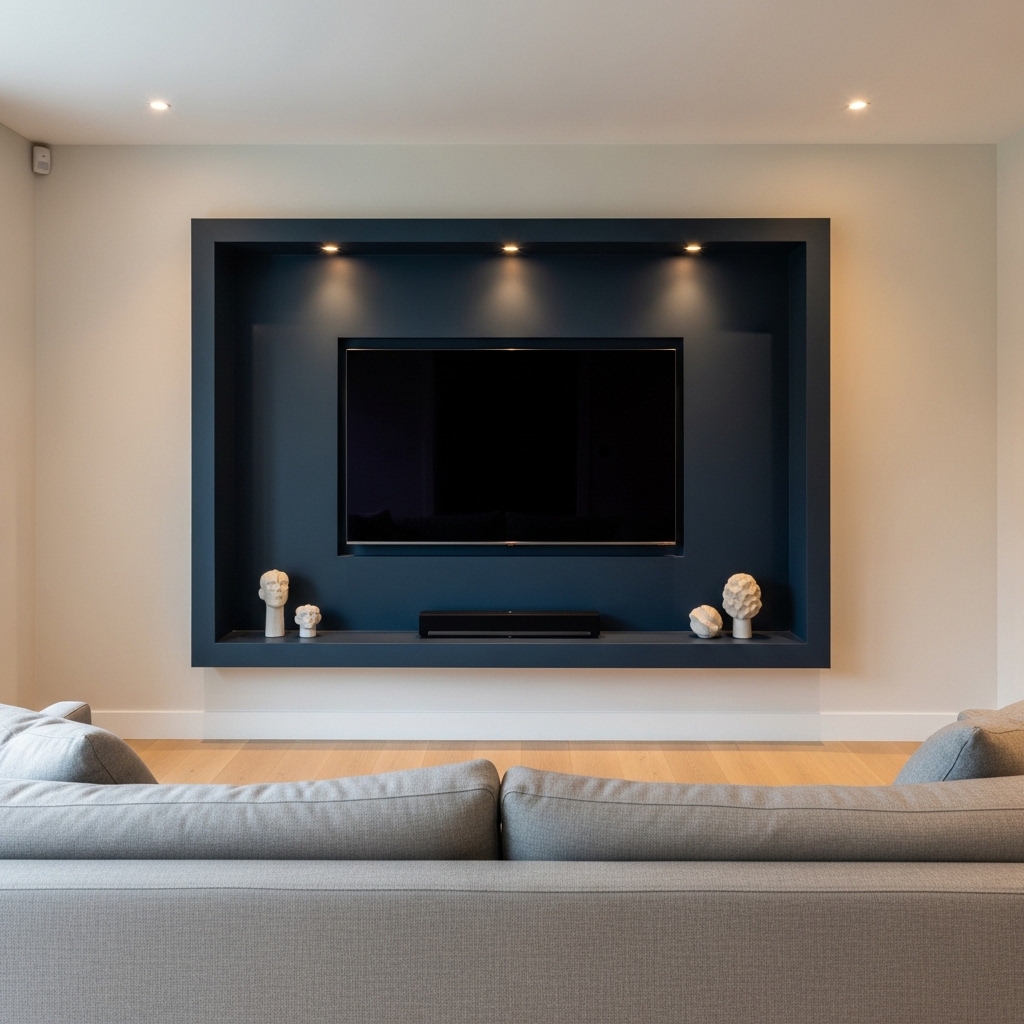
A recessed TV niche creates the most intentional and architecturally precise feature wall treatment in modern living room design. Cutting the television into the wall itself removes any feeling of the screen protruding into the room. The result looks custom-built and professionally designed from every angle. This approach works best during new builds or full renovation projects where wall framing allows for niche depth.
Painting the interior of the niche in a deep contrasting color — navy, charcoal, or forest green — makes the television appear to float within a framed void of rich color. This technique is borrowed directly from museum display design, where dark backgrounds make displayed objects appear more dramatic and important. I’ve seen this applied in residential living rooms with genuinely spectacular results.
- TV appears to float in a framed deep niche
- Dark interior paint adds dramatic contrast effect
- Works during new builds and full renovations
- Built-in shelf inside niche hides soundbar neatly
- Creates a custom, architectural feature wall look
The niche also completely eliminates visible wall-mount hardware from the front view. Mounting brackets, tilt arms, and cable entry points all hide within the recessed space. This hardware concealment contributes significantly to the clean, polished appearance that makes a recessed TV niche so visually satisfying.
Adding a single recessed spotlight aimed directly into the niche highlights the TV screen surround and adds warm depth to the dark interior. This targeted lighting creates a subtle glow around the screen perimeter that improves the viewing experience and adds a cinematic quality to the living room atmosphere.
Gallery Wall Around TV
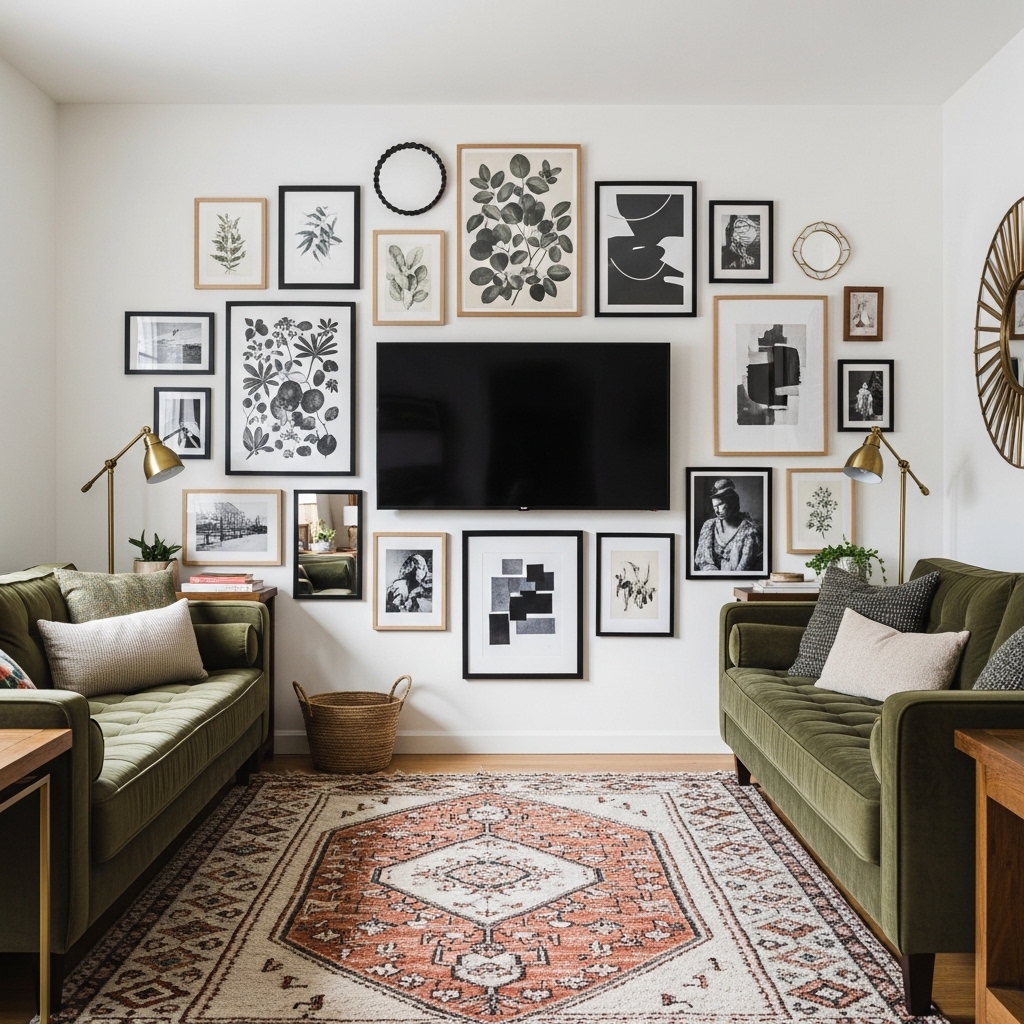
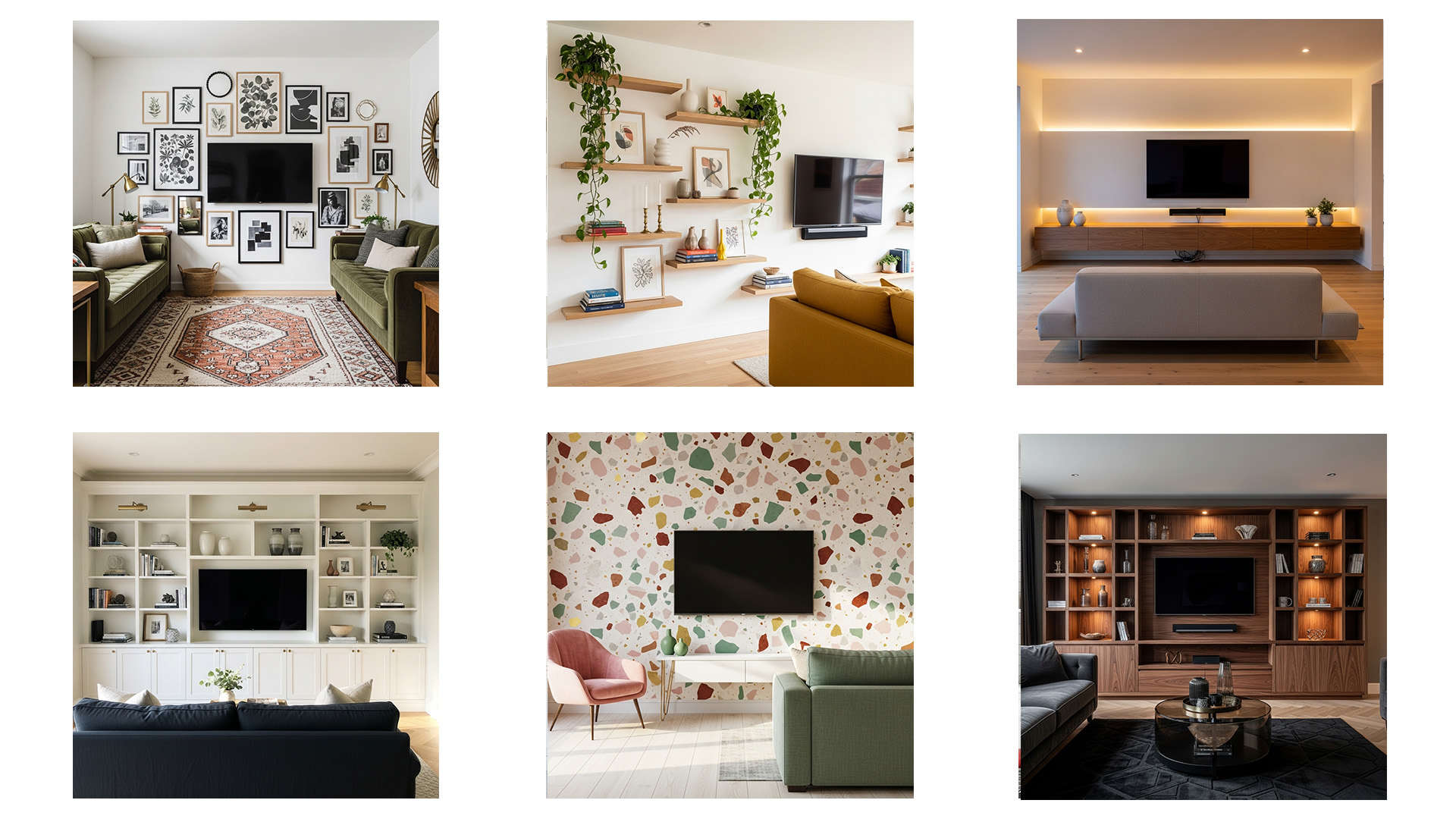
Surrounding a TV with a gallery wall arrangement is one of the most effective ways to integrate the screen into the room’s overall decor story. When the television becomes one element within a larger wall composition, it stops dominating the visual field and starts feeling like part of a curated display. This approach suits eclectic, bohemian, and personality-driven living rooms.
The key to making this work is treating the TV screen as a fixed anchor point and building the gallery arrangement outward from its edges. Placing artwork too close to the screen edges looks cramped. Leaving at least 4 to 6 inches between the TV border and the nearest frame gives each element enough breathing room. That’s why many stylists recommend sketching the full layout on paper before hanging a single nail.
- TV becomes part of a curated wall story
- Mixed frames add personality and visual depth
- Botanical and abstract prints work beautifully together
- Eclectic and personality-driven rooms benefit most
- Gallery arrangement reduces TV visual dominance
Choosing frames in two consistent finishes — black and natural wood, or brass and black — keeps the mixed gallery feeling cohesive rather than chaotic. A completely random mix of frame colors and finishes competes visually with the TV screen. Limiting frame tones to two options creates harmony across the entire wall arrangement.
Small decorative mirrors included within the gallery scatter light across the wall and add dimensional variety that flat printed art cannot provide. One or two mirrors of varying sizes within the arrangement creates visual interest that keeps the eye moving across the whole composition rather than locking onto the TV immediately.
Venetian Plaster TV Wall
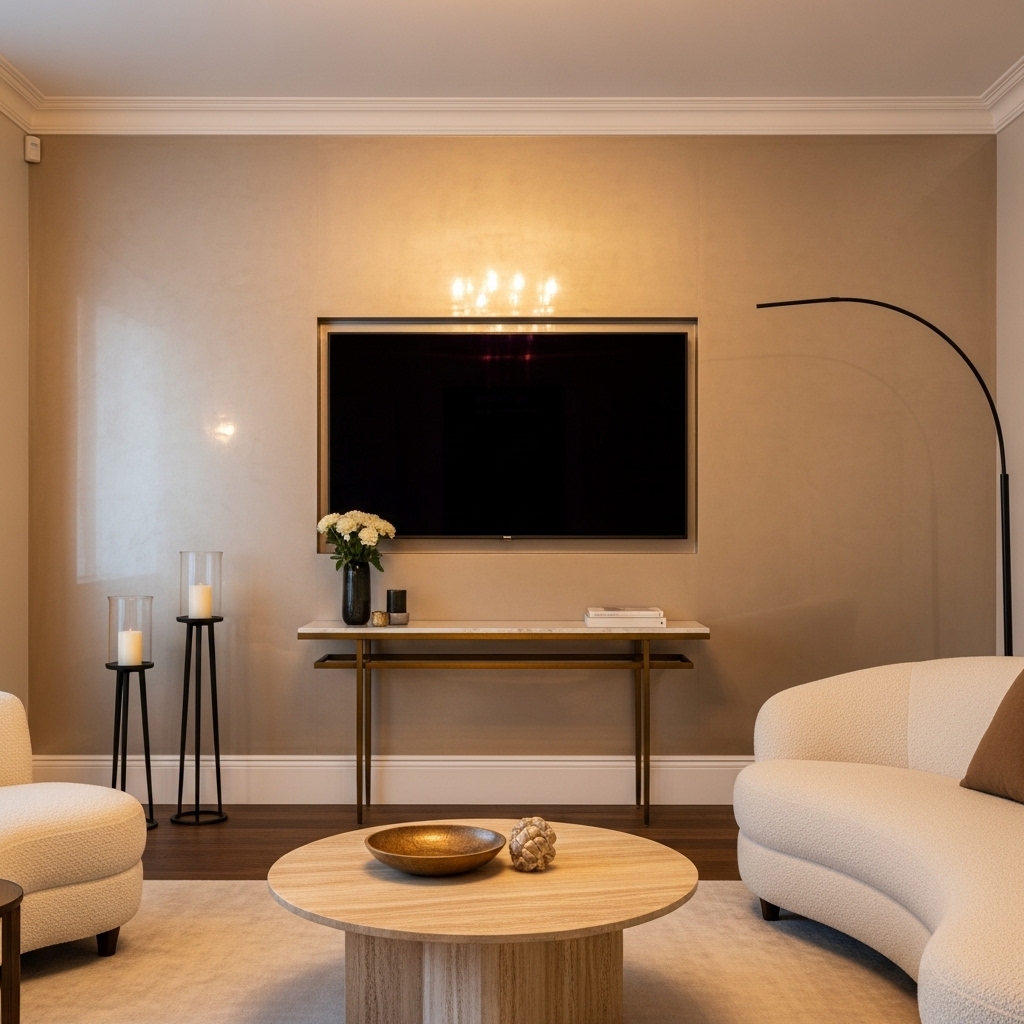
Venetian plaster delivers a wall surface that looks genuinely hand-crafted and one-of-a-kind, which is exactly why luxury interior designers use it so frequently as a TV backdrop treatment. The burnished, semi-reflective surface shifts between matte and glossy depending on light angle, creating a wall that never looks the same twice throughout the day. This treatment suits contemporary luxury, modern glam, and high-end transitional living rooms.
The warm champagne and gold tone of Venetian plaster works particularly well behind a TV because it creates a rich, luminous surround that makes the screen feel intentionally framed rather than simply mounted. I’ve seen this treatment completely define the design direction of an entire living room — everything else in the room coordinates with the plaster wall as the primary reference point.
- Burnished surface creates luminous light reflection
- No two Venetian plaster walls look identical
- Pairs beautifully with brass and marble accessories
- Works in luxury and modern glam living rooms
- Makes the TV feel intentionally framed and positioned
Applying Venetian plaster requires a skilled plasterer for the best results. The multi-layer application and burnishing process demands experience that most DIY attempts cannot fully replicate. For rooms where the TV wall is the primary design investment, hiring a professional applicator is always the right decision.
Keeping furniture simple and elegant against a Venetian plaster wall prevents visual competition with the surface. A curved cream boucle sofa, a travertine coffee table, and brass accessories all support the luxurious tone of the wall without attempting to match or overpower it. That supporting role is exactly what makes the plaster wall shine.
Fireplace and TV Combo
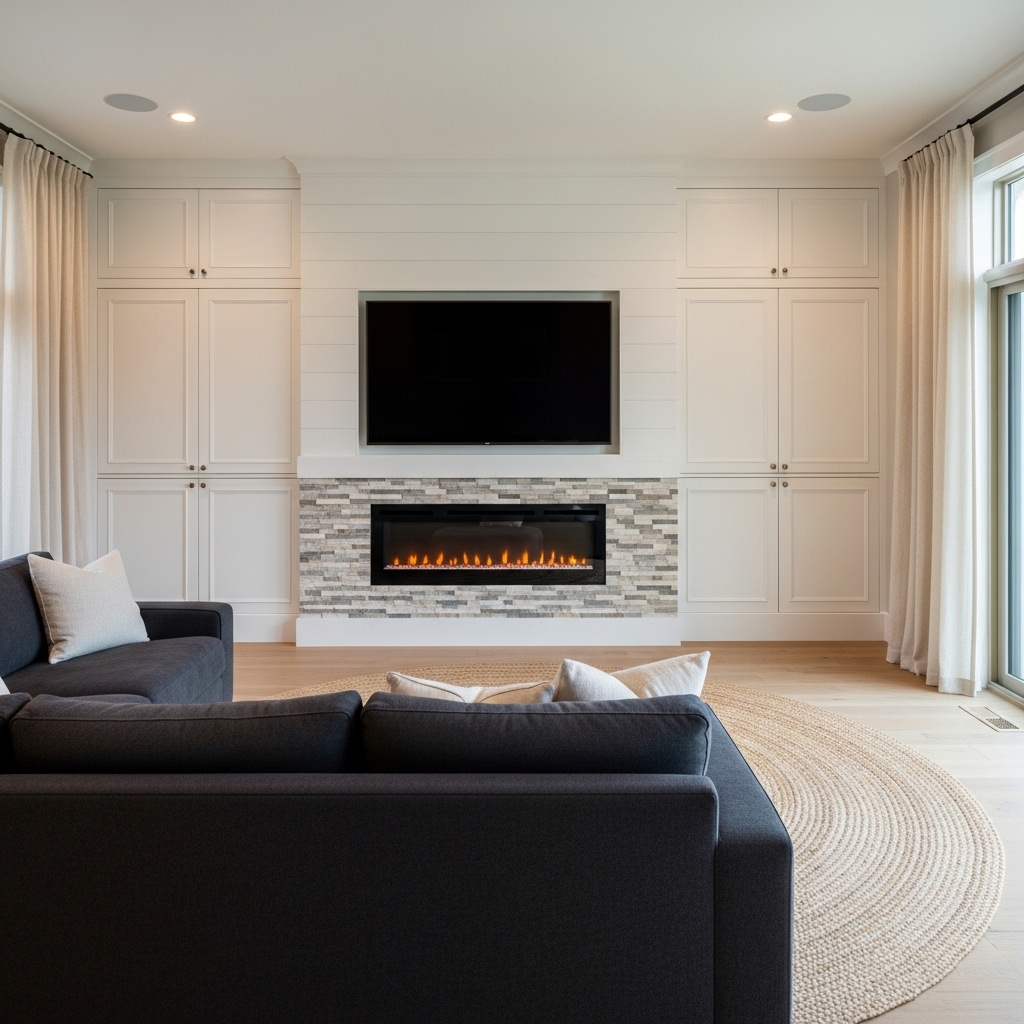
Combining a TV and a fireplace on the same feature wall solves the most common living room layout challenge — choosing between warmth and entertainment. Mounting the screen directly above a linear fireplace creates one unified focal point that anchors the entire room without requiring a separate accent wall for each feature. This combination suits family rooms, open-plan living spaces, and anyone who wants maximum visual impact from a single wall.
I’ve seen this combination completely change how families use their living rooms. Before the combined wall, seating faced different directions for TV versus fireplace. After installation, the entire sofa arrangement unified around one powerful central point. That shift in spatial logic makes the room feel more intentional and socially connected during both everyday evenings and holiday gatherings.
- Creates one unified focal point on the wall
- Combines warmth and entertainment in one space
- Linear fireplace suits modern and transitional rooms
- Stone tile insert adds rich material texture
- Works for family rooms and open-plan layouts
Maintaining at least 12 inches of vertical space between the fireplace mantel and the bottom edge of the TV screen protects the electronics from heat while keeping the proportions comfortable for viewing. Most interior designers recommend 18 inches as the ideal minimum clearance for both safety and ergonomic viewing angles.
Electric fireplaces offer the most flexible installation option for this combined wall treatment. They require no flue, no gas line, and no major structural modification. That flexibility makes the fireplace and TV wall achievable in apartments, rental spaces, and rooms where traditional fireplace installation would be impossible or prohibitively expensive.
Concrete Effect TV Panel
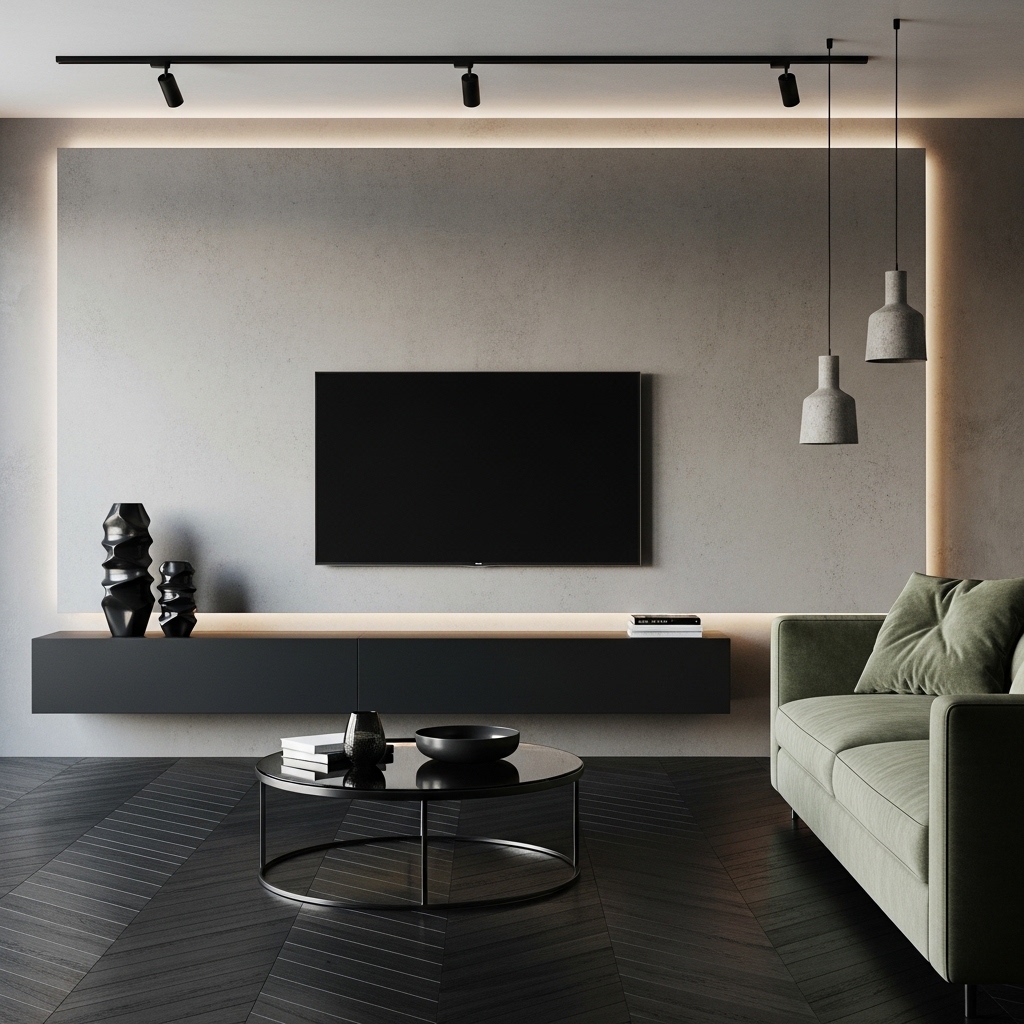
Micro-cement and concrete effect panels create a TV backdrop that feels raw, urban, and genuinely architectural without requiring structural concrete work. The smooth, slightly mottled gray surface suits industrial, loft-style, and minimalist modern living rooms where texture takes priority over color. This treatment works especially well when paired with matte black fixtures and dark-toned furniture for a cohesive, high-contrast room.
The warmth variation within concrete effect finishes prevents the room from feeling cold or clinical. Micro-cement applied by hand carries subtle tonal shifts that make the surface feel crafted rather than manufactured. That handcrafted quality is exactly what separates a concrete-finish wall from a dull gray painted surface in terms of visual depth and interest.
- Raw concrete texture adds industrial character
- Subtle tonal variation keeps the wall from feeling cold
- Pairs beautifully with matte black accessories
- Works in loft, urban, and modern minimalist rooms
- Micro-cement covers existing wall surfaces easily
Sealing micro-cement with a clear matte topcoat protects the surface from dust, minor scratches, and moisture. The sealant preserves the raw appearance while adding practical durability for a high-traffic living room wall. Most micro-cement systems include a compatible sealant as part of the standard application kit.
Keeping the rest of the room’s color palette restrained — dark sage, charcoal, and warm white — lets the concrete panel claim visual leadership. Adding too many competing textures or colors on surrounding walls diminishes the impact of the concrete feature. Restraint in the supporting elements always amplifies the feature wall.
Asymmetric Open Shelving
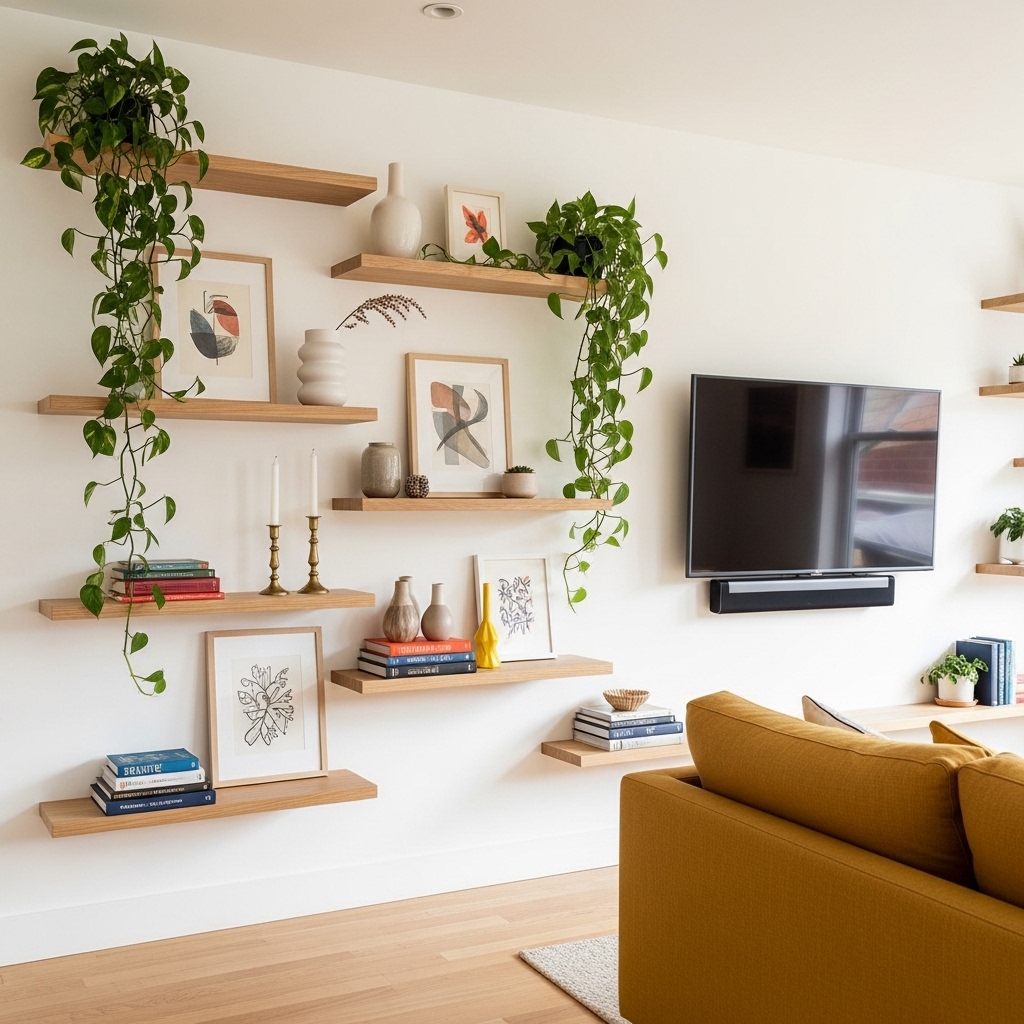
Asymmetric shelving around a TV breaks the rigid symmetry that most built-in units follow and creates a wall composition that feels genuinely creative and one-of-a-kind. Extending shelves from one side only — or at uneven heights on both sides — produces a dynamic visual tension that keeps the eye moving across the wall in an interesting way. This approach suits eclectic, creative, and design-forward living rooms.
That’s why many interior designers now recommend asymmetric configurations as an alternative to traditional symmetrical built-ins for clients who want a more artistic, personalized look. The irregular arrangement makes a room feel curated by someone with a genuine design sensibility rather than assembled from a standard furniture catalog. I’ve seen this simple structural decision completely define a room’s personality.
- Breaks rigid symmetry for a creative wall look
- Shelves at varying heights create visual movement
- Works in eclectic and design-forward living rooms
- Trailing plants add organic softness to the shelving
- Mustard and natural wood tones work beautifully together
Styling asymmetric shelves requires the same restraint as any display arrangement. Each shelf should hold no more than three objects. The empty space between items carries as much visual weight as the objects themselves. That intentional empty space is what prevents the asymmetric arrangement from reading as disorganized or unfinished.
Choosing one consistent material for all shelf boards — white oak, walnut, or painted MDF — creates structural cohesion across the uneven layout. When the shelf material stays uniform, the asymmetric configuration reads as a deliberate design choice rather than a mismatched collection of individual shelves added at different times.
Grasscloth Wallpaper Backdrop
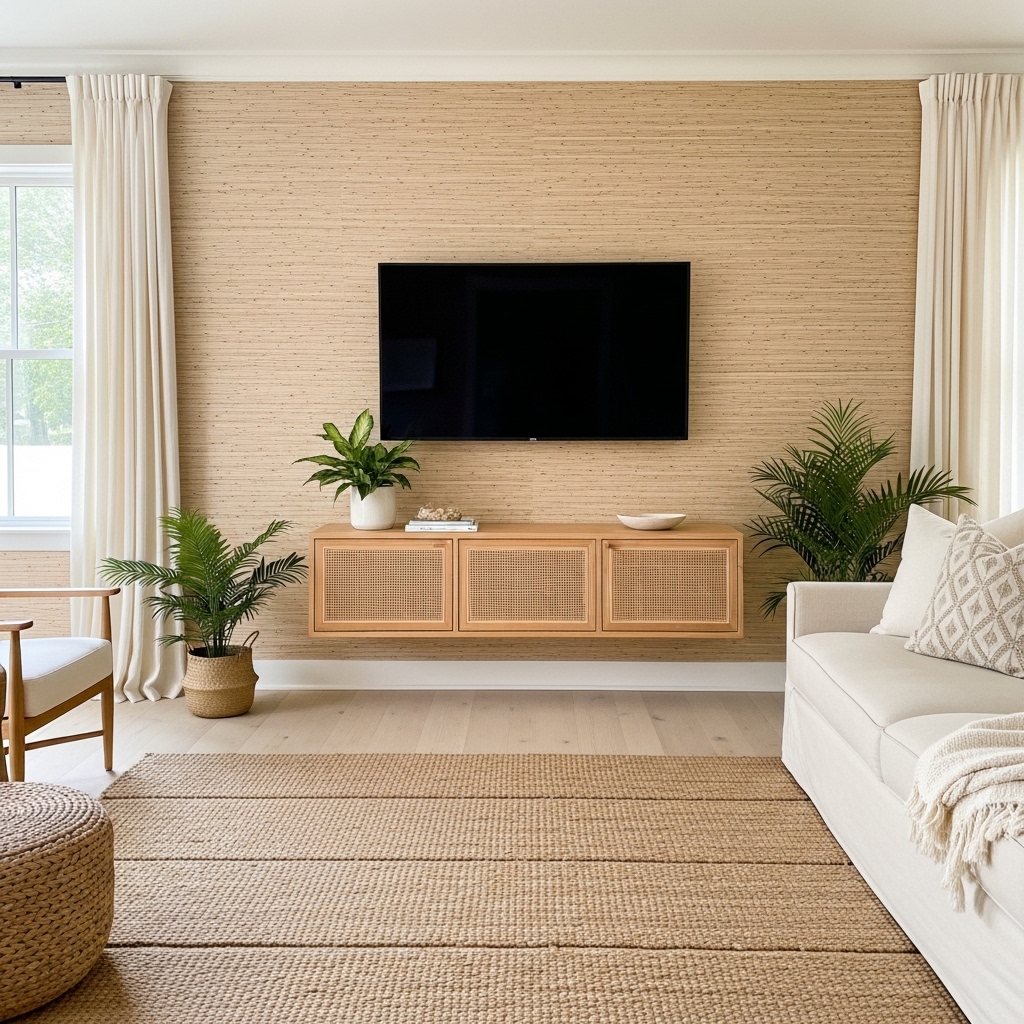
Grasscloth wallpaper behind a TV adds a layer of natural texture that paint simply cannot achieve, bringing warmth, organic character, and coastal elegance to a living room wall in one application. The woven surface creates a subtle visual pattern that shifts depending on light direction, making the wall feel alive and dimensional rather than flat and static. This treatment suits coastal, transitional, and nature-inspired living rooms.
I’ve noticed that grasscloth walls photograph exceptionally well in natural afternoon light because the woven fibers cast tiny individual shadows across the surface. That photographic quality makes this wallpaper one of the most saved TV wall treatments on home decor inspiration platforms. The natural fiber material also resonates strongly with homeowners pursuing organic, sustainable interior choices.
- Natural woven texture adds coastal wall warmth
- Surface shifts visually with changing light direction
- Pairs beautifully with rattan and linen furniture
- Works in coastal and transitional living rooms
- Organic material suits sustainable decorating choices
Grasscloth wallpaper requires professional installation for the best seam results. The natural fiber material does not tolerate moisture during application, and seam alignment demands precision that most DIY attempts struggle to achieve consistently. For a feature wall where the TV draws constant attention, professional installation is always worth the additional cost.
Choosing a grasscloth tone that coordinates with your sofa rather than contrasting it keeps the room feeling harmonious. Warm oatmeal grasscloth behind a cream sofa creates a tone-on-tone layering effect that feels effortlessly sophisticated. Slightly contrasting tones — like warm wheat grasscloth behind a sage green sofa — also look stunning and intentional.
Backlit Panel TV Wall
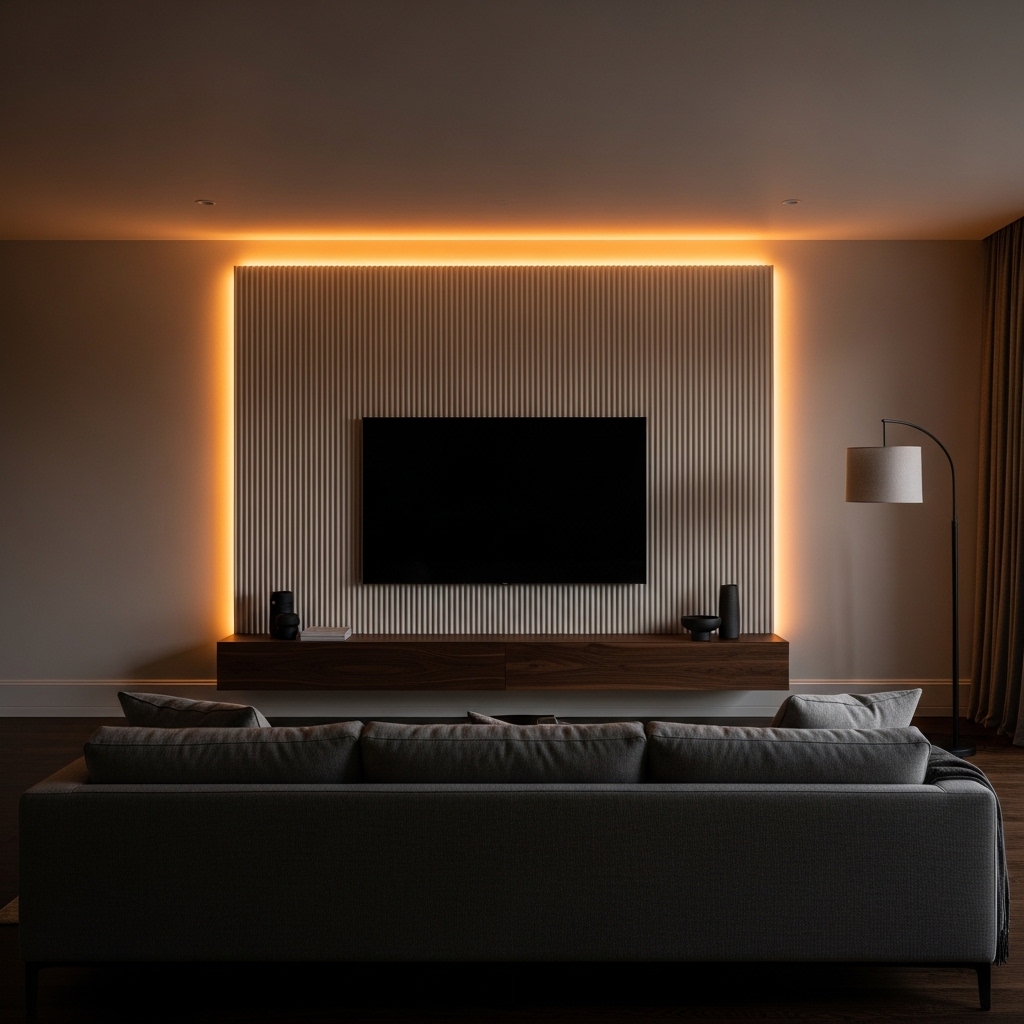
A backlit panel TV wall creates an atmospheric glow behind the screen that reduces eye strain during evening viewing while adding a cinematic quality to the entire room. The warm LED light bleeding from behind the panel creates a soft halo effect around the television that makes the screen appear intentionally framed rather than simply mounted. This approach is one of the fastest-growing TV wall design ideas in 2026 interior trends.
Bias lighting — the technical term for light placed behind a TV screen — is a well-established ergonomic recommendation from display technology experts. Watching television against a fully dark wall forces the eye to rapidly adjust between a bright screen and a dark surround, causing fatigue over time. A backlit panel wall eliminates that contrast problem while simultaneously making the room look stunning during evening hours.
- Reduces eye strain during long TV viewing sessions
- Warm LED halo makes the TV feel intentionally framed
- Creates cinematic evening atmosphere in living rooms
- Fluted panel texture catches the backlight beautifully
- One of the fastest-growing TV wall trends in 2026
Color-tunable LED strips allow you to shift the backlight from warm amber to cool white depending on the activity. Warm amber suits relaxed evening film watching. Cooler white suits daytime news or sports viewing. That tunability adds a functional layer of personalization that a fixed-color strip cannot provide.
Installing LED strips in a continuous loop behind the panel perimeter — top, sides, and bottom — creates the most even and complete halo effect. Running lights on only one or two sides creates uneven brightness that looks unintentional. A full perimeter installation takes only marginally more time and produces a dramatically more polished result.
Sage Green TV Feature Wall
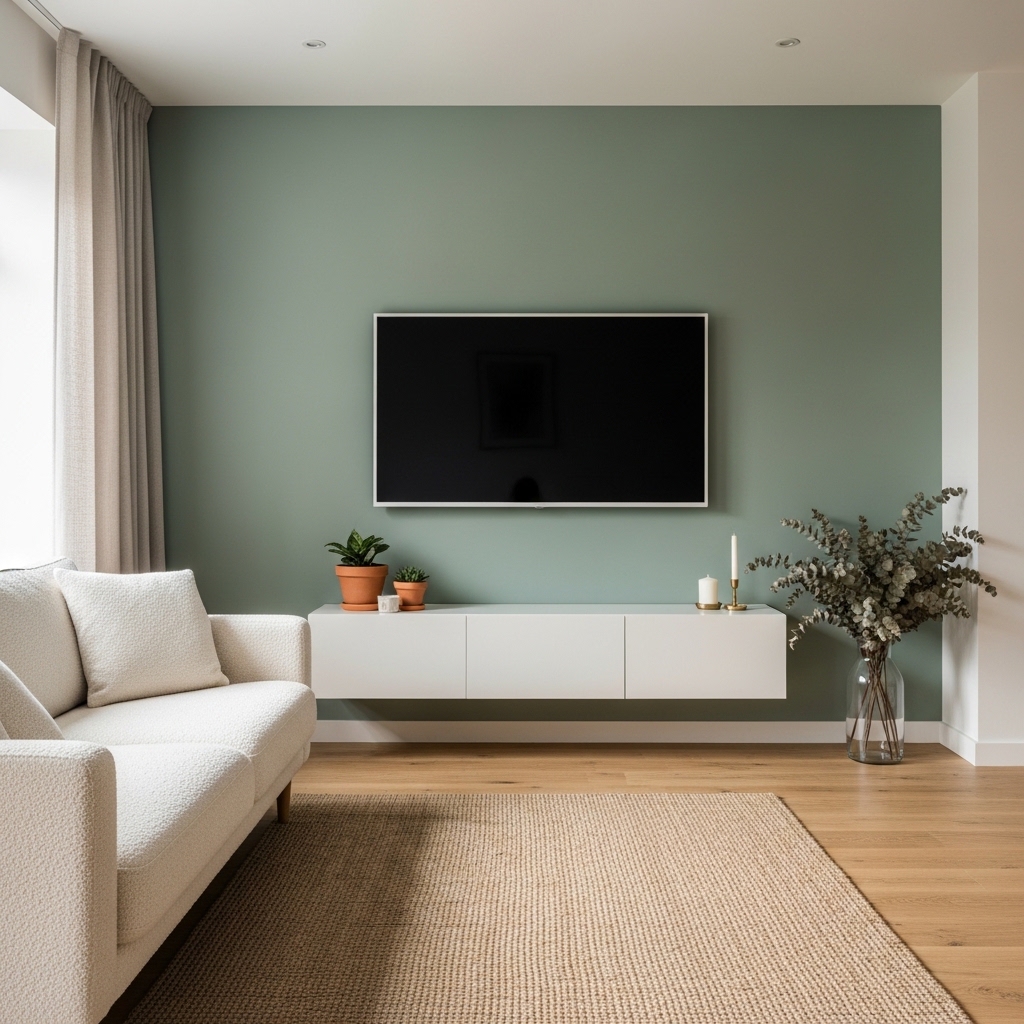
Sage green is consistently one of the most popular accent wall colors for TV walls because it creates a calming, nature-forward backdrop that makes the dark TV screen feel less visually dominant. The muted green tone bridges the gap between warm neutrals and cool hues, which means it coordinates naturally with cream, white, warm wood, and terracotta tones all at once. This versatility makes sage an almost universally safe accent wall choice.
That flexibility is exactly why interior color specialists continue to recommend sage green as a first accent wall choice for homeowners who feel hesitant about bold colors. The muted saturation of sage green never overwhelms a room the way brighter greens can. I’ve recommended this color to numerous people who considered themselves too cautious for accent walls, and it has worked beautifully every single time.
- Sage green calms the visual weight of dark TV screens
- Coordinates naturally with cream, wood, and terracotta
- Works in farmhouse and organic modern styled rooms
- Muted saturation suits cautious accent wall choices
- Pairs beautifully with boucle and linen furniture
Painting only the TV wall in sage while keeping surrounding walls in warm white creates a clean, purposeful accent. Extending the sage green onto adjacent walls or the ceiling creates a more immersive, enveloping atmosphere for those who prefer a deeper color commitment. Both approaches work depending on your comfort level with color.
Adding dried botanicals and terracotta plant pots to the console below the TV reinforces the organic, nature-connected palette that sage green suggests. These natural accessories feel like a natural extension of the wall color rather than a separate styling choice. That cohesion between wall color and accessory choices is what makes this TV wall treatment feel designed rather than simply painted.
Mirror Panel TV Surround
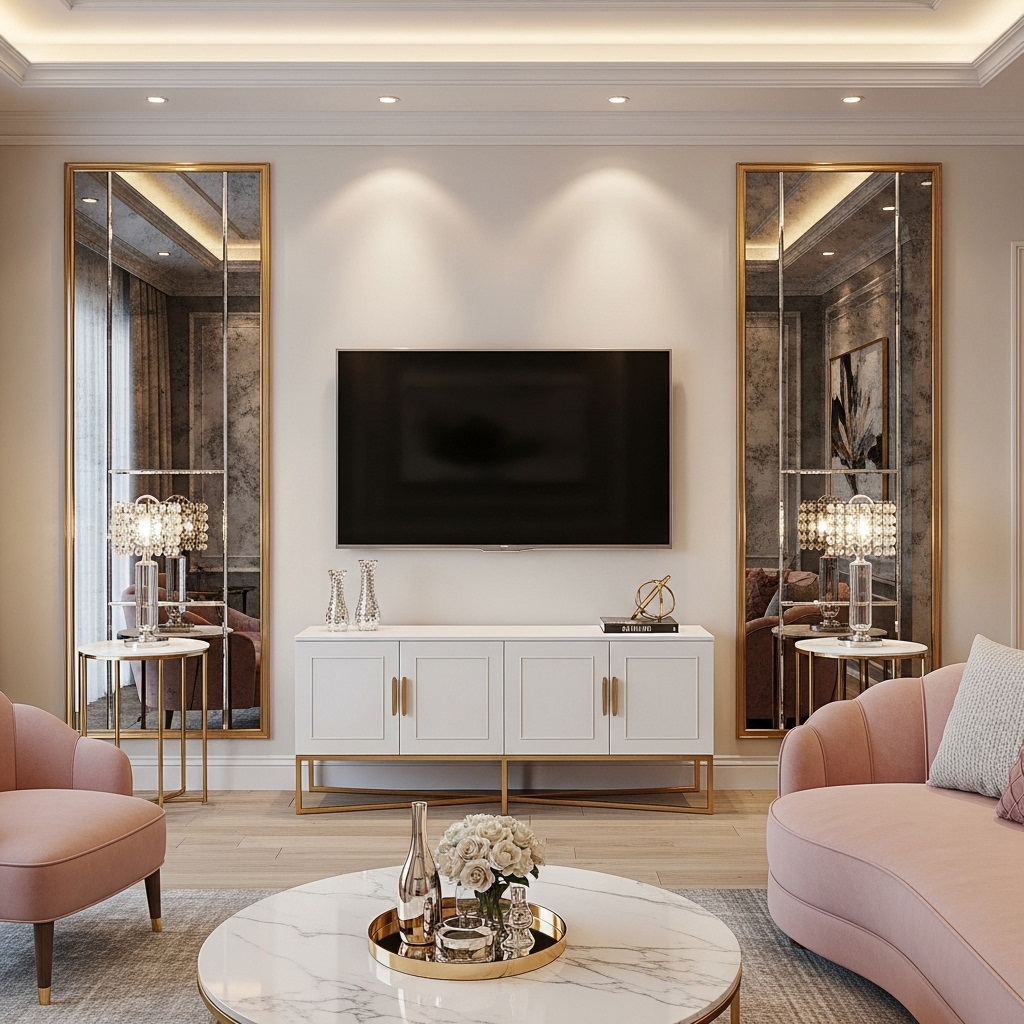
Mirror panels flanking a TV wall multiply natural light across the room while adding a glamorous, high-end quality that few other wall treatments can match at a similar cost. Tall vertical mirrors on either side of the screen create a dramatic symmetrical framing effect that makes the television feel like the centerpiece of a carefully designed display. This approach suits modern glam, Hollywood Regency, and luxury contemporary living rooms.
The reflective surfaces of the mirror panels also visually widen the TV wall, making a narrow feature wall feel broader and more expansive than its actual dimensions. In smaller living rooms, this optical widening effect is practically valuable as well as aesthetically beautiful. I’ve noticed that mirror panel walls consistently make compact urban apartments feel significantly more spacious and airy.
- Mirror panels multiply natural light beautifully
- Symmetrical framing makes TV feel like a centerpiece
- Gold frames add glamorous luxury wall detail
- Works in glam, Regency, and luxury modern rooms
- Makes narrow TV walls feel visually wider
Choosing mirror panels that extend from console height to ceiling creates the most dramatic vertical proportion. Shorter panels that stop mid-wall look truncated and reduce the elegant impact of the overall composition. Going full height from console to ceiling is the detail that makes this treatment look truly intentional and architectural.
Keeping the console and accessories restrained in color — white lacquer, blush velvet, and gold hardware — prevents the mirrored wall from becoming visually overwhelming. Reflective surfaces already carry significant visual energy. Simple, elegant accessories beside them create the refined balance that makes a mirrored TV wall feel sophisticated rather than excessive.
Industrial Brick TV Wall
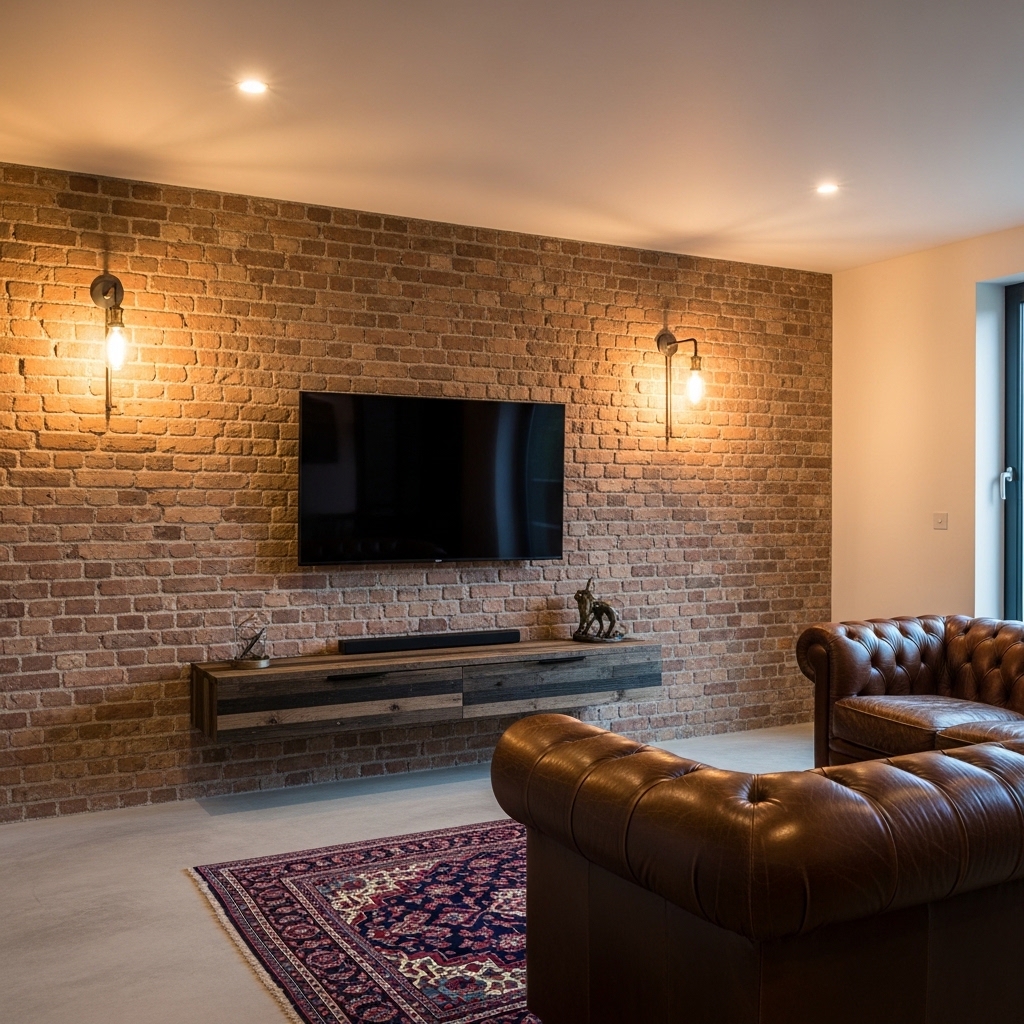
Exposed brick behind a TV delivers a raw, characterful backdrop that no manufactured surface can authentically replicate. The irregular texture, natural color variation, and mortar line pattern of real brick creates a uniquely organic wall surface that suits industrial, loft, rustic, and urban-modern living rooms. This treatment works equally well in genuine brick-walled spaces and with brick veneer tiles applied to standard drywall.
I’ve noticed that homes with exposed brick TV walls consistently feel more memorable and personality-rich than rooms with painted or paneled alternatives. The material authenticity of real brick carries a sense of history and permanence that newer surfaces simply do not possess. That quality of genuine aged character is something no reproduction material fully captures, even when it comes impressively close.
- Exposed brick adds raw, aged character naturally
- Irregular brick texture creates organic visual depth
- Works in industrial, loft, and rustic modern rooms
- Edison bulb sconces complement brick tone beautifully
- Brick veneer tiles replicate the look affordably
Sealing exposed brick with a clear matte sealer prevents dust shedding and makes the surface easier to maintain without altering its natural appearance. Unsealed brick gradually deposits fine red dust onto nearby furniture and floors. One application of matte sealer eliminates that issue entirely while preserving the raw, authentic look that makes brick so appealing.
Pairing exposed brick with warm incandescent or Edison bulb lighting is essential for bringing out the best tones in the material. Cool LED lighting makes brick look flat and slightly purple. Warm Edison-style bulbs in the 2200K to 2700K range enhance the amber, red, and brown tones in the brick surface beautifully.
Minimalist White TV Wall
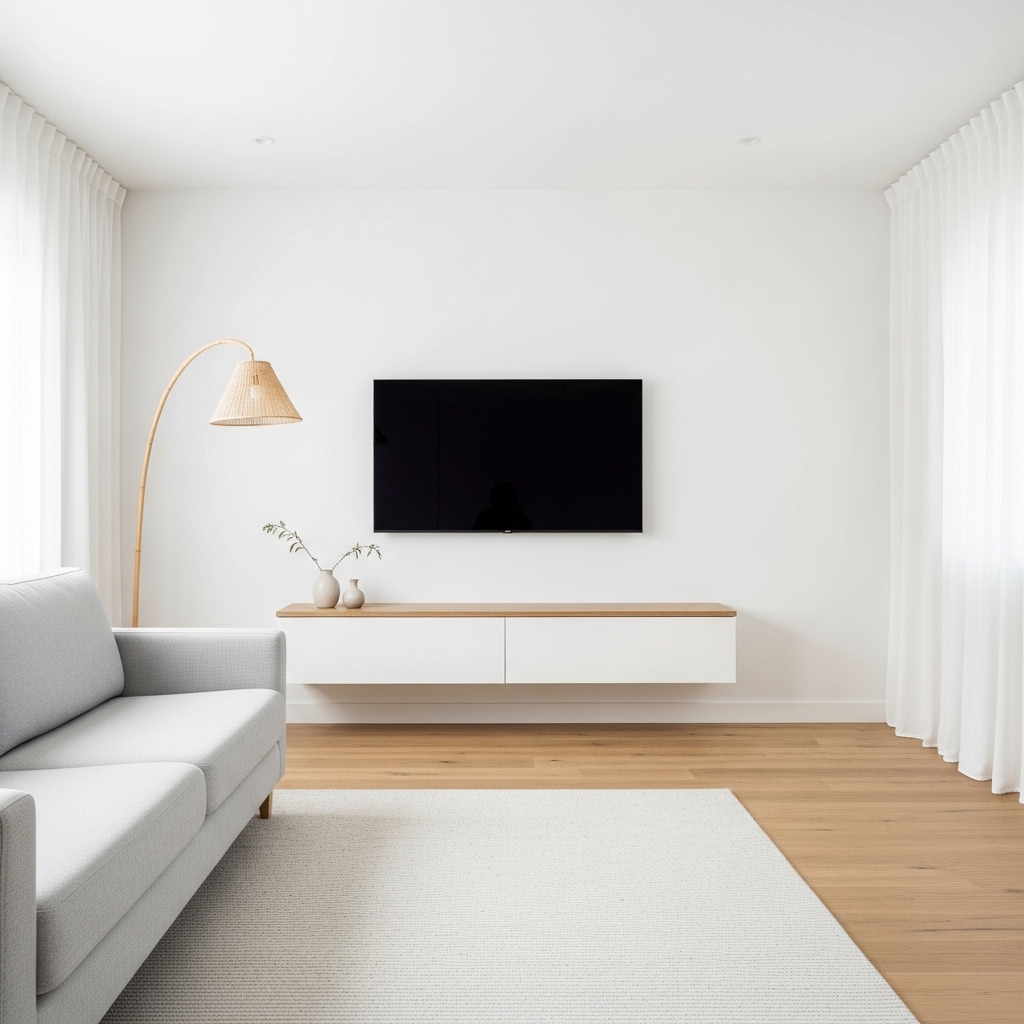
A completely minimalist white TV wall proves that restraint is its own form of design sophistication. Removing every accessory except the television and one slim console directs all visual attention to the quality of the wall surface itself and the sleek form of the mounted screen. This approach suits Japandi, Zen minimalist, and Scandinavian living rooms where calm and clarity take priority over decoration.
The challenge of a pure minimalist TV wall lies in the quality of execution rather than the complexity of design. Every surface imperfection, every visible cable, and every misaligned mount becomes immediately apparent when nothing else competes for attention. That’s why many minimalist interior designers invest heavily in professional installation, premium mounts, and flawless cable concealment before considering the space complete.
- Restraint makes the TV wall feel sophisticated
- All attention goes to surface quality and clean lines
- Professional cable concealment is non-negotiable here
- Works in Japandi, Zen, and Scandinavian styled rooms
- Pairs beautifully with natural ash and pale gray tones
Choosing a warm white rather than a stark, cool white keeps the minimalist wall from feeling sterile. Warm white tones like pure white with a slight yellow undertone suit natural wood and linen accessories far more naturally than cool whites with blue or gray undertones. This single paint choice determines whether the room feels calm or clinical.
One well-chosen organic accessory — a single ceramic vase with a dried stem, or a small potted plant on the console — prevents the space from feeling empty rather than minimalist. There is a clear distinction between intentional minimalism and a room that simply looks unfinished. One carefully placed natural object establishes that the restraint is deliberate.
Geometric Wall Panel Design
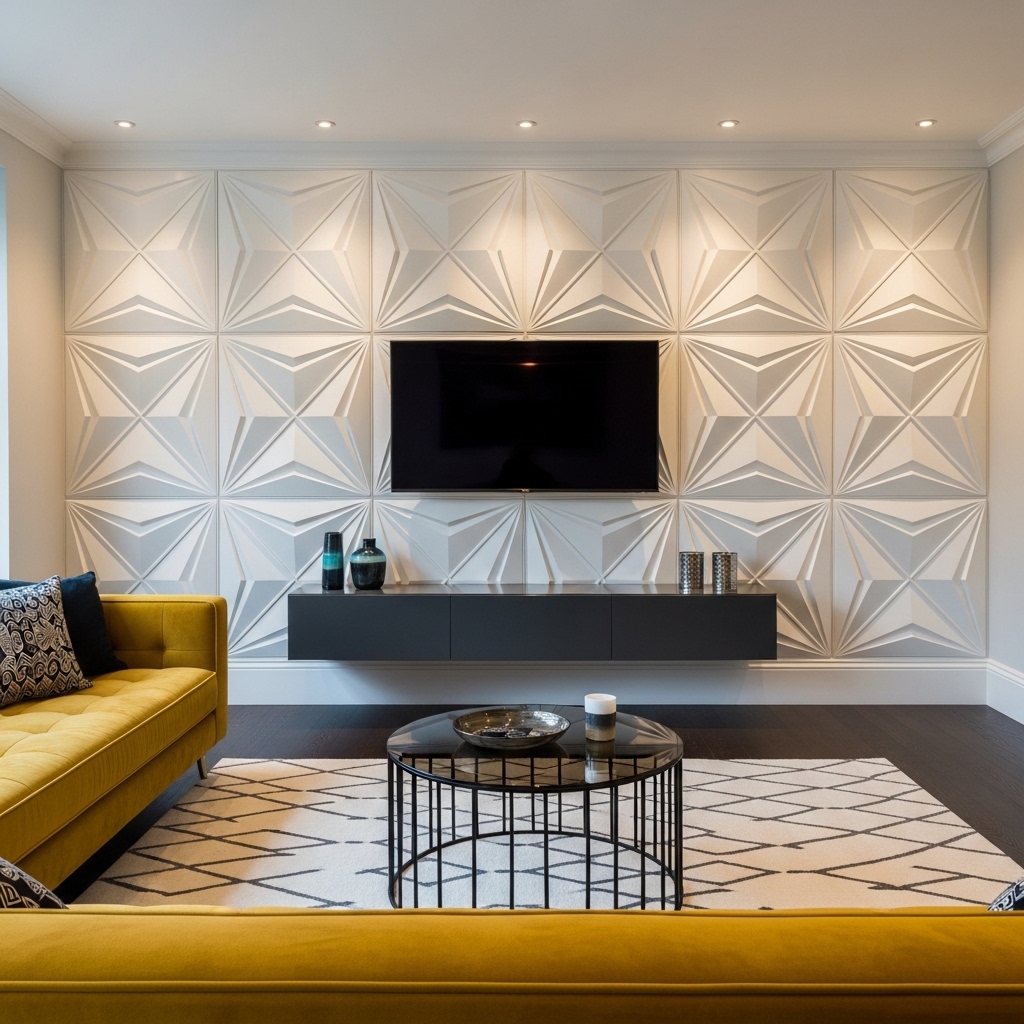
Geometric 3D wall panels behind a TV create a visually complex backdrop that looks custom-designed and highly considered without requiring expensive materials or professional trades. The repeating three-dimensional pattern of diamond or hexagon shapes casts sharp, shifting shadow lines across the wall as light changes throughout the day. This treatment suits bold, contemporary, and design-forward living rooms where visual impact is the primary goal.
Pre-cut geometric MDF panels are now widely available in home improvement and specialty decor stores across the USA. Most systems use interlocking tiles that mount directly onto drywall with adhesive. A full TV accent wall using these panels costs significantly less than custom carpentry while producing a result that looks professionally installed and architecturally intentional.
- 3D pattern creates bold visual shadow and depth
- Shadow lines shift beautifully throughout the day
- Pre-cut MDF panels offer affordable DIY installation
- Mustard yellow furniture pops against white geometric wall
- Works in contemporary and design-forward living rooms
Painting the geometric panels the same color as the surrounding wall creates a subtle, tone-on-tone effect where the pattern reads through shadow and texture alone. This monochromatic approach looks more sophisticated than contrasting the panel color sharply against the wall. The understated result suits minimalist design sensibilities while retaining the three-dimensional interest of the panel pattern.
Recessed ceiling spotlights aimed directly at the geometric wall amplify the shadow pattern dramatically. Angling two to three spotlights across the panel surface from slightly different directions creates a complex interplay of light and shadow. That lighting detail transforms a panel wall from an interesting texture into a genuinely striking architectural feature.
Curved Arch TV Frame
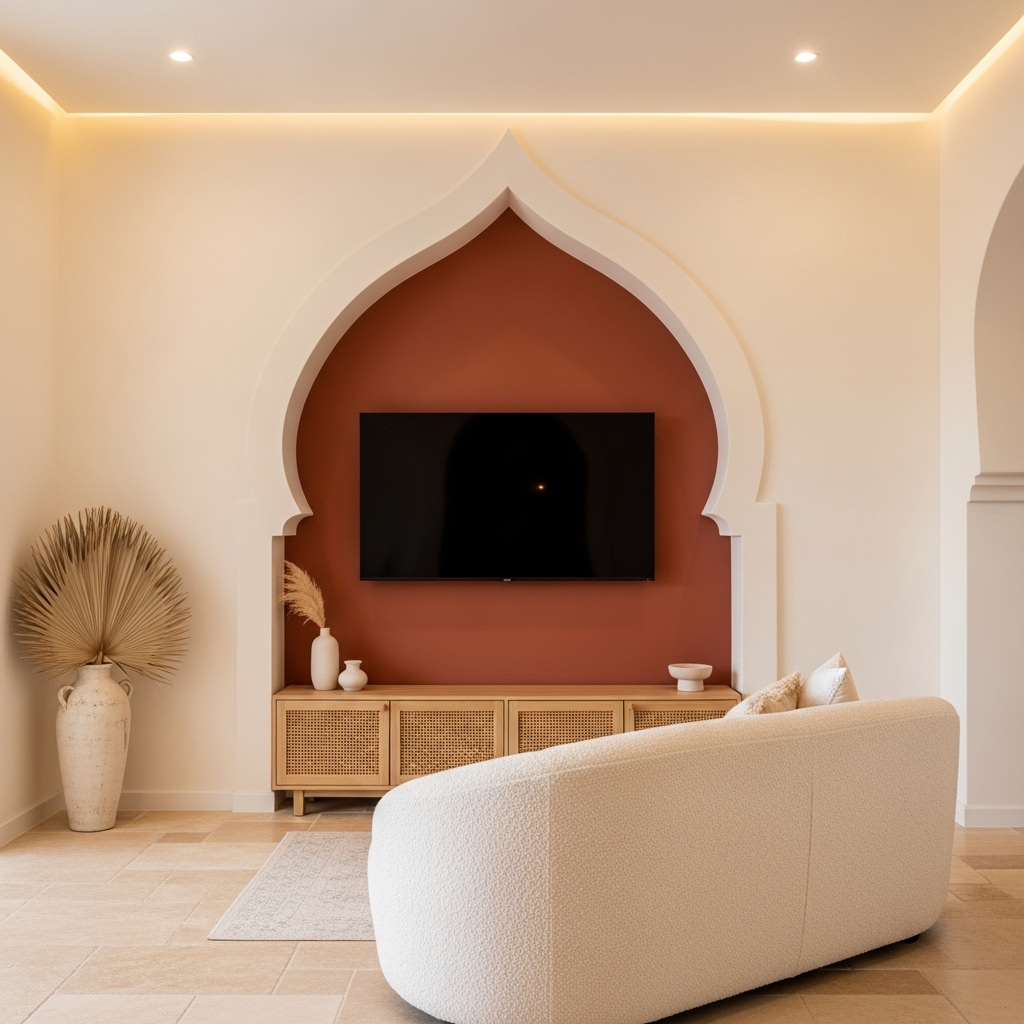
Building a decorative arch frame around a TV turns an ordinary wall mount into an architectural focal point that looks genuinely custom-built. The arched shape draws immediate attention to the screen while framing it within a design element that belongs to the room’s aesthetic identity. This approach suits Mediterranean, Moroccan-inspired, and bohemian-modern living rooms.
I’ve seen this treatment completely shift the design personality of rooms that previously felt bland and undefined. The arch introduces a curved, organic shape that contrasts beautifully with the rectangular form of the TV screen. That contrast between the organic arch and the rigid screen creates a visual tension that makes the wall feel designed rather than assembled.
- Arch frame makes the TV a true focal point
- Curved shape contrasts TV’s rectangular form beautifully
- Terracotta interior adds rich color depth
- Works in Mediterranean and bohemian modern rooms
- Plaster construction suits DIY confident renovators
Painting the arch interior in a deep contrasting tone — terracotta, navy, or forest green — makes the framing effect more dramatic. The dark interior of the arch creates a shadow-box effect that makes the TV screen appear to recede into a richly colored void. This depth illusion is what gives the arch treatment its distinctive architectural character.
Keeping the arch construction in smooth white plaster rather than detailed ornamental molding suits a modern sensibility. A clean, plain arch outline is more versatile and contemporary than elaborate carved detail. The simplicity of the form works across more furniture styles and lets the contrasting interior color do the decorative work.
TV Wall With Hidden Storage
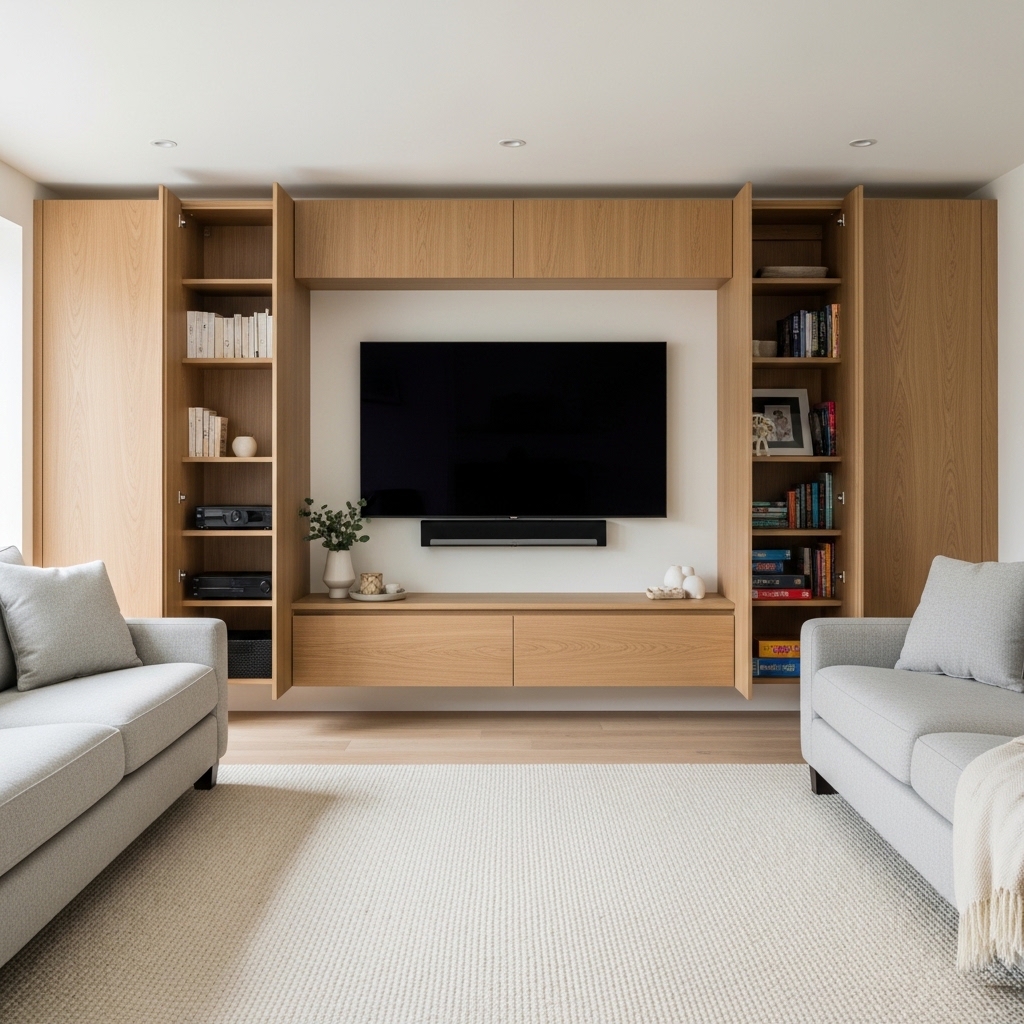
A TV wall with fully concealed storage solves the biggest practical challenge in most family living rooms — where to hide the equipment, remotes, cables, and everyday clutter that accumulates around a television. Flush push-to-open cabinet doors with no visible handles create a wall surface that looks completely seamless when closed. This approach suits families, minimalist households, and anyone who values a tidy, organized living space.
That’s why many interior designers prioritize hidden storage walls as the single most functional upgrade they recommend to clients with children or active households. The cabinets hide everything unattractive while maintaining a clean, designed wall surface at all times. I’ve seen this addition reduce daily living room tidying time by a significant margin in homes where it has been installed.
- Hidden cabinets keep media clutter fully out of sight
- Flush hardware creates a perfectly seamless wall surface
- Works for families and minimalist-minded households
- Push-to-open doors need no visible hardware at all
- Reduces daily tidying time significantly in family rooms
Choosing cabinet doors in a wood veneer that matches the floating console below creates a cohesive unit that reads as one purposeful installation. When doors and console share the same material, the entire wall reads as a single architectural element rather than separate pieces. That unity of material is what gives this treatment its high-end, custom-built appearance.
Allocating one cabinet specifically for media equipment — receiver, gaming console, streaming devices — with ventilated back panels keeps electronics from overheating when the doors are closed. Ventilation holes or mesh inserts on the back wall of media equipment cabinets extend the life of the equipment and prevent heat buildup. This functional detail is one that many homeowners overlook until a problem occurs.
Terrazzo Effect TV Backdrop
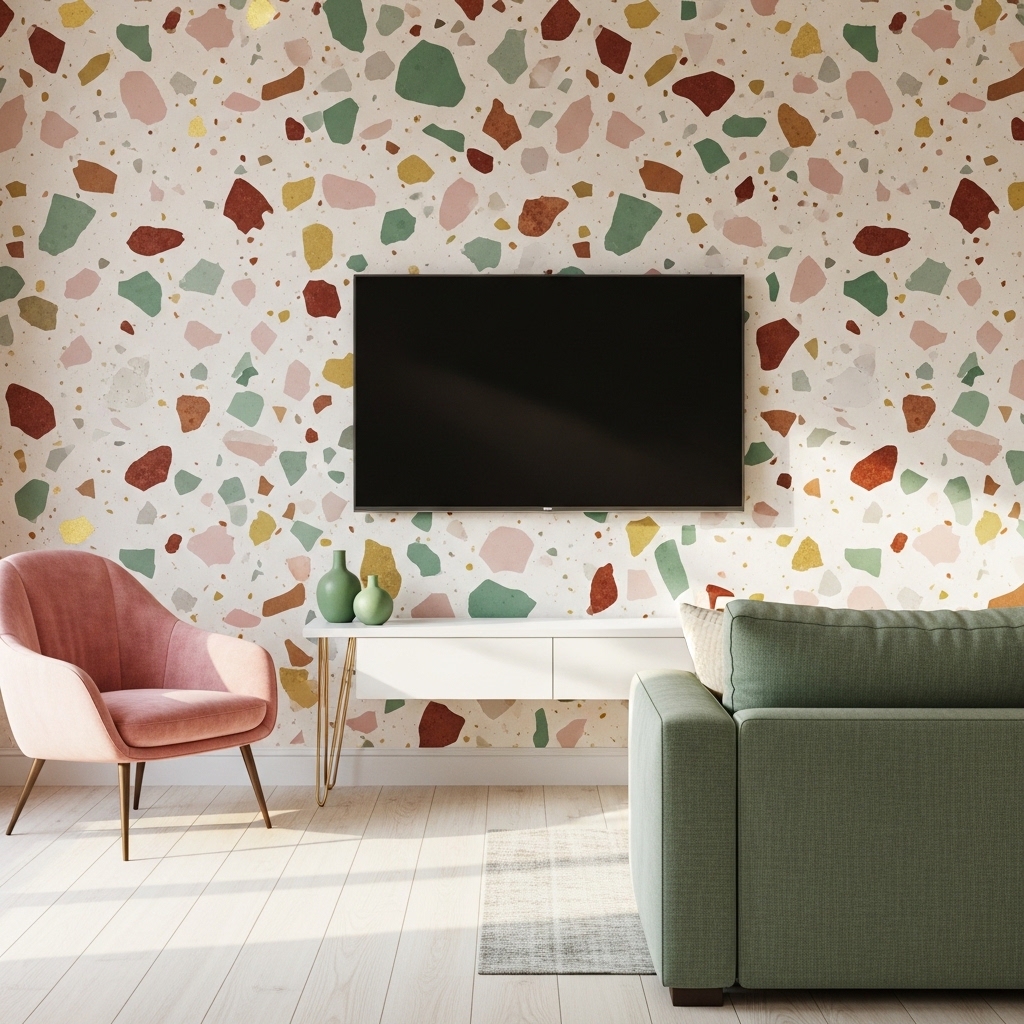
Terrazzo effect wall treatments bring a uniquely joyful, artistic energy to a TV backdrop that no other surface material matches. The scattered multi-colored chips within the creamy base create a wall that feels simultaneously retro and fresh — a combination that resonates strongly with the maximalist and eclectic design trends driving home decor choices in 2026. This treatment suits colorful, personality-driven, and eclectic living rooms.
Large-format terrazzo-effect porcelain tiles now make this look achievable for standard wall installation without the cost and complexity of genuine poured terrazzo. The tile format allows precise placement and easy replacement of any individual tile if damage occurs. That practicality makes terrazzo-effect tiles one of the smartest choices for a feature wall that needs both visual impact and long-term durability.
- Scattered color chips create joyful visual energy
- Works with eclectic and maximalist living room styles
- Terrazzo-effect porcelain tiles offer practical installation
- Ivory base coordinates with multiple sofa colors
- Brass and sage green accessories reinforce the palette
Choosing a terrazzo pattern where the chip colors match the room’s existing accent tones creates a cohesive palette that feels curated rather than busy. If your sofa is dusty pink and your accessories include sage and rust, selecting those exact chip colors in your terrazzo wall ties the room together through a shared color language. That intentional color repetition is what makes the wall feel designed.
Keeping the TV console and accessories clean and minimal against a terrazzo wall prevents the space from feeling overwhelming. The terrazzo pattern already provides significant visual energy. Simple brass-legged furniture and small ceramic accessories support the wall without competing with its colorful pattern. Restraint in the accessories is what makes a bold wall treatment look sophisticated.
Tall Curtain TV Wall Frame
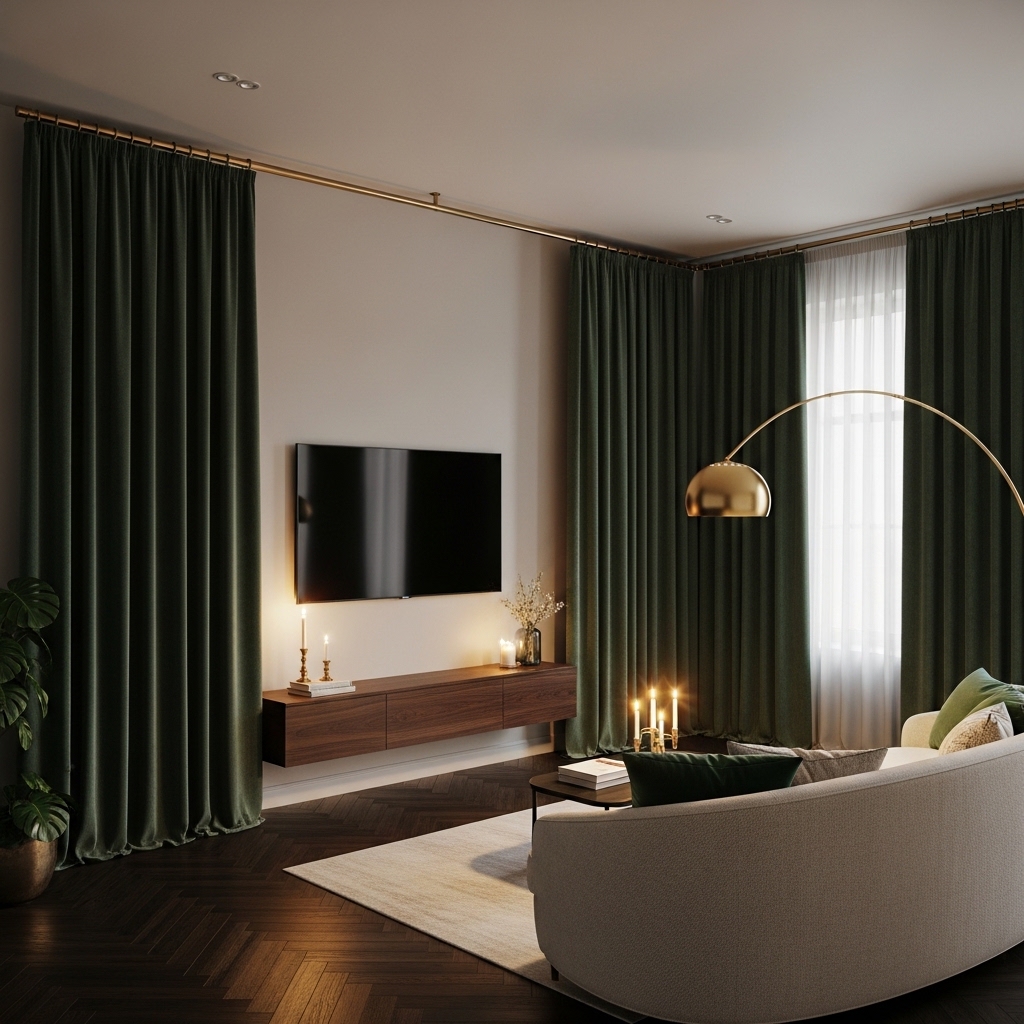
Floor-to-ceiling curtains framing a TV wall create a theatrical, stage-like quality that makes the living room feel genuinely luxurious and carefully considered. The vertical fall of fabric from ceiling to floor draws the eye upward, making the room feel taller while the rich curtain color frames the screen within a dramatic textile backdrop. This approach suits modern glam, art deco, and luxury contemporary living rooms.
Velvet curtains in deep jewel tones — forest green, burgundy, navy, or deep teal — produce the most impactful framing effect because the pile of the velvet fabric absorbs and reflects light simultaneously. That dual quality gives the curtains a depth and richness that flat woven fabrics cannot replicate. I’ve seen this treatment make a compact living room feel like a private cinema screening room.
- Floor-to-ceiling curtains make the room feel taller
- Velvet absorbs and reflects light for rich visual depth
- Creates a theatrical stage effect around the TV
- Works in glam, art deco, and luxury styled rooms
- Deep jewel tones frame dark TV screens beautifully
Mounting the curtain rod at ceiling height rather than just above the TV panel is the detail that makes this treatment feel luxurious. A rod positioned at ceiling height creates a continuous vertical line from floor to ceiling. Dropping the rod lower reduces the dramatic height effect and makes the curtains look like an ordinary window treatment rather than a design feature.
Tying the curtain color into at least two other elements in the room — a throw pillow, a plant pot, or an accessory — prevents the deep-toned curtains from feeling isolated. When the curtain color echoes across the room in smaller doses, it creates a cohesive color story. That repetition of tone transforms a single dramatic feature into a fully integrated design decision.
Coastal Whitewash TV Wall
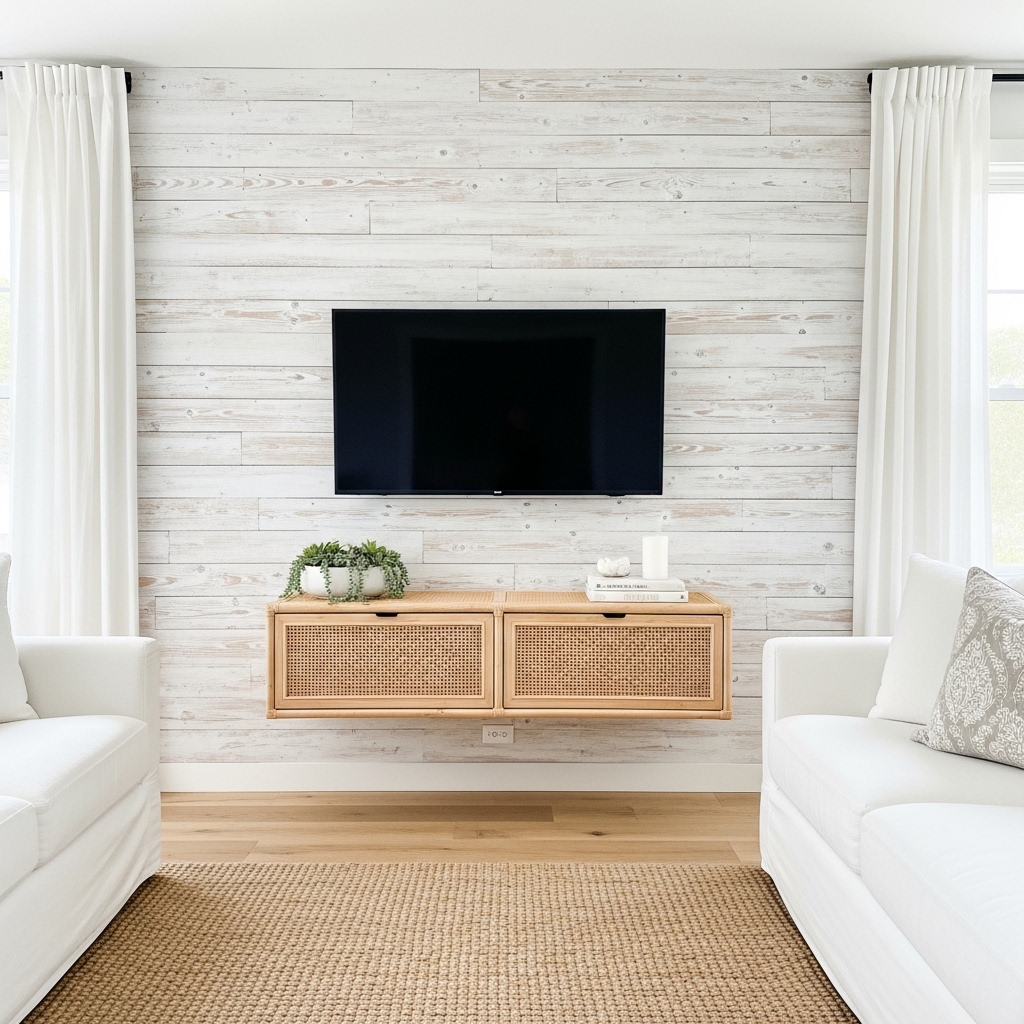
Whitewashed wood plank walls create the most relaxed, sun-bleached coastal atmosphere of any TV wall treatment available. The pale, translucent white finish over natural wood grain produces a surface that feels simultaneously rustic and refined — exactly the balance that coastal and beach-house living room styles aim for. This treatment suits coastal cottage, beachy modern, and relaxed transitional living rooms.
The horizontal plank direction reinforces the wide, open visual quality that coastal rooms rely on. Horizontal lines stretch the eye sideways across the wall, making narrow rooms feel broader and open-plan spaces feel even more expansive. That’s why many coastal interior designers default to horizontal wood application as their first choice for feature wall treatments in seaside-inspired homes.
- Whitewash finish creates sun-bleached coastal tone
- Horizontal planks make narrow rooms feel wider
- Visible wood grain adds natural organic depth
- Works in coastal, cottage, and relaxed modern rooms
- Pairs beautifully with rattan and linen furniture
Applying the whitewash in thin, diluted coats rather than full coverage paint preserves the maximum natural grain visibility through the finish. Diluting white latex paint with 30 to 40 percent water creates the ideal translucency for a genuine whitewash effect. Heavy full-coverage application produces a flat painted look that loses the driftwood character entirely.
Coordinating the whitewash wall with pale natural fiber accessories — sisal rugs, rattan furniture, linen throws, and white ceramic accents — creates a tone-on-tone palette that feels completely cohesive. Every element in the coastal palette shares the same bleached, natural color language. That shared palette creates a room that feels like it was designed all at once rather than assembled piece by piece.
Dark Walnut Full Wall Unit
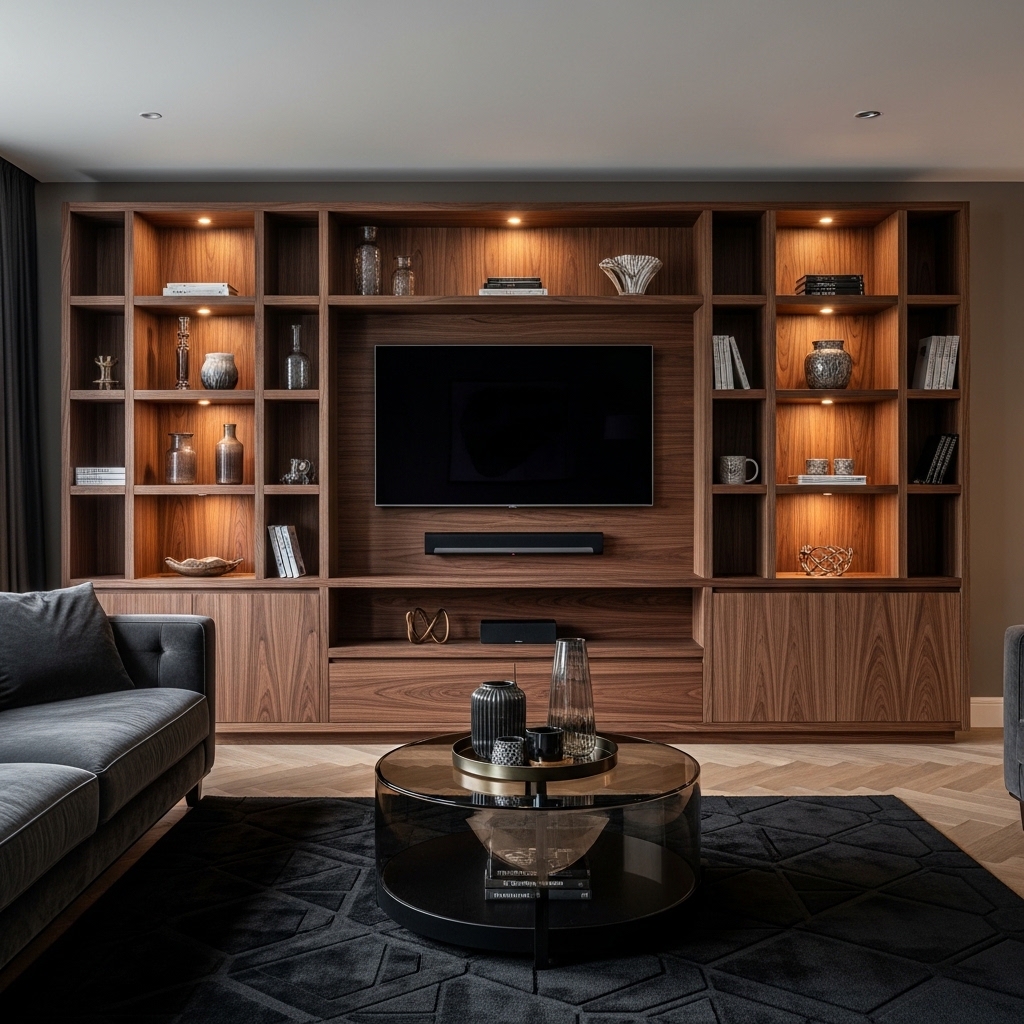
A floor-to-ceiling dark walnut TV wall unit commands the room with a level of richness and material depth that lighter wood tones simply cannot match. The deep grain, warm chocolate tones, and natural variation within walnut wood create a surface that looks more expensive the closer you stand to it. This treatment suits contemporary luxury, masculine-modern, and warm sophisticated living rooms where richness of material takes priority.
That richness makes walnut the wood of choice for high-end residential interior designers working on premium living room projects. Clients who invest in a dark walnut wall unit consistently report that no other single piece in the room generates more compliments from guests. The material quality speaks immediately and requires no explanation. I’ve recommended this investment to numerous clients and the satisfaction rate has been universal.
- Dark walnut depth commands immediate visual authority
- Grain variation makes the wood look richer up close
- Floor-to-ceiling height maximizes wall impact fully
- Integrated LED shelving lighting adds warm ambiance
- Works in luxury, contemporary, and masculine modern rooms
Balancing a dark walnut wall unit with lighter surrounding elements prevents the room from feeling heavy or oppressive. A charcoal sofa, a light-toned rug, and sheer curtains in warm white create enough contrast to keep the dark wood feature wall from overwhelming the space. That balance between the dominant dark feature and lighter supporting elements is the key to making this treatment work in all room sizes.
Incorporating open shelving within the unit allows the display of books, plants, and sculptural objects that add organic life and color variety against the dark wood tone. Trailing plants, white ceramic vases, and brass-toned accessories all glow warmly against dark walnut backgrounds. These small points of light and color prevent the unit from reading as a solid dark mass on the wall.
Stone Veneer Accent Wall
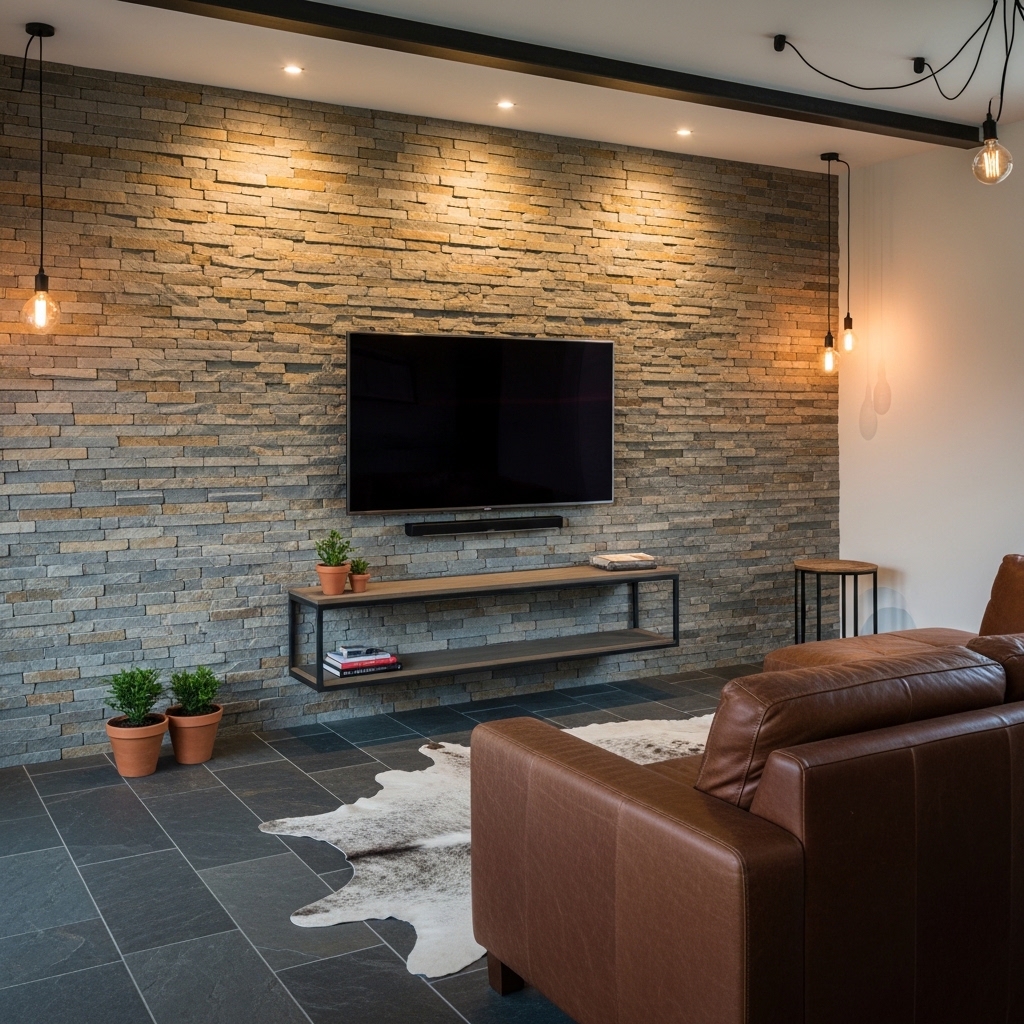
Stone veneer accent walls behind a TV deliver a natural authority and material richness that immediately defines the entire design personality of the room. The layered, horizontal lines of ledgestone create an inherently structured texture that suits both rustic and contemporary design directions depending on the furniture and accessories paired with it. This versatility makes stone veneer one of the most broadly applicable TV wall treatments available.
Stone veneer tiles weigh significantly less than solid stone and mount directly onto standard drywall with construction adhesive and mortar. Most homeowners complete a stone veneer accent wall over a single weekend without professional assistance. That accessibility makes a material that looks genuinely expensive available to a much wider range of home budgets and skill levels.
- Stone veneer adds natural authority to TV walls
- Layered ledgestone suits rustic and contemporary rooms
- Significantly lighter than solid stone for DIY installation
- Warm gray and beige tones pair with leather furniture
- Recessed spotlights amplify stone texture dramatically
Grouting stone veneer in a mortar tone that closely matches the stone color creates a seamless, natural look where the mortar disappears into the surface. Contrasting mortar color draws attention to the individual tile lines rather than the overall texture of the stone. For a natural stone appearance, the mortar should support rather than compete with the material.
Pairing stone veneer with warm Edison bulb or incandescent-adjacent LED lighting brings out the amber, gold, and warm brown undertones embedded within the stone surface. Cool lighting flattens stone’s natural warmth and makes the surface appear gray and lifeless. Warm lighting in the 2200K to 2700K range is always the right choice for natural stone and stone-effect wall treatments.
Full-Wall Bookcase TV Integration
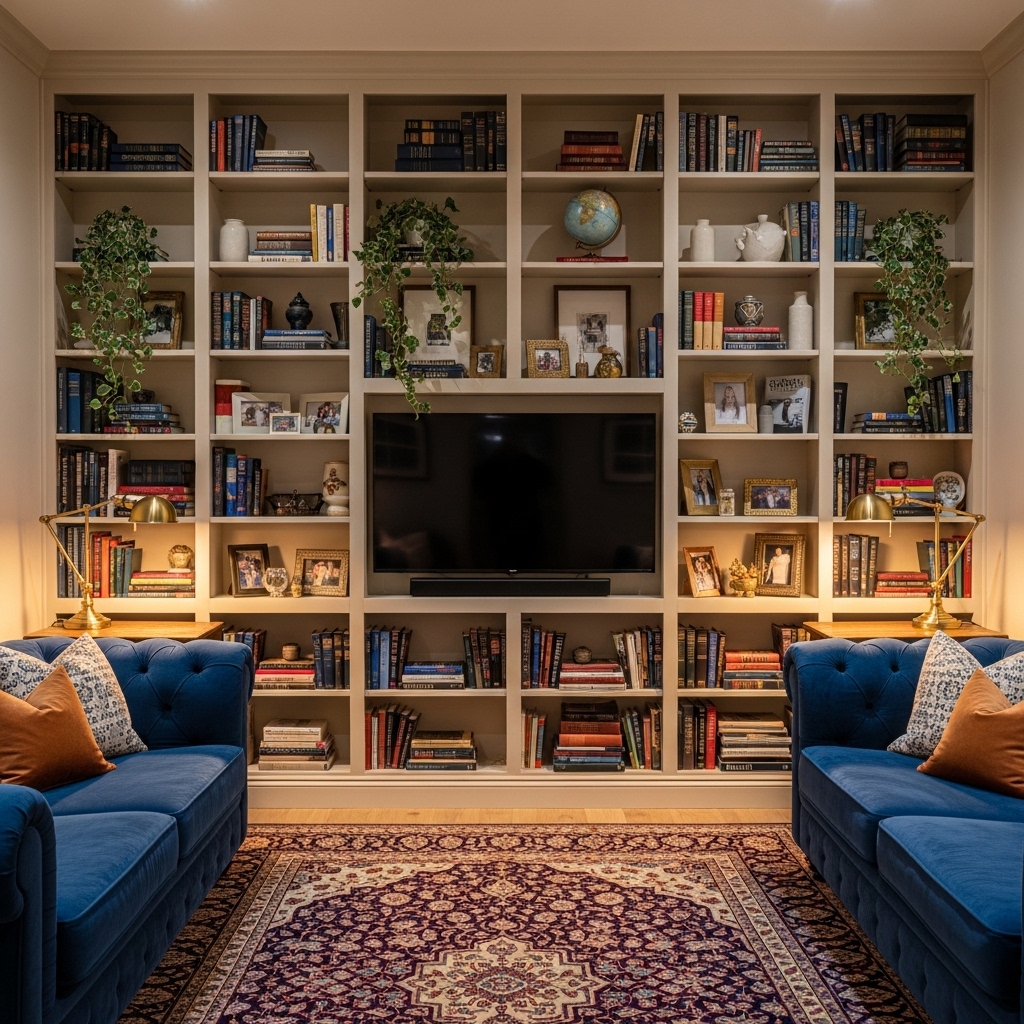
Integrating a TV into a full floor-to-ceiling bookcase wall creates the most intellectually rich and visually complete TV wall treatment in home design. The screen becomes one element within a wall of displayed books, objects, and personal collections — which reduces its visual dominance completely while adding extraordinary depth, character, and warmth to the room. This approach suits library-inspired, traditional, eclectic, and book-lover living rooms.
The bookcase wall also solves every storage challenge a living room faces while simultaneously creating the most conversation-worthy wall in any home. Guests consistently gravitate toward a full bookcase wall, reading titles and examining objects in a way they never would with a plain painted TV wall. I’ve seen this treatment single-handedly define the social atmosphere of every room in which it appears.
- TV becomes one element within a rich book display
- Books, plants, and objects add extraordinary visual depth
- Full bookcase wall solves every living room storage need
- Works in library-inspired and eclectic styled rooms
- Navy velvet and brass accessories suit the warm palette perfectly
Organizing books by color rather than title or author creates a visually harmonious backdrop that photographs beautifully and makes the overall wall feel curated rather than casually accumulated. Color-organized bookshelves are one of the most shared home styling ideas on visual platforms because the result looks both intentional and effortlessly beautiful.
Leaving intentional empty sections within the bookcase for plants, sculptural objects, and framed photographs prevents the wall from feeling like a solid wall of text. Those breathing spaces give the eye rest points between the denser book sections. The rhythm of full sections and empty sections creates visual movement that keeps the bookcase wall engaging rather than overwhelming.
Conclusion
Your TV wall has far more design potential than most people ever use. These 28 TV wall design ideas prove that the right treatment — whether a warm wood slat panel, a bold marble backdrop, or a cozy gallery wall arrangement — can completely define your living room’s personality and atmosphere. I’ve seen how one well-designed feature wall shifts the entire energy of a room and makes the people inside it feel genuinely proud of their space. Pick the idea that excites you most and start there. Save this article on Pinterest so you always have it as a reference, try at least one idea this season, and share it with a friend whose living room needs a fresh direction.
Frequently Asked Questions
How high should I mount my TV on a feature wall?
Mount your TV so the center of the screen sits at eye level when seated — roughly 42 to 48 inches from the floor for most sofas. Mounting too high causes neck strain during long viewing sessions. Always measure your seated eye level before drilling a single hole in the wall.
How do I hide cables on a TV feature wall?
Use an in-wall cable management kit for the cleanest result. These kits route cables through the wall between the TV and the outlet below. Alternatively, a slim cable raceway painted to match your wall color hides cords along the surface without any in-wall work — a great option for renters.
What is the best TV wall material for a small living room?
A large mirror panel or a light-toned wood slat wall works best in small rooms. Both options reflect light and create a sense of depth that makes compact spaces feel larger. Avoid dark heavy materials like stacked stone or dark walnut in very small rooms as they can make the space feel even more confined.
Can I create a stylish TV wall without drilling into the wall?
Yes. Leaning a large decorative panel or a framed surround against the wall works well. Peel-and-press wood slat panels and removable wallpaper also require no drilling. Many TV brands now offer wall mounts with adhesive plate systems rated for full TV weight. These options suit renters and apartment dwellers completely.
How do I make my TV less noticeable on the wall?
Paint the TV wall in a dark tone close to the TV screen color. Charcoal, dark navy, and deep forest green all make the black screen recede visually into the wall surface. Surrounding the TV with a gallery wall arrangement also draws the eye across multiple elements rather than locking it onto the screen immediately.
What color works best behind a wall-mounted TV?
Warm neutrals like sage green, warm white, and soft greige work across almost every furniture style. For a bold look, deep charcoal or navy makes the TV disappear into the wall. For a luxurious feel, warm champagne Venetian plaster or a marble-effect tile creates the richest possible backdrop behind any screen.
Do I need a professional to install a TV wall unit?
Built-in floor-to-ceiling units and recessed niche installations require a professional carpenter and potentially an electrician for in-wall cable work. Floating consoles, wood slat panels, and decorative tile walls are manageable DIY projects for confident homeowners. Always hire a professional when the installation involves structural wall modification or electrical work.