34 DIY Fabric Wall Art Ideas For Home Decor 2026
Your walls are telling a story right now — the question is whether you love what they’re saying. Blank walls feel cold, unfinished, and oddly stressful to live with daily. DIY fabric wall art ideas fix that problem beautifully, affordably, and without a single drop of paint.
I’ve noticed that most people overlook fabric entirely when planning their wall decor. They reach for framed prints or gallery photos first. However, fabric brings something those options simply cannot — real texture, warmth, movement, and deeply personal character. A woven wall hanging, a stretched linen canvas, or a kantha panel changes the entire energy of a room the moment you hang it.
In my experience, fabric wall art works especially well for renters, first-time decorators, and anyone working with a tight budget. You don’t need contractor help or expensive renovations. You need creative ideas, a few affordable materials, and the confidence to start. Experienced interior stylists consistently recommend textile art as the fastest way to add personality to spaces that feel generic or uninspired.
This article covers 34 unique fabric wall art styles for 2026. Each idea suits a different room, aesthetic, and skill level. You will find boho hangings, modern abstract panels, framed vintage textiles, and seasonal wreaths — all designed to make your walls genuinely worth looking at every single day.
Stretched Linen Canvas Art
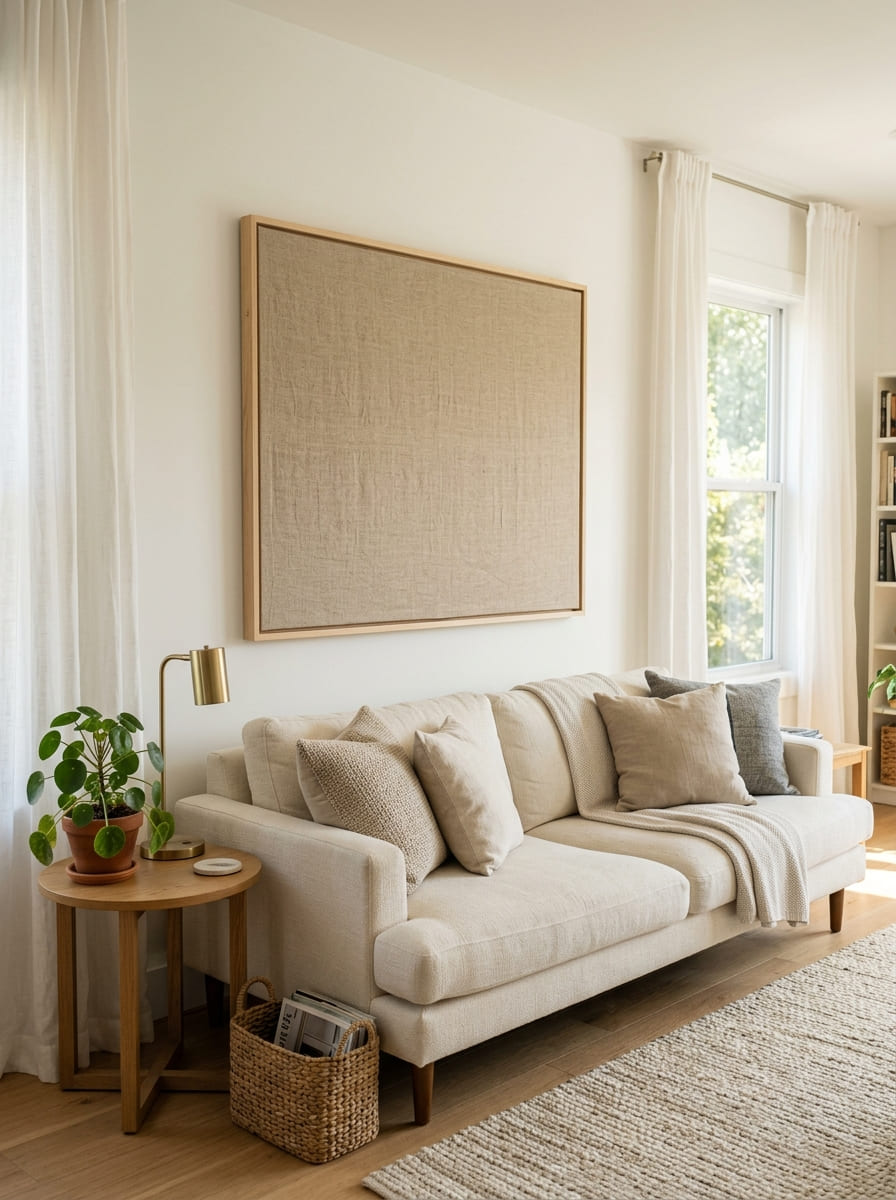
Stretched linen over a simple wooden frame creates instant gallery-wall energy. I’ve noticed this style works especially well in minimalist rooms where clean textures speak louder than bold colors. The raw, natural fabric surface adds warmth without overwhelming small spaces.
This fabric wall art approach suits living rooms, bedrooms, and home offices equally well. In my experience, linen’s neutral tone pairs beautifully with warm wood furniture and soft lighting. You get a polished, intentional look in under an hour.
- Adds natural texture instantly
- Works in small apartment walls
- Pairs with neutral room palettes
- Budget-friendly DIY wall decor
- No painting skills needed
Linen canvas art feels curated yet effortless — exactly the aesthetic most home decorators chase. You can leave the fabric plain, dye it softly, or stitch a simple pattern across the surface. That versatility makes it one of the most practical handmade wall decor options available.
That’s why many interior stylists recommend linen as a starting fabric for beginners. It drapes cleanly, holds shape well on frames, and never looks cheap on a wall. Your room will feel intentionally styled from the moment you hang it.
Boho Macramé Wall Hanging
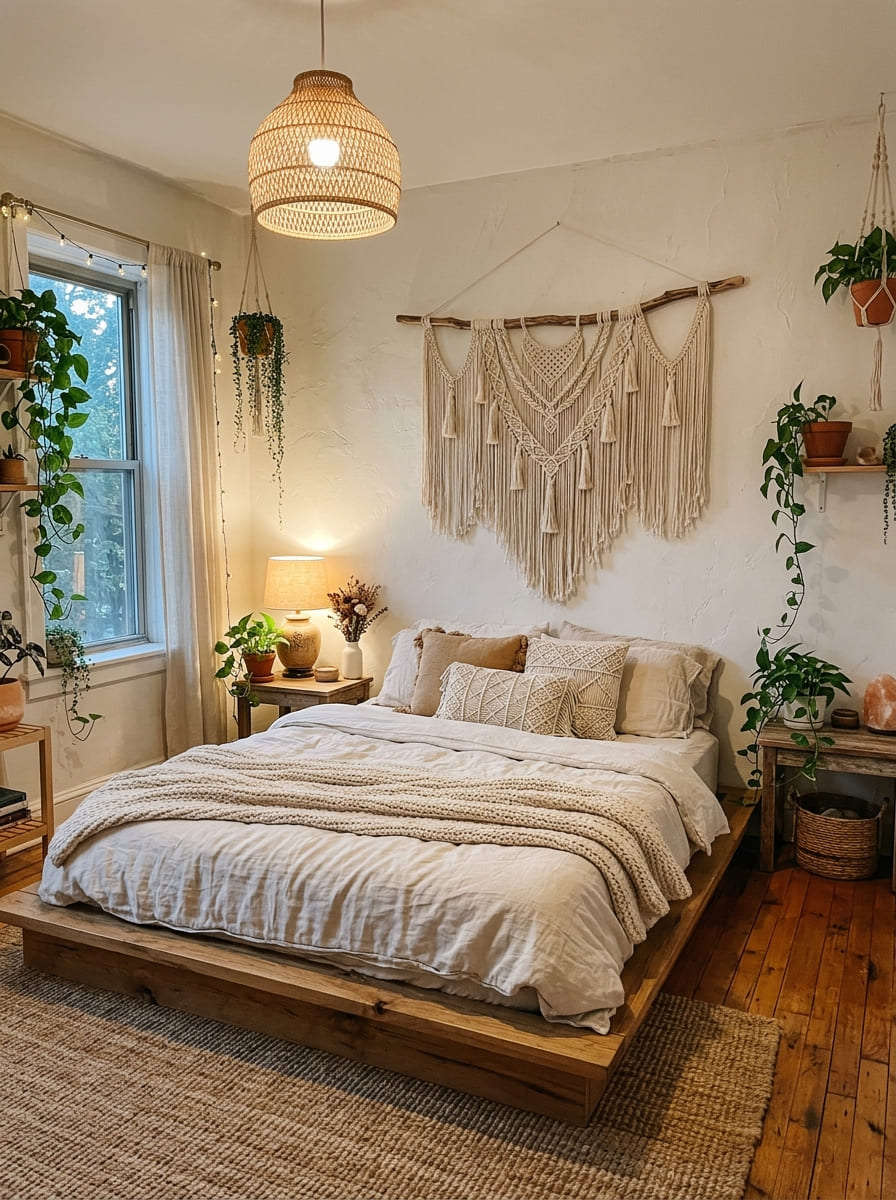
Macramé instantly brings texture, depth, and bohemian warmth to any wall. The knotted cotton rope creates a handcrafted look that no printed art can replicate. I’ve seen this style completely anchor a bedroom that previously felt cold and unfinished.
Boho macramé suits bedrooms, reading nooks, and living room feature walls beautifully. The natural rope fibers add organic softness, especially against white or light gray walls. You feel the craftsmanship the moment you walk into the room.
- Creates rich wall texture fast
- Perfect boho bedroom wall decor
- Pairs with rattan and jute
- Easy beginner-friendly knotting project
- Rental-friendly with simple hooks
Beyond its visual appeal, macramé absorbs sound slightly, which makes rooms feel cozier and quieter. You can customize the size, fringe length, and knot pattern to match your exact wall space. That level of personalization is nearly impossible with store-bought art.
I’ve tried both small accent pieces and large statement hangings — and the large version always wins for impact. A wide macramé piece above a bed replaces the need for a headboard entirely. It’s one of those fabric wall art ideas that looks expensive but costs very little.
Embroidery Hoop Gallery Wall
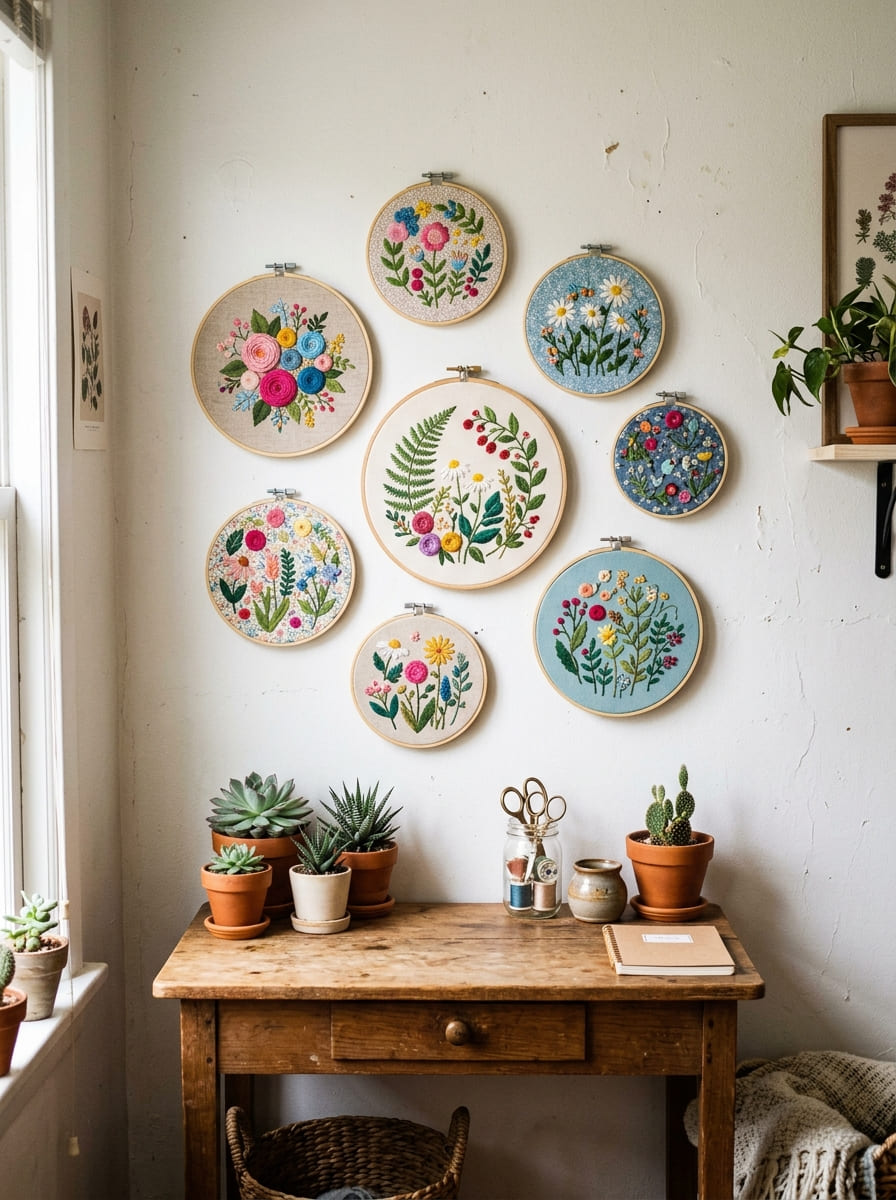
A gallery wall built entirely from embroidery hoops looks playful, personal, and incredibly charming. Each hoop acts like a tiny framed window into color, pattern, and texture. I’ve noticed this arrangement works as a conversation starter in every room it occupies.
Embroidery hoop walls suit craft rooms, nurseries, hallways, and bedroom accent walls perfectly. You mix hoop sizes, fabric patterns, and thread colors to build a display that feels curated over time. No two arrangements ever look identical.
- Mix patterns for visual interest
- Works as DIY gallery wall art
- Great for small blank wall spaces
- Lightweight and easy to hang
- Kids’ room and nursery friendly
The beauty of this handmade wall art idea is its flexibility. You can swap hoops out seasonally, add new pieces as you complete them, or rearrange the layout whenever you want a change. That adaptability makes it one of the most living, evolving decor choices you can make.
That’s why many crafters and stylists recommend starting with just 3 hoops and building outward. The wall grows with you organically. You never feel locked into a permanent design, which is especially valuable in rental apartments.
Fabric Tapestry Feature Wall
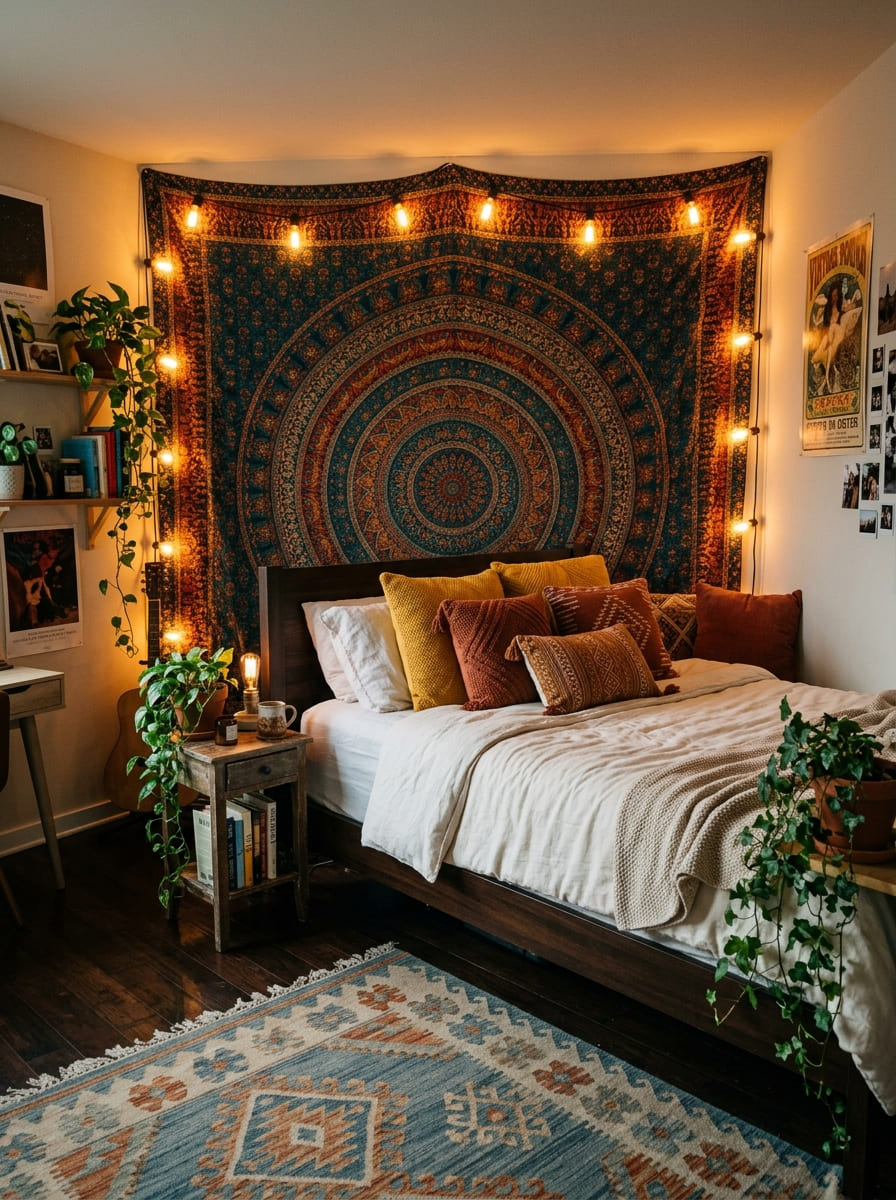
One large fabric tapestry can replace an entire wall’s worth of decor in minutes. The visual impact is immediate, dramatic, and deeply personal — especially when you choose a print that reflects your personality. Renters particularly love this solution because it requires zero nails and zero paint.
Tapestry feature walls work best in bedrooms, studio apartments, dorm rooms, and living room accent walls. You can hang them with tension rods, curtain rings, or simple washi tape for a truly damage-free display. The room transforms completely with one single piece.
- Covers large blank walls fast
- Perfect renter-friendly wall decor
- Adds color and pattern boldly
- Easy to swap between seasons
- No tools or hardware required
In my experience, the trick to making a tapestry look intentional is choosing one that echoes at least two colors already present in the room. When the fabric connects to your existing palette, the whole space feels designed rather than decorated randomly.
I’ve seen tapestries work beautifully as DIY fabric wall art in rooms with very little furniture. The fabric adds so much visual weight that the space never feels sparse or empty. It solves the “bare room” problem almost instantly.
Quilted Patchwork Wall Panel
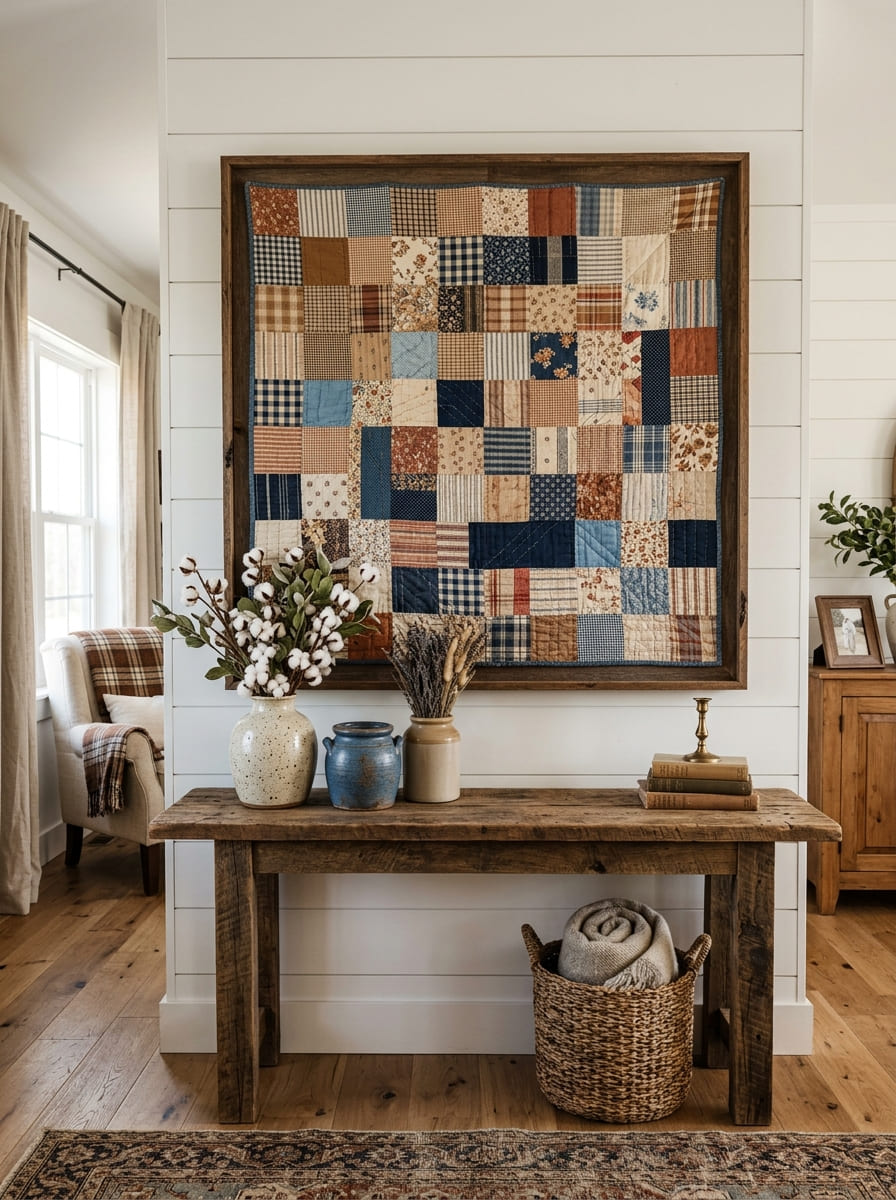
A quilted patchwork panel hung on a wall bridges the gap between art and memory. Each fabric square carries its own color, texture, and history. I’ve noticed that rooms featuring patchwork panels immediately feel warmer, more personal, and more lived-in than rooms with generic prints.
Quilted wall panels suit farmhouse kitchens, cozy living rooms, master bedrooms, and cottage-style spaces beautifully. You hang them using a simple wooden dowel threaded through a fabric sleeve along the top edge. The result looks intentional, clean, and truly handmade.
- Tells a visual story on walls
- Adds heirloom charm to rooms
- Works in farmhouse and cottage styles
- Textile wall art with real depth
- Great use of fabric scraps
Beyond the visual warmth, quilted panels add a layer of soft acoustic insulation to a room. You notice the difference in rooms that feel echoey or cold. That’s why many interior designers use fabric panels specifically in rooms with hard floors and bare surfaces.
This style works especially well in dining rooms and reading corners where warmth matters most. You can commission a local quilter or create your own using pre-cut fabric squares and iron-on adhesive. Either way, the result feels genuinely special on your wall.
Dip-Dyed Ombre Fabric Art
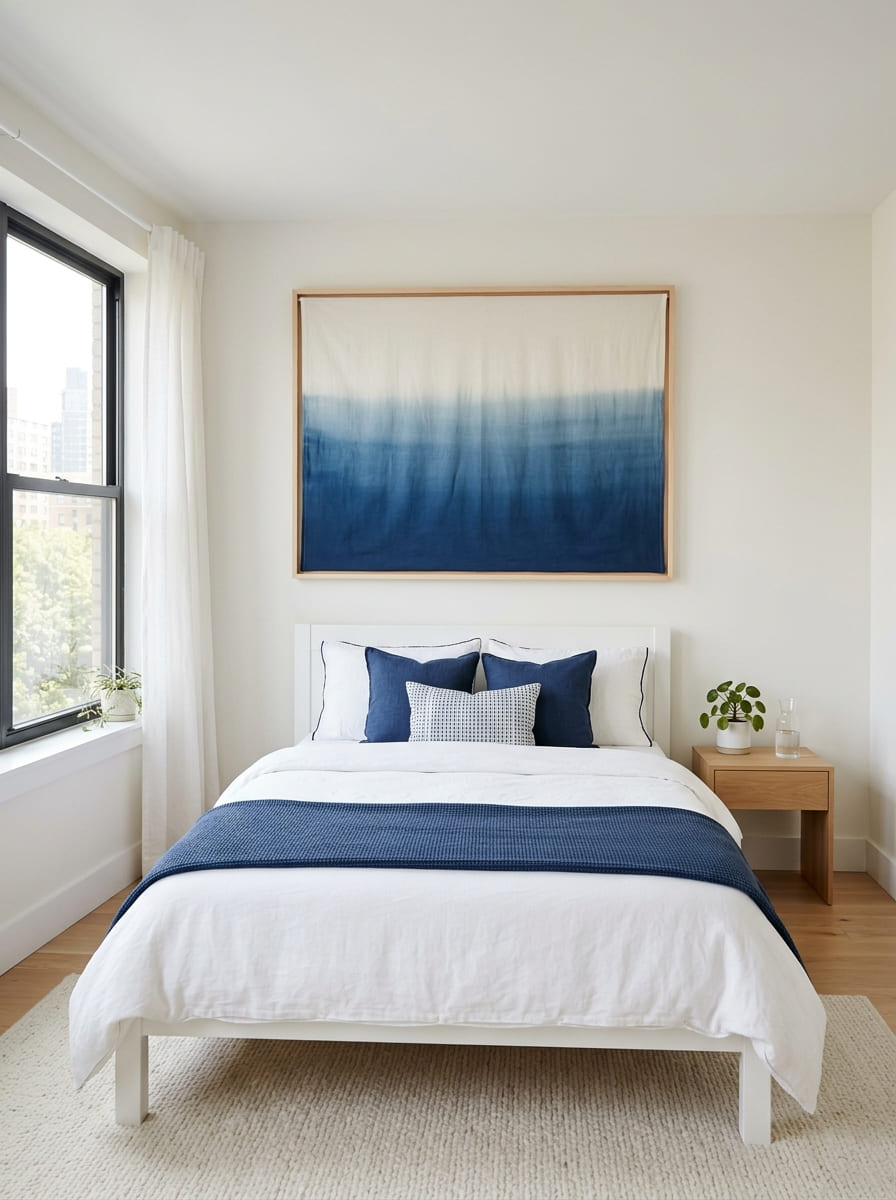
Dip-dyed fabric creates a gradient effect so beautiful it looks like a professional watercolor painting. The colors bleed naturally from light to deep, producing a result no two people can replicate exactly. That uniqueness is precisely what makes it feel like genuine, original wall art.
Ombre fabric panels suit modern bedrooms, spa-style bathrooms, and minimalist living rooms perfectly. You stretch the dyed fabric over a canvas frame or hang it freely with a wooden dowel. The soft color transition adds artistic depth without visual noise.
- Creates one-of-a-kind wall color
- Perfect minimalist bedroom wall art
- Easy DIY with cold-water fabric dye
- Adds calm, spa-like room energy
- Works beautifully above beds
The indigo, blush, and sage color families tend to work best for this technique because they produce soft, dreamy gradients. I’ve tried bold reds and oranges — and while striking, softer tones photograph better and blend more naturally into a room’s palette.
That’s why many stylists recommend ombre fabric art for bedrooms specifically. The calming gradient quality promotes a restful, serene atmosphere. You wake up every morning looking at something that genuinely feels handcrafted and intentional.
Woven Wall Hanging With Driftwood
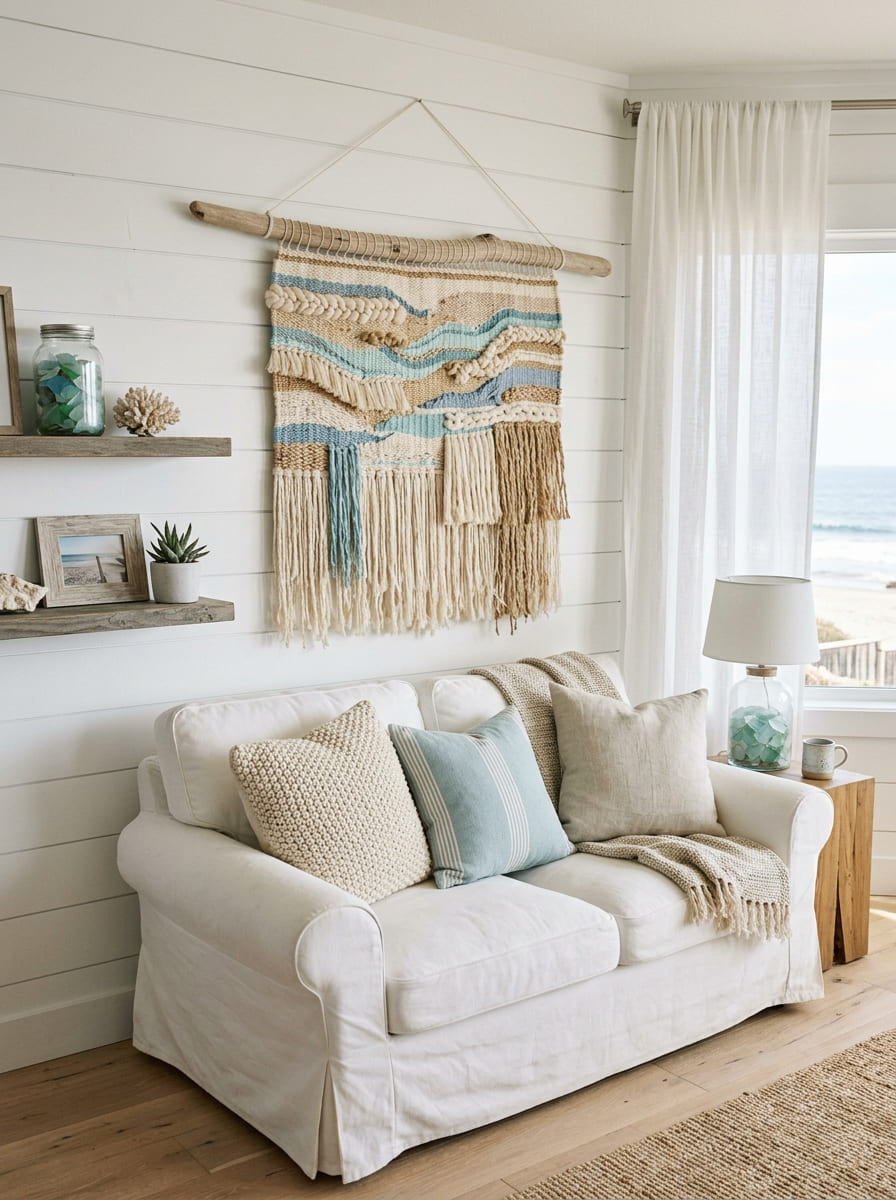
Driftwood as a hanging rod turns simple woven fabric into a sculptural coastal masterpiece. The irregular shape of the wood adds natural imperfection that makes the whole piece feel genuinely handmade. I’ve seen this combination work brilliantly in beach houses, lake cabins, and urban apartments that crave organic character.
Woven driftwood hangings suit living rooms, entryways, and open-plan coastal spaces beautifully. The combination of woven textile and natural wood adds two distinct textures in a single piece. Your wall gains depth, dimension, and a story all at once.
- Brings coastal texture indoors
- Handmade fabric wall art standout
- Works in any neutral-toned room
- Natural driftwood adds rustic charm
- Lightweight and easy to hang
The woven texture catches light differently at various times of day, which means the piece actually looks slightly different in morning sun versus evening lamplight. That quality gives your room a living, dynamic energy that printed art simply cannot provide.
Collecting your own driftwood from a beach or river walk adds a personal story to the piece. In my experience, that kind of intentional sourcing makes home decor feel more meaningful and memorable. You look at the piece and remember exactly where every part came from.
Framed Vintage Fabric Prints
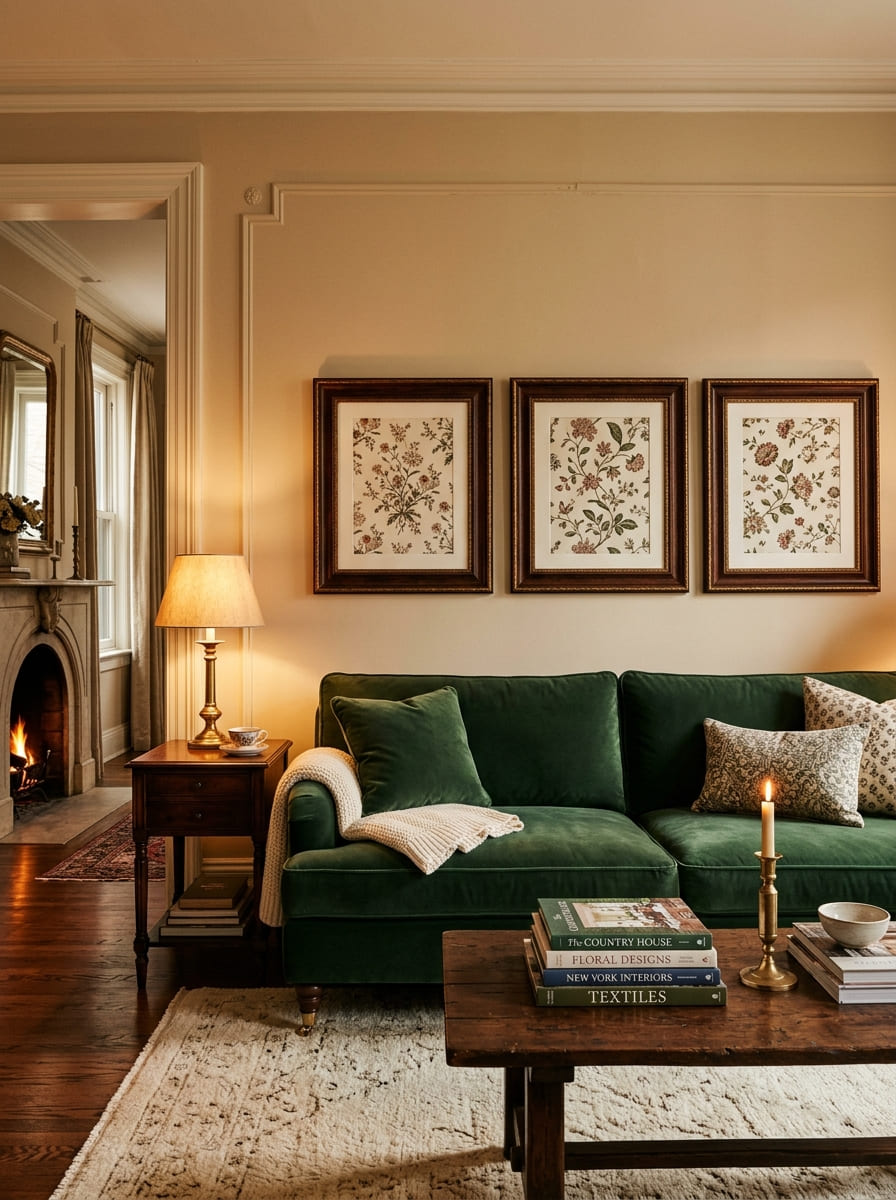
Framing vintage fabric prints is one of the most underrated ways to create sophisticated, museum-quality wall decor on a small budget. Antique floral, paisley, or botanical fabrics look stunning behind glass in quality frames. I’ve noticed that even a single framed vintage textile changes a room’s perceived elegance dramatically.
Framed fabric art suits traditional living rooms, formal dining rooms, and bedroom gallery walls beautifully. You find beautiful vintage fabrics at thrift stores, estate sales, and online vintage shops for just a few dollars. The frames do the heavy lifting visually.
- Thrifted fabric becomes gallery art
- Adds vintage textile wall decor charm
- Works in classic and eclectic interiors
- Mix frame sizes for visual interest
- Budget-friendly and highly elevated
The key to making framed fabric look intentional is choosing frames that echo another metal or wood tone already present in the room. When the frames connect to your existing hardware or furniture, the whole display looks planned and cohesive.
That’s why many interior decorators use this technique in transitional homes — spaces that blend old and new aesthetics. You honor heritage craftsmanship while maintaining a fresh, modern sensibility. It’s a beautiful balance that very few other decor choices achieve so naturally.
Fabric Panels With Curtain Rods
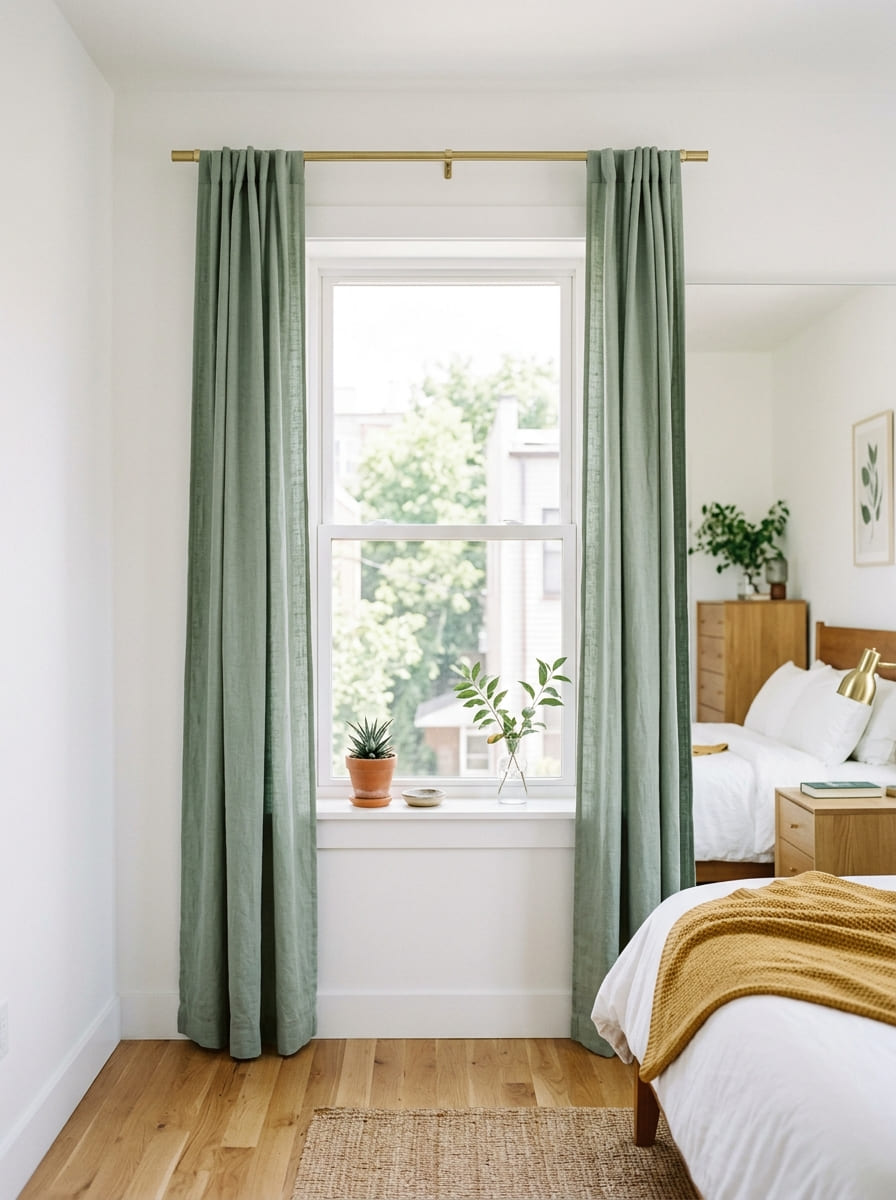
Hanging fabric panels on curtain rods creates a soft, architectural look that feels halfway between window treatment and wall art. The vertical panels draw the eye upward, making ceilings appear taller. I’ve tried this in rooms with low ceilings, and the difference in perceived height is remarkable.
This fabric wall idea suits narrow bedrooms, hallways, and any room where you want to add height and softness simultaneously. You choose fabric in a color that complements your existing palette and let the natural drape do the styling work.
- Creates visual height in small rooms
- Soft fabric adds warmth to walls
- Easy to swap seasonally
- Works as rental-friendly wall decor
- Elegant DIY wall panel solution
The slim curtain rod becomes part of the aesthetic when you choose brass, matte black, or brushed nickel finishes. Each metal tone creates a distinctly different mood — brass feels warm and traditional, while matte black reads modern and bold.
In my experience, sage, warm white, and dusty rose fabrics work best for this style because they add color without competing with other room elements. You get a calming, gallery-like effect that makes even the most basic apartment wall look intentionally designed.
Tie-Dye Fabric Art Panel
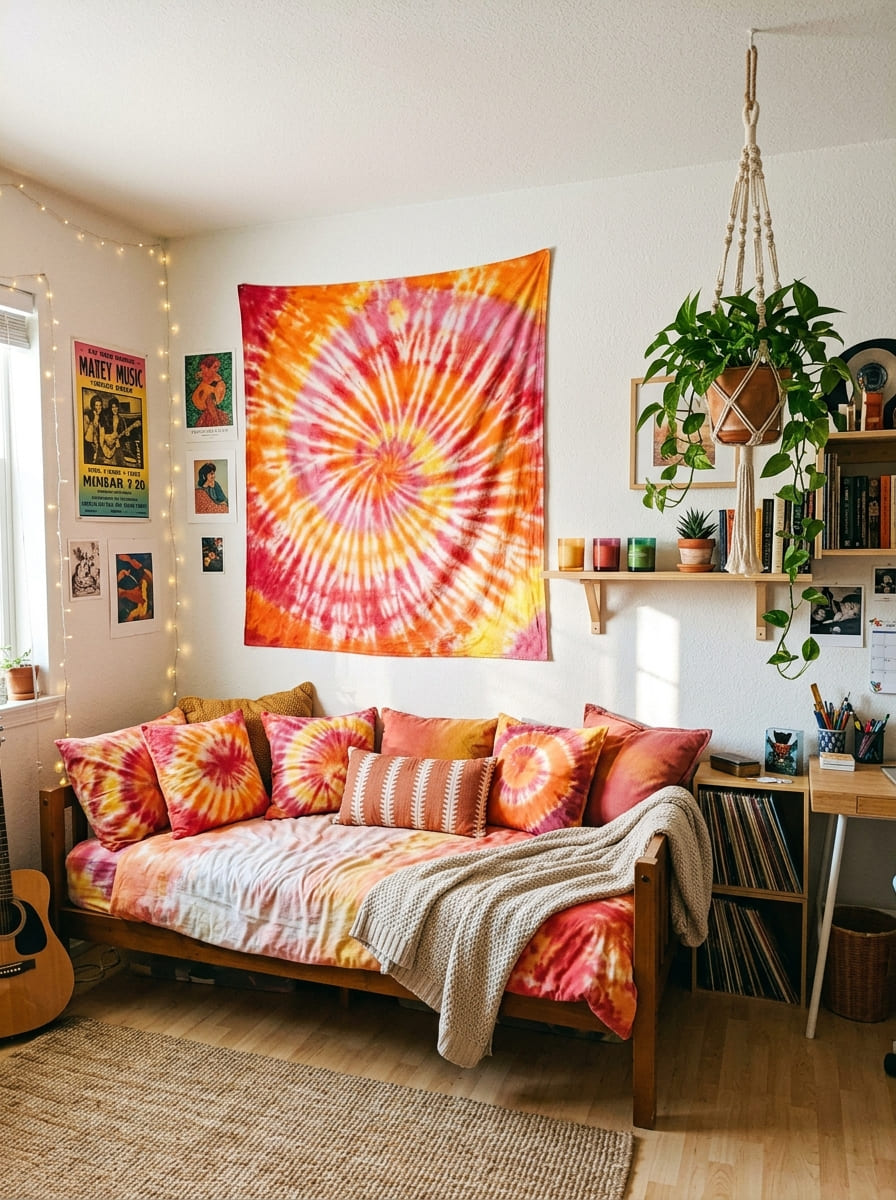
Tie-dye fabric panels bring bold, joyful energy to walls that desperately need personality. The swirling, unpredictable patterns make every single piece completely one-of-a-kind. I’ve seen this style work beautifully in teen bedrooms, creative studios, and playful living rooms that celebrate color without apology.
Tie-dye wall panels suit bright, eclectic rooms, studio apartments, and creative workspaces perfectly. You stretch the fabric over a canvas frame or mount it freely on a wooden dowel. The saturated colors create an instant focal point on any wall.
- Adds bold, joyful color to rooms
- Each piece is completely unique
- Perfect DIY fabric art for teens
- Pairs with neutral furniture easily
- Easy beginner tie-dye project
The secret to making tie-dye look sophisticated rather than messy is sticking to a two or three-color palette. When the colors relate to each other harmoniously — like coral, mustard, and cream — the result feels artistic rather than chaotic.
That’s why many art teachers and craft bloggers recommend the sunset color family as a starting point. Orange, pink, and yellow blend naturally and photograph beautifully for Pinterest sharing. You end up with wall art that looks intentional, handcrafted, and genuinely vibrant.
Felt Letter Board Fabric Art
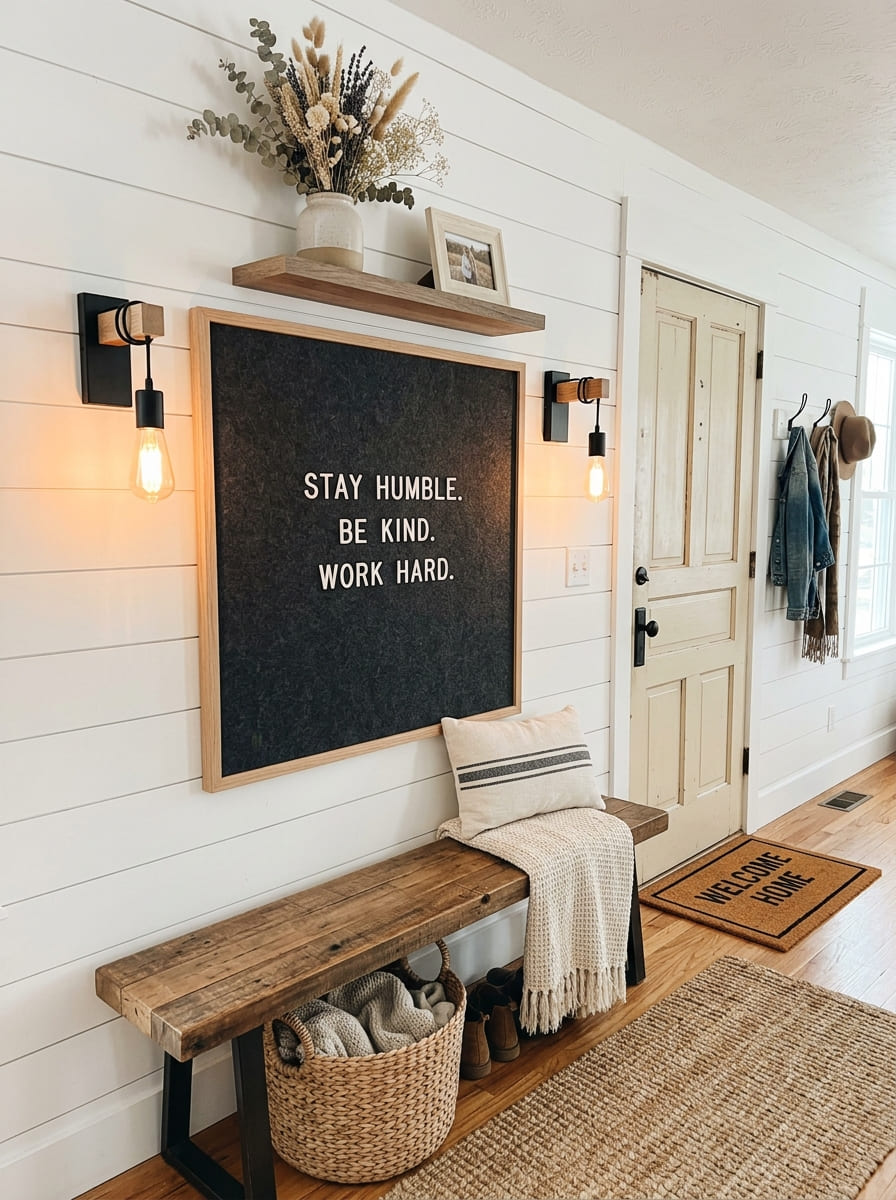
A felt letter board combines typography, texture, and personal expression in one practical wall piece. The dark felt background makes white letters pop with clean, graphic clarity. I’ve noticed that homes with letter boards in entryways feel warmer and more welcoming from the very first step inside.
Felt letter boards suit entryways, kitchens, home offices, and nurseries where short messages add daily inspiration. You change the quote or message weekly without touching a single nail. That flexibility makes it one of the most interactive DIY wall art ideas available.
- Changes message anytime you want
- Adds personal touch to any room
- Works as motivational home wall decor
- Perfect for entryways and kitchens
- Family-friendly and highly customizable
Beyond motivation, letter boards serve a practical daily function. You use them for grocery lists, family announcements, birthday countdowns, or seasonal greetings. The felt material keeps letters locked in place securely so nothing shifts or falls throughout the day.
In my experience, pairing a letter board with warm side lighting dramatically improves its visual impact. The soft shadows created by letters on textured felt give the whole piece a dimensional, gallery-quality appearance. It stops feeling like a novelty and starts feeling like intentional decor.
Fabric Origami Wall Sculpture
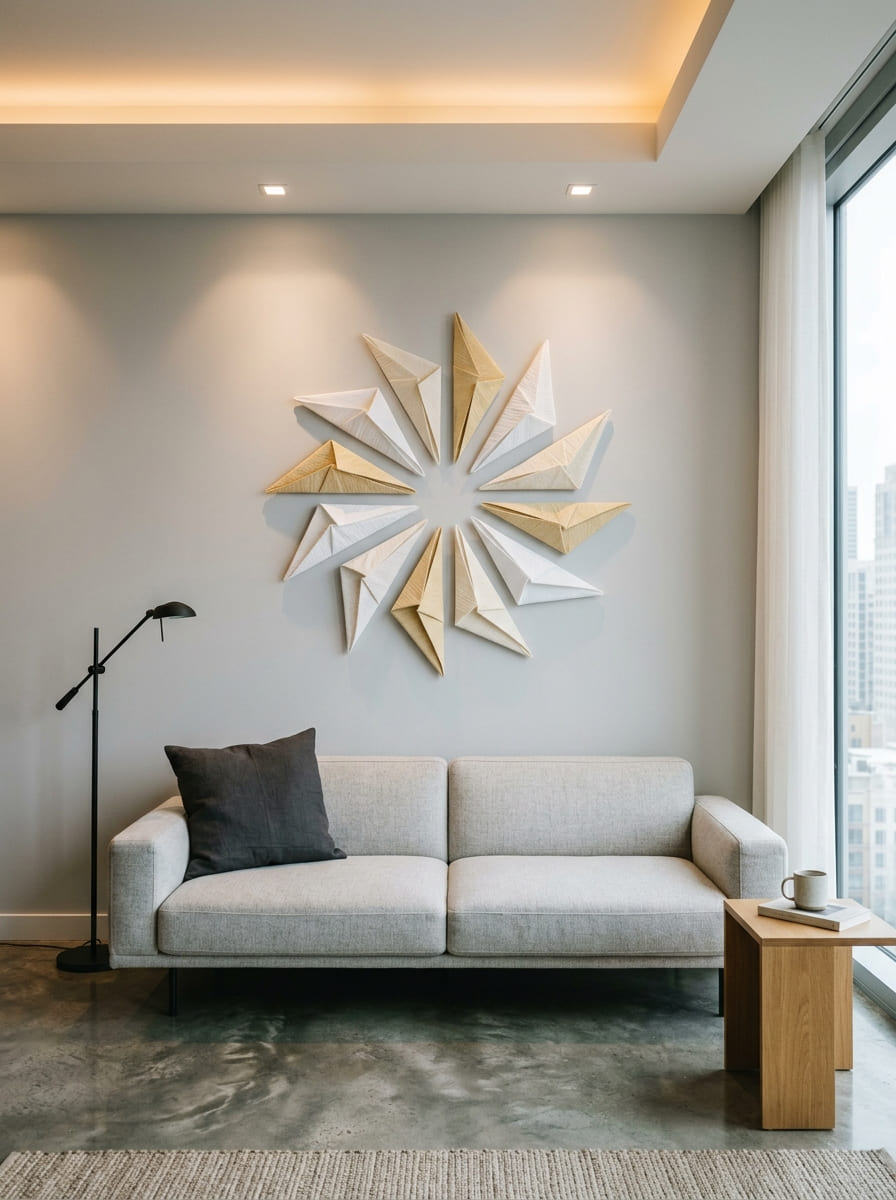
Fabric origami wall sculptures create three-dimensional art that casts shadows and shifts visually throughout the day. Each folded fabric shape catches light differently depending on the angle, making the wall feel alive. I’ve seen this style completely redefine plain, flat walls in modern apartments with very little effort.
Fabric origami installations suit modern living rooms, home offices, and open-concept spaces where architectural interest matters. You mount individual folded pieces in geometric arrangements using simple adhesive strips or small nails. The result reads more like installation art than typical home decor.
- Adds 3D dimension to flat walls
- Geometric fabric art for modern homes
- Creates dynamic shadow and light play
- Customizable arrangement and spacing
- White and gold tones suit most rooms
The beauty of this approach is total scalability. You can start with 6 pieces and expand the installation over time as you fold more shapes. Each new piece integrates naturally because the geometric logic connects every element visually.
That’s why many modern decorators use fabric origami as a slow-build feature wall project. You add pieces over weeks or months, and the wall evolves gradually. You never feel overwhelmed by a single large project because the installation grows at your own comfortable pace.
Kantha Stitch Fabric Art
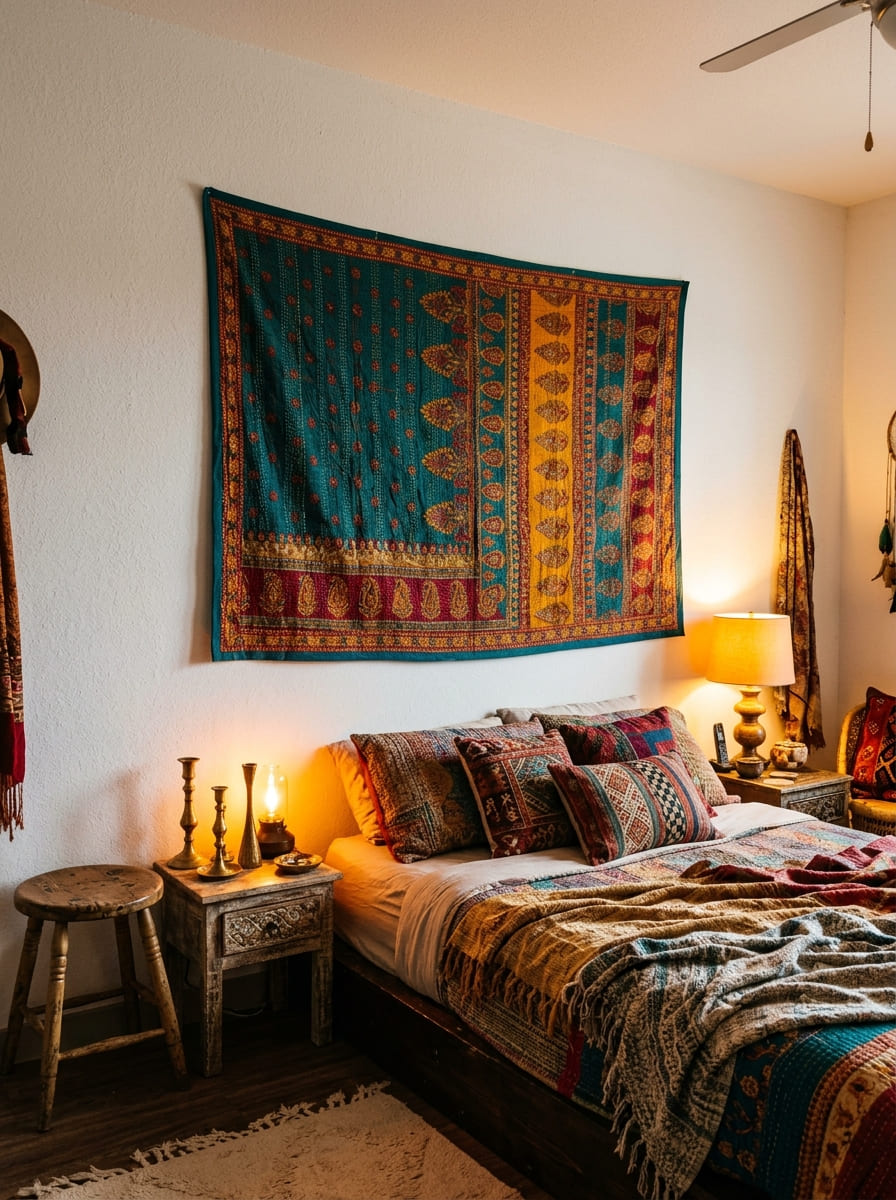
Kantha stitch fabric art brings centuries of hand-stitching tradition straight onto your wall. The dense running stitches create a subtly rippled texture that catches light beautifully. I’ve seen a single Kantha panel turn a plain white wall into the most talked-about feature in an entire home.
Kantha panels suit eclectic bedrooms, bohemian living rooms, and globally inspired spaces perfectly. The rich jewel tones add vibrant color depth without requiring any paint or renovation. You get world-class textile artistry displayed as intentional, meaningful wall decor.
- Adds global textile art to walls
- Rich jewel tones deepen room color
- Pairs with brass and wood accents
- Perfect boho fabric wall decor piece
- Lightweight and simple to hang
The Kantha tradition originated in South Asia, where fabric scraps were layered and stitched together for warmth and utility. Displaying this textile on your wall honors that craftsmanship while giving your home a sophisticated, traveled aesthetic.
That’s why many interior stylists recommend Kantha panels for rooms that feel sterile or personality-free. You introduce culture, color, and texture in a single decision. The room immediately feels like it belongs to someone with genuine taste and curiosity about the world.
Fabric Stencil Wall Mural
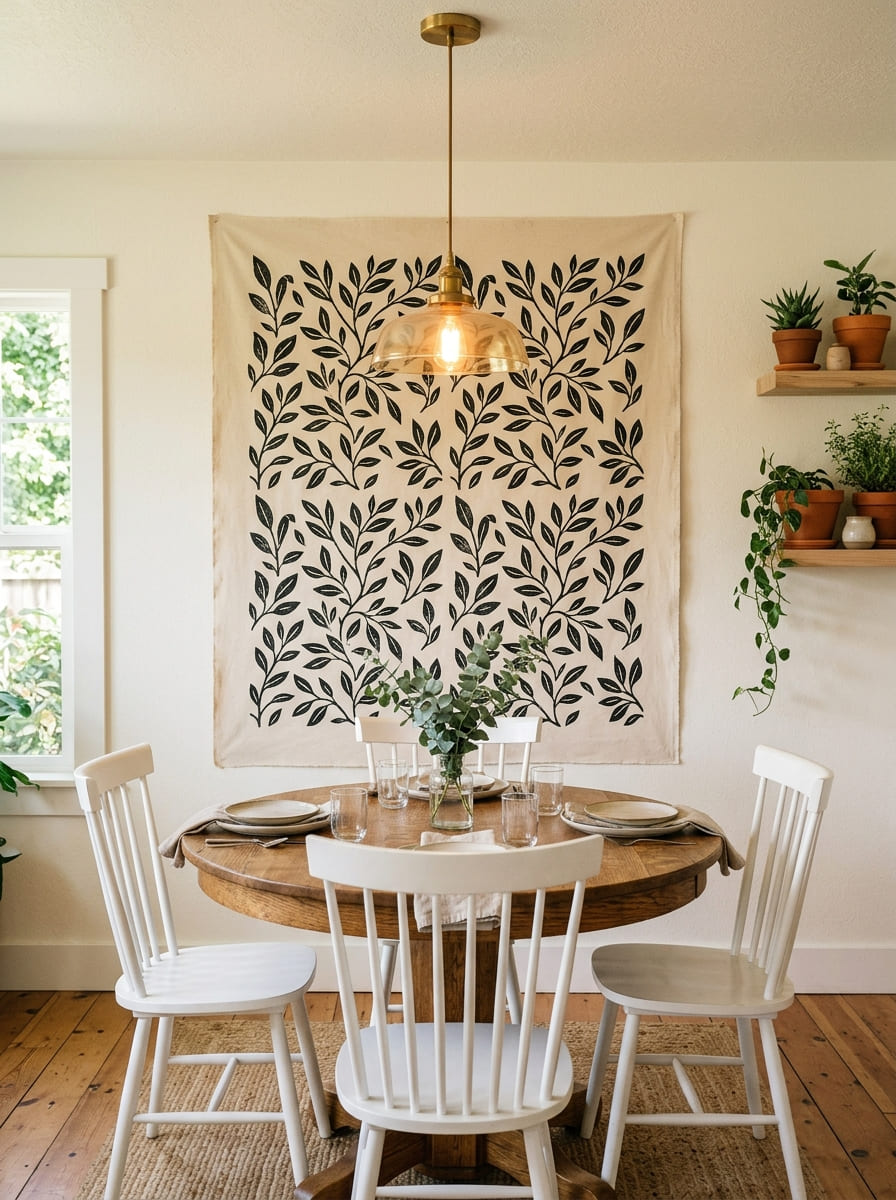
Stenciling directly onto fabric creates a custom wall mural without touching a single painted surface. You choose any pattern — geometric, botanical, abstract — and repeat it across a large fabric canvas. I’ve noticed this technique gives rooms a designer-wallpaper look at a fraction of the actual wallpaper cost.
Fabric stencil murals suit dining rooms, hallways, and accent walls in living spaces beautifully. The flat-mounted fabric reads like artwork rather than wallpaper, which makes the whole room feel more curated and intentional. You can remove it completely when you move.
- Custom pattern without painting walls
- Perfect renter-friendly mural solution
- Botanical patterns add natural charm
- Easy fabric stenciling DIY project
- Works in dining and living rooms
Choosing a stencil pattern that echoes another element in your room ties the whole space together. A leaf pattern looks brilliant in a dining room surrounded by real plants. A geometric stencil suits a minimalist home office where clean lines matter most.
In my experience, black ink on cream or natural linen fabric produces the sharpest, most graphic result. The contrast is bold enough to read from across the room yet refined enough to feel like gallery-quality handmade wall art. You get maximum visual impact with minimal materials.
Batik Fabric Framed Art
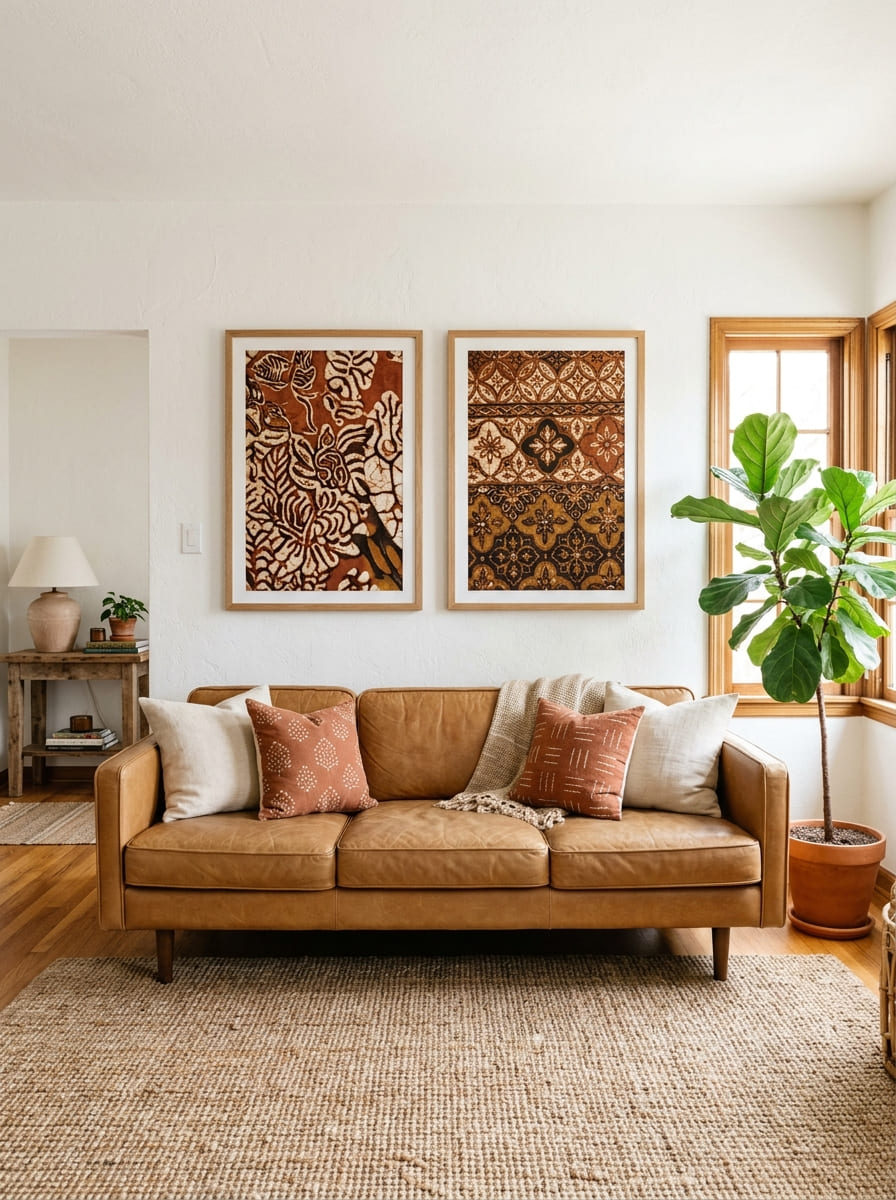
Batik fabric prints carry an ancient wax-resist dyeing tradition that produces patterns no machine can fully replicate. The slightly imperfect edges and organic color variations make each piece genuinely unique. I’ve noticed that framed batik panels instantly elevate a room’s artistic credibility without any effort.
Framed batik art suits living rooms, bedrooms, and reading nooks where warm, earthy tones feel most at home. You frame a single large piece as a solo statement or hang two matching prints side by side for balanced symmetry. Either approach looks polished and intentional.
- Earthy tones warm neutral rooms
- Framed textile wall decor idea
- Each batik print is truly unique
- Pairs with leather and wood furniture
- Affordable global-inspired wall art
The wax-resist process creates color blooms and organic edge effects that feel almost watercolor-like once framed. Those soft, painterly qualities make batik fabric especially beautiful behind glass in a clean frame. The glass adds a gallery-quality finish that elevates the textile dramatically.
That’s why many art lovers choose batik prints as an alternative to expensive original paintings. You get genuine handcrafted artistry at a price that fits a realistic home decorating budget. Your walls feel cultured, considered, and completely original at the same time.
Sheer Fabric Window Wall Art
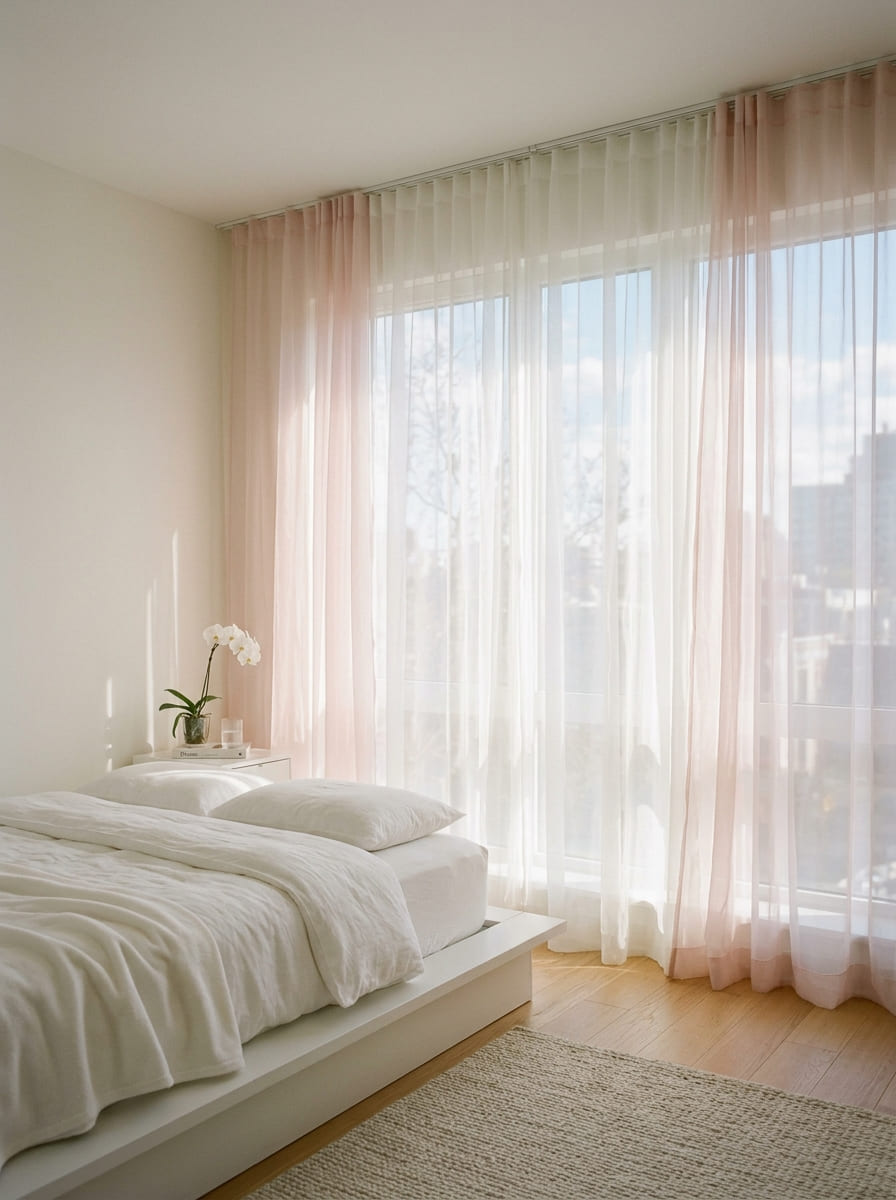
Sheer fabric panels hung wall-to-wall create a dreamy, glowing backdrop that transforms a bedroom into something that feels almost cinematic. The light passes through the translucent fabric, casting a soft, diffused glow across the entire room. In my experience, no single decor decision changes a bedroom’s atmosphere as dramatically as this one.
Sheer wall panels suit romantic bedrooms, photography studios, meditation spaces, and any room where soft, filtered light matters deeply. You hang them from a simple ceiling rod or tension wire. The visual effect is ethereal, luxurious, and genuinely stunning.
- Creates soft glowing room backdrop
- Perfect romantic bedroom wall idea
- Sheer fabric filters light beautifully
- Works for photography and content creation
- Easy ceiling-mounted DIY installation
The color of the sheer fabric determines the entire mood of the space. White sheers create a clean, spa-like calm. Blush sheers add romance and warmth. Dusty blue sheers evoke a cool, coastal serenity. You essentially choose the emotion of the room with one fabric decision.
That’s why many content creators and bloggers use sheer fabric walls specifically for photography backdrops. The soft, glowing light quality makes every photo look professionally lit. You get a beautiful room and a functional creative workspace at the same time.
Fabric Bunting Wall Display
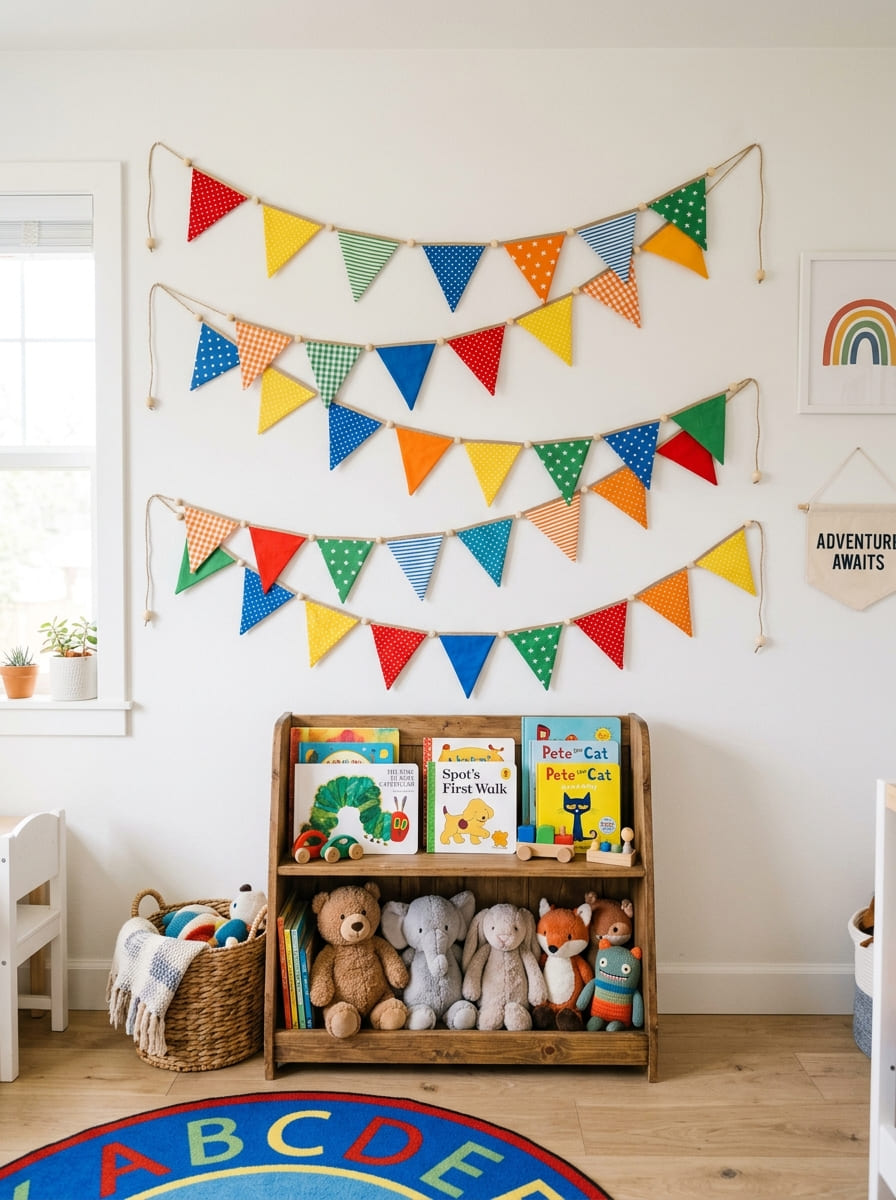
Fabric bunting adds instant color, celebration, and playful energy to walls that need joy rather than minimalism. Each triangular flag brings a different print, pattern, and texture into the same display. I’ve seen bunting work brilliantly in children’s rooms, party spaces, and any home corner that simply needs more happiness.
Fabric bunting suits nurseries, playrooms, kids’ bedrooms, and party-ready living areas beautifully. You string handmade flags across a wall in single or layered rows for a festive, hand-crafted look. The color combinations you choose can grow with your child’s changing tastes.
- Adds instant color and playful energy
- Easy DIY kids’ room wall decor
- Mix fabric prints for visual richness
- Perfect for nurseries and playrooms
- Reusable for parties and celebrations
Making bunting is one of the simplest fabric DIY projects available. You cut triangles from fabric scraps, fold them over a length of twine, and sew or glue them in place. The entire project takes one afternoon and costs almost nothing if you use leftover fabric.
In my experience, mixing three to four complementary fabric prints creates the richest, most visually engaging bunting result. A single-color bunting looks flat, while a mix of patterns creates depth and movement. Your wall gains texture, story, and genuine handmade charm all at once.
Fabric Wrapped Canvas Abstract
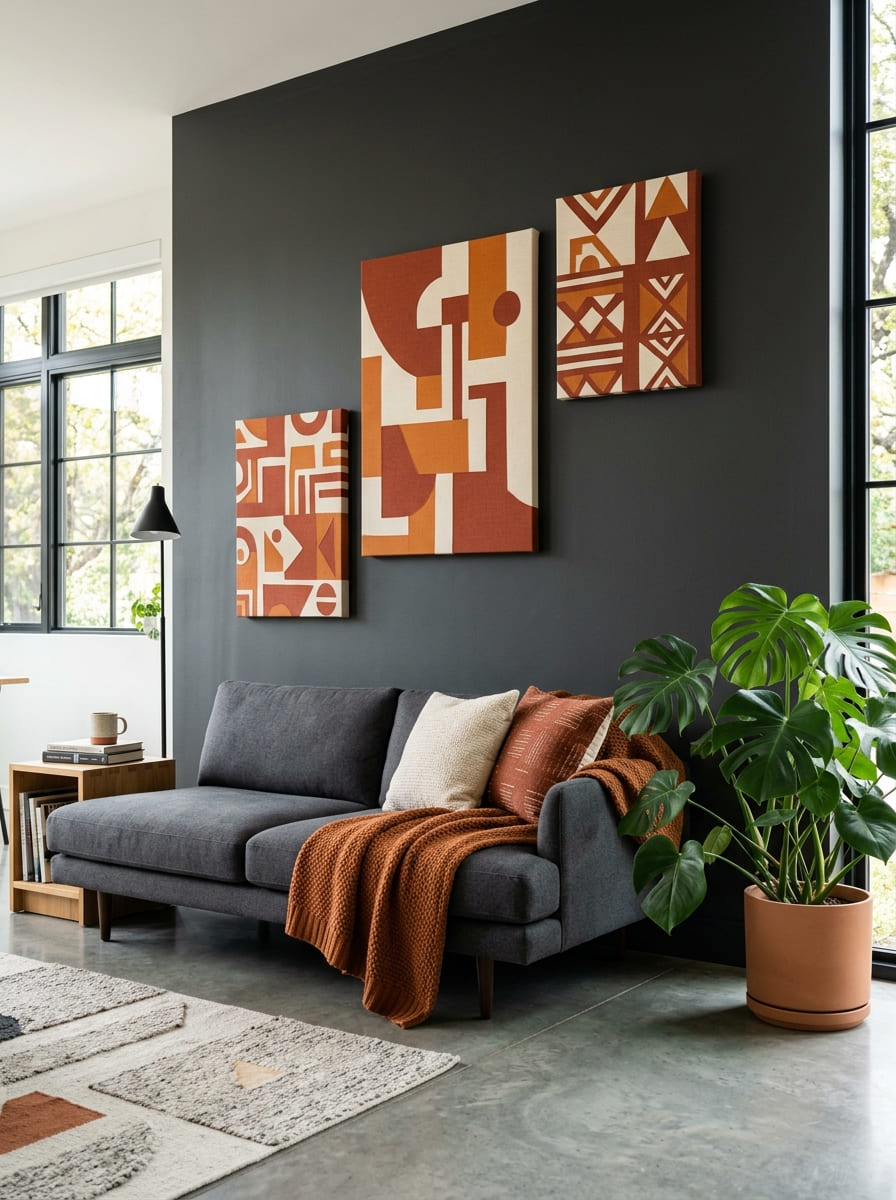
Wrapping different fabrics tightly around canvas frames creates abstract wall art that feels deliberately curated and visually bold. Each fabric’s color and texture becomes the artwork itself — no painting skill required. I’ve tried this with solid-color fabrics and bold prints, and both deliver completely different yet equally striking results.
Fabric-wrapped canvas panels suit modern living rooms, home offices, and any space where bold color blocking creates a strong focal point. You hang three panels in varying sizes for a gallery arrangement that reads like professional abstract art. The effect is dramatic and surprisingly affordable.
- Bold abstract art without painting
- Fabric-wrapped canvas wall decor idea
- Mix sizes for gallery arrangement
- Terracotta and cream suit modern rooms
- Quick weekend DIY wall art project
The key to making this idea look intentional is choosing fabrics that share at least one color tone. When your three canvases feel related — not identical — the gallery reads as a cohesive series rather than random pieces thrown together.
That’s why many home decorators use this technique to introduce a new accent color into a room. You wrap one canvas in the new color and two in supporting neutrals. The room absorbs the new tone gradually and naturally without feeling overwhelmed or overhauled.
Weaved Ribbon Wall Grid
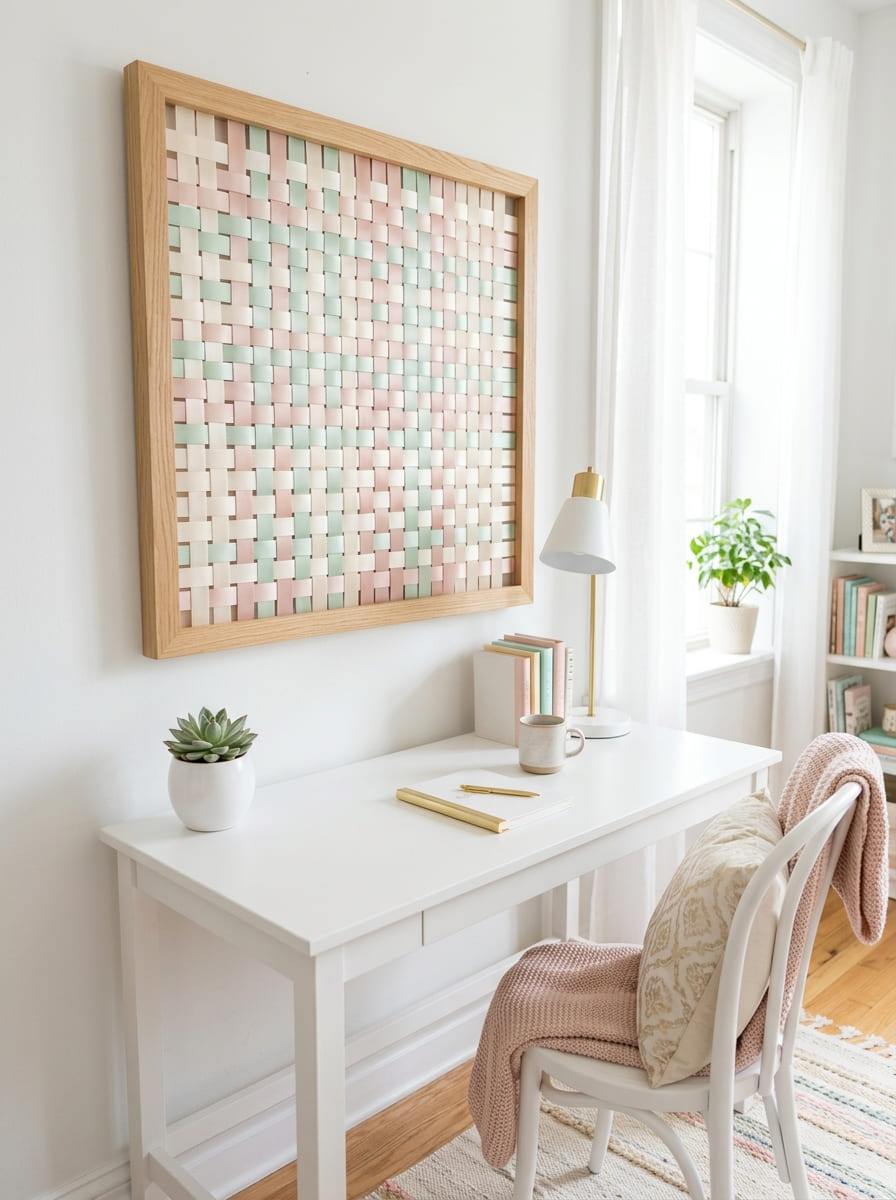
A woven ribbon grid combines function and beauty in one single wall piece. You weave satin or grosgrain ribbons across a square wooden frame to create a dense, colorful textile surface. I’ve seen this used as both decorative wall art and a practical memo board — and it succeeds brilliantly at both.
Ribbon grids suit home offices, dressing rooms, teenage bedrooms, and vanity walls perfectly. You tuck photos, notes, cards, and small mementos between the ribbon intersections. The wall becomes a living, constantly evolving display of the things that matter most to you.
- Doubles as art and memo board
- Perfect feminine bedroom wall decor
- Satin ribbon adds luxurious texture
- Holds photos and keepsakes securely
- Custom size fits any wall space
Choosing ribbon colors that match your room’s existing palette keeps the grid feeling like intentional decor rather than a craft project. Blush and ivory suit romantic bedrooms. Navy and white suit coastal or preppy spaces. Sage and cream suit natural, organic-inspired rooms.
In my experience, this is one of the most genuinely useful DIY fabric wall art projects you can make. It solves the decorating need and the organization need at the same time. You look at it daily and always find something new to notice or appreciate within the display.
Printed Sari Fabric Wall Panel
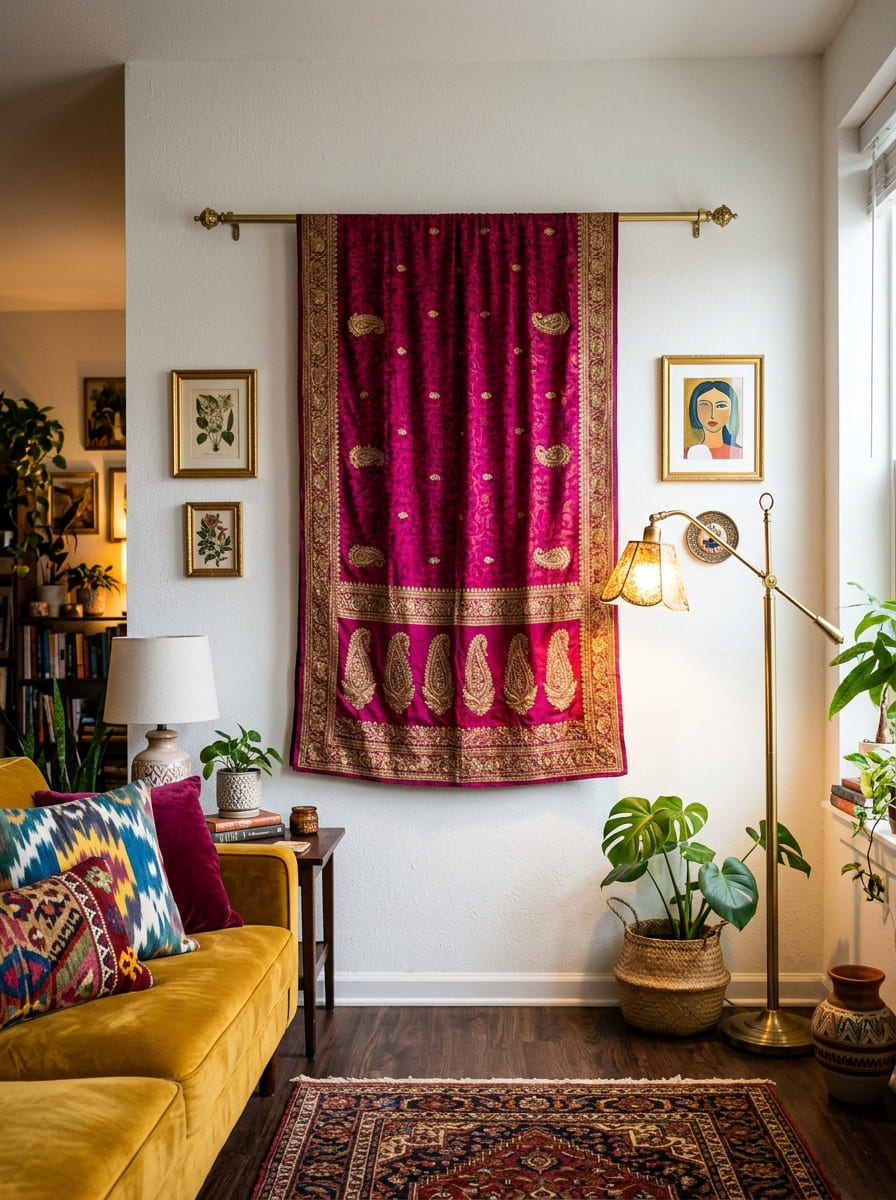
Printed sari fabric produces some of the most breathtakingly beautiful wall art imaginable — and the fabric itself does all the work. The intricate woven patterns, rich jewel colors, and gold or silver border details create a piece that looks like it belongs in a luxury boutique. I’ve noticed that even a small section of sari fabric commands a room entirely.
Sari wall panels suit maximalist living rooms, romantic dining areas, and globally inspired bedrooms where rich color and texture reign. You mount the fabric between two slim brass curtain rods for a clean, gallery-quality presentation. The gold borders catch candlelight stunningly in evening settings.
- Rich colors create instant focal point
- Silk sari adds luxurious wall texture
- Perfect maximalist fabric wall art piece
- Brass rods complement gold embroidery
- Works beautifully in evening lighting
The sheer variety of sari prints available means you can find a fabric that matches virtually any existing room palette. Deep teal saris suit jewel-toned rooms. Ivory and gold saris suit neutral, traditional spaces. Magenta and orange saris electrify eclectic, bold interiors.
That’s why many decorators with a love of global textiles keep searching for the perfect sari panel long after their room is finished. The fabric is so beautiful that finding one feels like discovering a piece of wearable art. Displaying it on your wall simply shares that discovery with everyone who visits.
Fabric Collage Art Panel
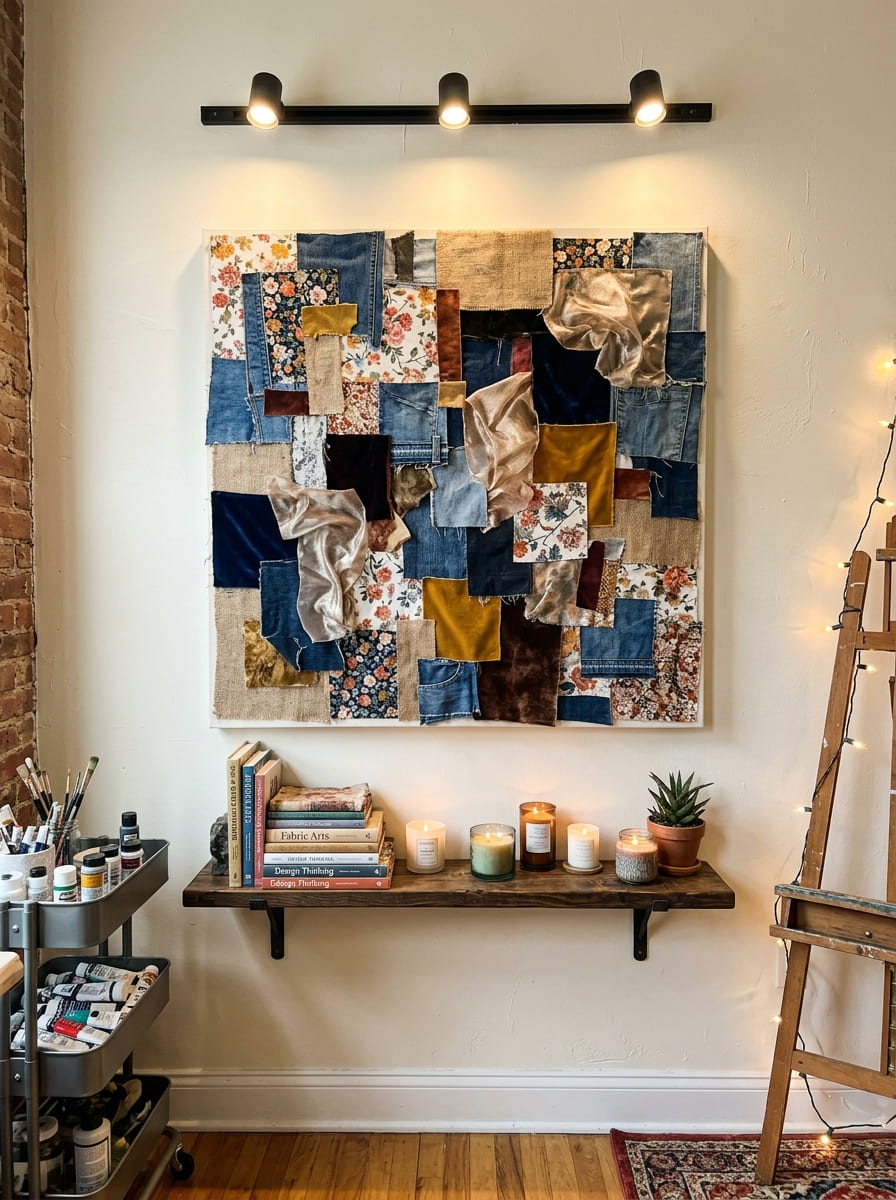
Fabric collage panels turn leftover fabric scraps into bold, museum-worthy mixed-media wall art. The contrast between different textures — rough burlap against smooth velvet, sheer organza against stiff denim — creates visual complexity that grows more interesting the longer you look. I’ve tried this with random fabric offcuts and the result genuinely surprised me.
Fabric collage suits creative studios, eclectic living rooms, teen bedrooms, and any space that celebrates artistic expression over minimalist order. You arrange fabric pieces intuitively across a canvas and adhere them with fabric glue or Mod Podge. No artistic training required — only creative instinct.
- Recycles fabric scraps beautifully
- Mixed texture DIY wall art idea
- Each panel is completely original
- Great creative project for teens
- Works in eclectic and maximalist rooms
The trick to making a collage feel intentional rather than chaotic is introducing a consistent color thread throughout. If every fabric piece contains at least one shared tone — say, warm amber running through denim, velvet, and organza — the whole panel reads as a cohesive composition.
In my experience, metallic fabric scraps added sparingly across a collage create the perfect finishing touch. They catch the light and add a luxurious shimmer that elevates the entire mixed-media surface. Your wall becomes something people genuinely stop to study, not just glance at briefly.
Fabric Shadow Box Wall Art
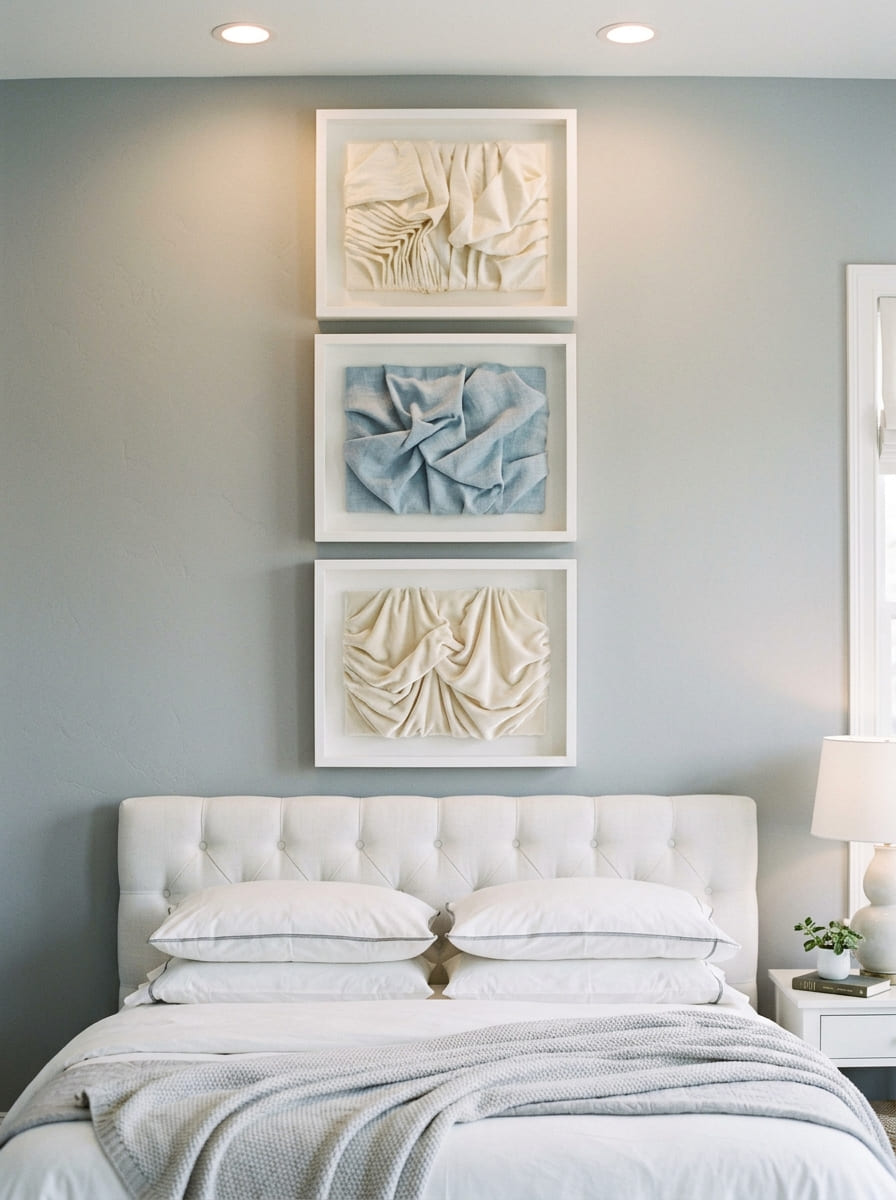
Shadow boxes turn gathered fabric into three-dimensional sculptural wall art that looks genuinely refined and gallery-worthy. The depth of the frame creates real shadows around the folded fabric, making each piece look like a small, framed textile sculpture. I’ve noticed this style impresses visitors more than almost any other DIY wall decor approach.
Fabric shadow boxes suit bedrooms, formal living rooms, and hallways where understated elegance matters most. You gather, pleat, or fold small fabric sections inside deep frames. The result combines the softness of textile with the clean structure of framed art.
- Creates 3D sculptural wall depth
- Elegant DIY fabric art for bedrooms
- Shadows add gallery-quality dimension
- Works in neutral and soft-toned rooms
- Ivory and velvet suit formal spaces
Choosing one fabric per shadow box — rather than mixing multiple fabrics — keeps the display refined and intentional. Three identical frames with three different but coordinating fabrics create a series that feels designed rather than decorated.
That’s why many interior designers use fabric shadow boxes in master bedrooms specifically. The soft, gathered textiles add sensory warmth while the framing keeps everything structured and clean. You balance comfort and sophistication in a single wall display that costs surprisingly little to create.
Circular Fabric Hoop Wreath Art
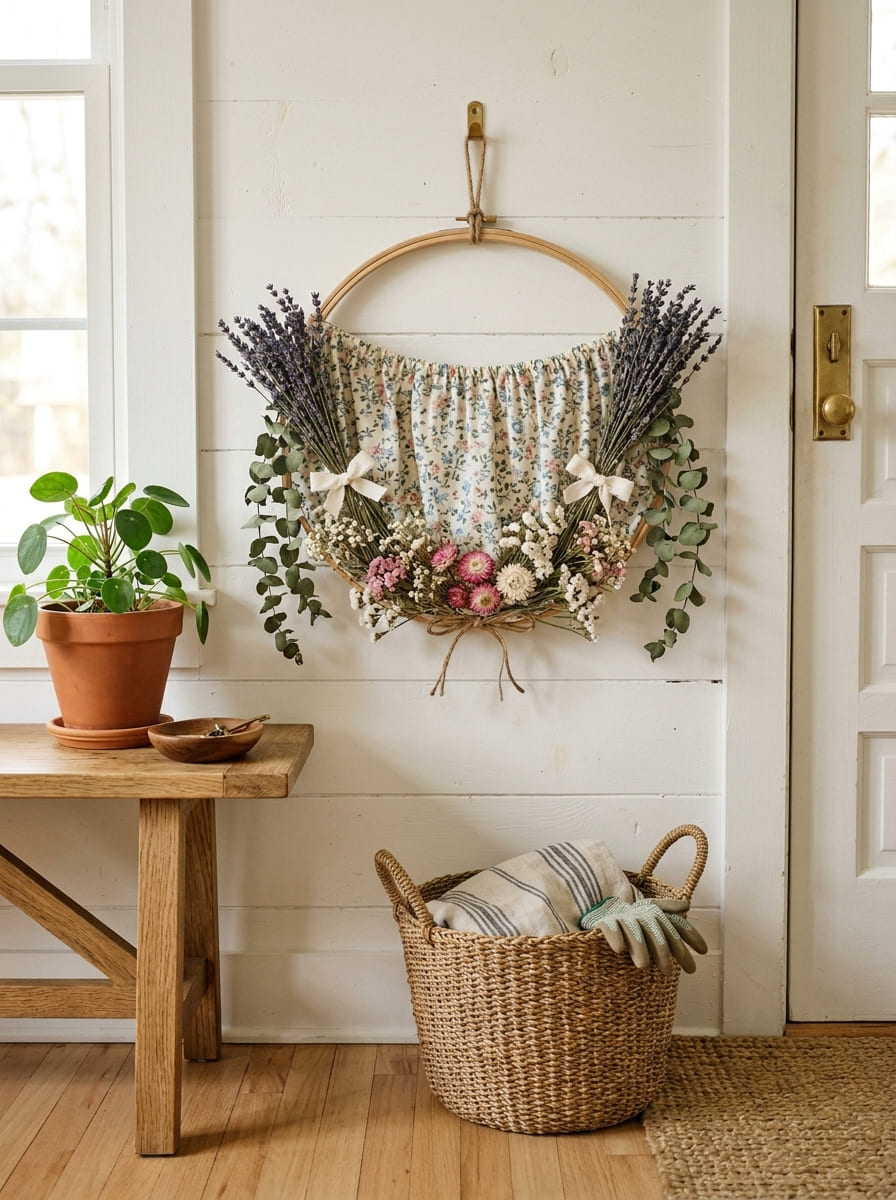
A circular fabric hoop wreath blends the structure of embroidery art with the organic beauty of a floral wreath. The round shape creates a natural focal point that draws the eye immediately. In my experience, hoop wreaths in entryways make guests feel genuinely welcomed before they even step fully inside.
Circular hoop wreaths suit entryways, front doors, living room accent walls, and kitchen walls beautifully. You combine gathered fabric with dried botanicals, ribbons, and seasonal accents. The result feels handcrafted, seasonal, and deeply personal all at once.
- Combines fabric art and botanicals
- Perfect entryway wall decor idea
- Circular shape adds visual balance
- Swap seasonal accents easily
- Cottage-core aesthetic instantly achieved
The seasonal swapping potential makes this one of the most versatile DIY fabric wall art ideas in this entire list. Spring calls for floral cotton and lavender. Autumn suits plaid flannel with dried orange slices. Winter asks for velvet ribbon and pine sprigs.
That’s why many home decorators keep the base hoop permanently and simply refresh the accents four times yearly. You invest once in the hoop and fabric base, then spend just a few dollars updating the seasonal details. The entryway always feels fresh, current, and lovingly tended.
Fabric Dreamcatcher Wall Cluster
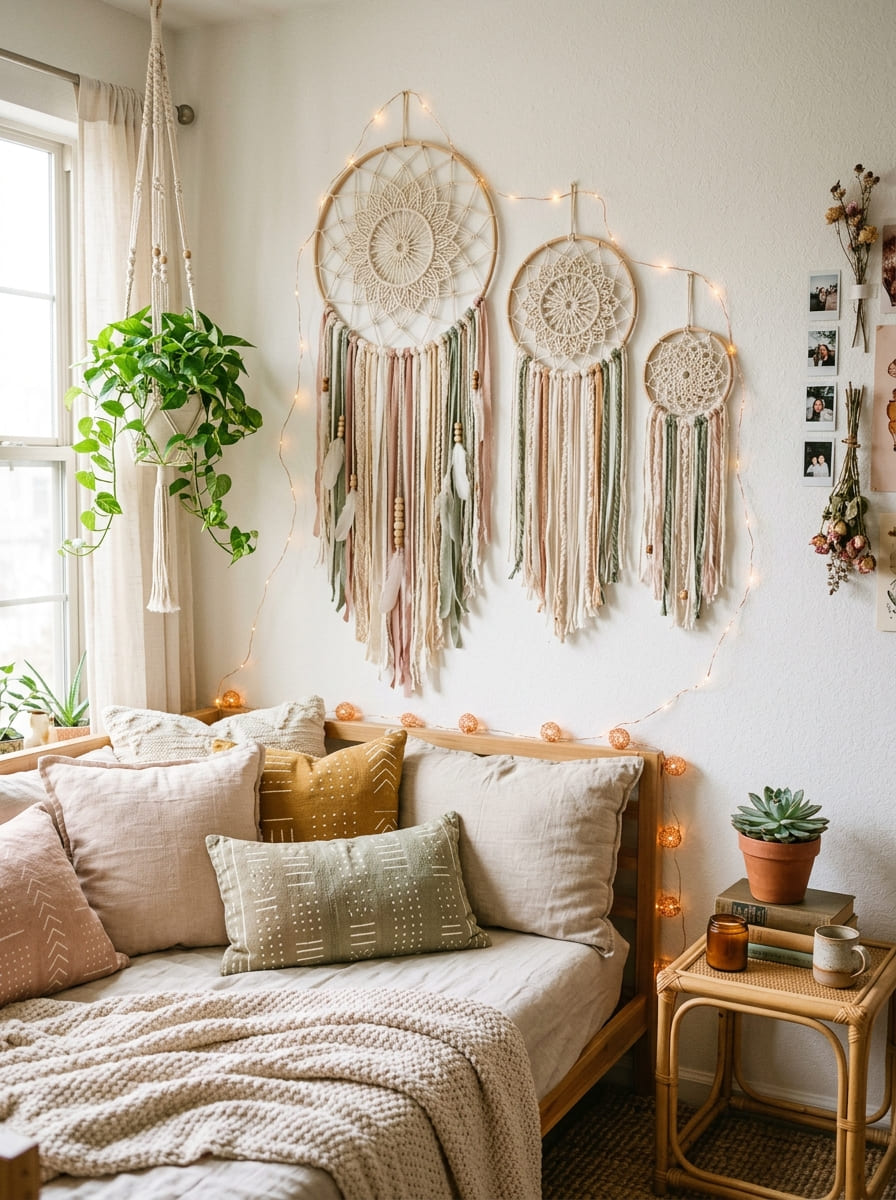
A dreamcatcher wall cluster adds layers of texture, movement, and spiritual warmth that few other decor choices can replicate. The long fabric fringe tails catch even the slightest breeze from an open window, giving your wall a subtle, living quality. I’ve seen this arrangement completely transform bare teen bedroom walls into something genuinely magical.
Dreamcatcher clusters suit teen bedrooms, reading nooks, meditation corners, and boho living rooms beautifully. You hang three pieces in graduated sizes — large in center, two smaller ones flanking it — for a balanced, intentional arrangement. The varied fringe lengths add beautiful visual rhythm to the display.
- Long fringe adds movement to walls
- Perfect boho teen bedroom wall decor
- Blush and sage tones suit soft rooms
- Three-piece cluster creates visual balance
- Handmade fabric art with spiritual charm
Making your own dreamcatcher frames from flexible willow branches or metal hoops gives each piece an organic, genuinely handcrafted character. You wrap the frame with cotton cord and attach fabric strips, ribbons, and yarn for the tails. No two pieces ever turn out identically.
That’s why many craft bloggers rank dreamcatcher clusters among the most rewarding DIY fabric wall art projects for beginners. The materials cost very little, the technique is forgiving, and the finished display looks far more complex and intentional than the process actually requires.
Loom-Woven Textile Panel
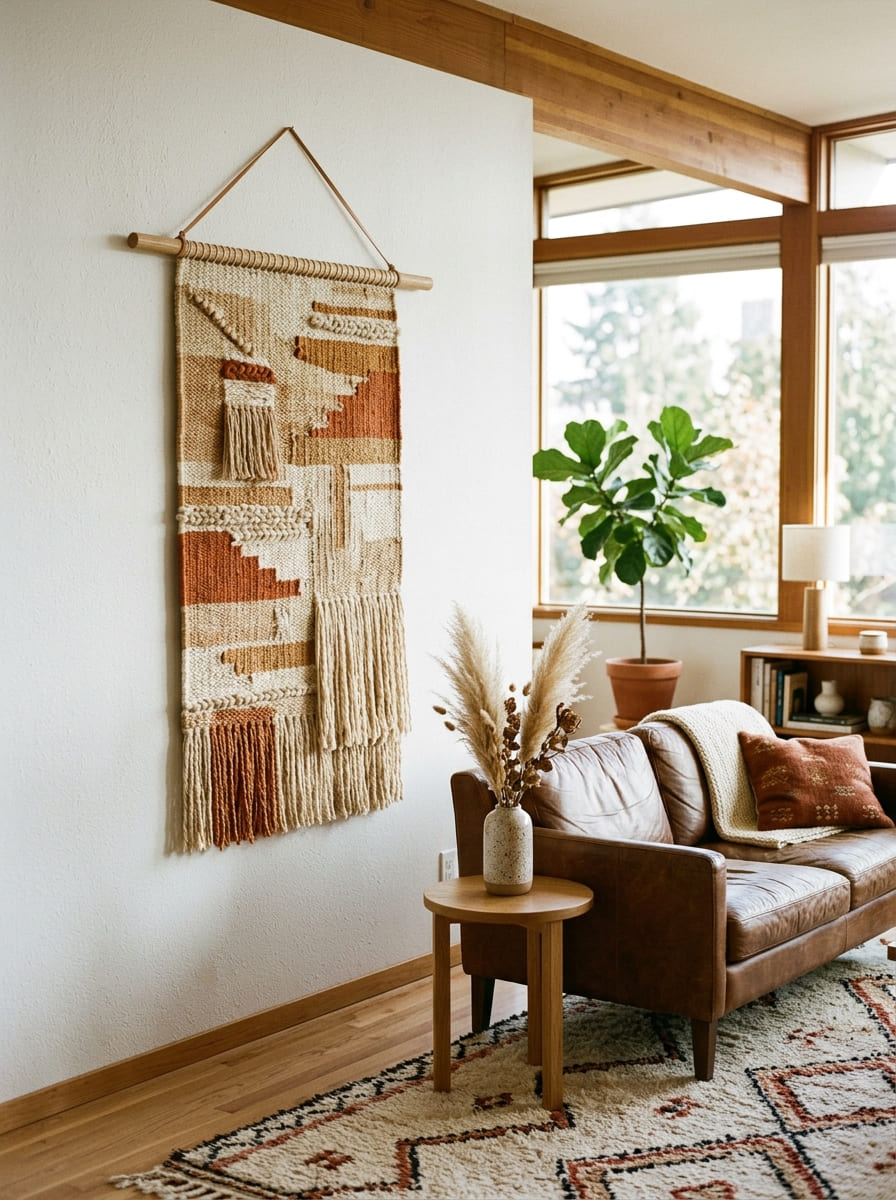
A loom-woven textile panel brings genuine artisan craftsmanship to your wall in a way that printed art simply cannot achieve. The layered yarn rows create rich horizontal texture that shifts in appearance depending on the lighting angle. I’ve noticed that rooms with loom-woven pieces always feel warmer, craftier, and more personally invested than rooms relying solely on framed prints.
Loom-woven panels suit minimalist living rooms, Japandi-inspired spaces, and mid-century modern interiors where natural materials and honest craftsmanship take center stage. You hang the panel on a smooth wooden dowel that doubles as part of the visual composition. The natural materials breathe warmth into even the most neutral room.
- Adds handcrafted artisan wall texture
- Warm wool tones deepen room coziness
- Pairs with leather and mid-century furniture
- Loom weaving beginner-friendly DIY project
- Natural yarn creates organic wall art
Frame looms are inexpensive and readily available at craft stores, making this one of the most accessible handmade wall art projects for complete beginners. You learn the basic over-under weaving rhythm within minutes. The meditative, repetitive process becomes enjoyable rather than tedious.
That’s why many home decorators describe loom weaving as both a craft and a form of relaxation. You create beautiful wall art while genuinely unwinding from a stressful day. The finished piece carries that calm, patient energy — and your room feels it every single time you enter.
Velvet Fabric Pinboard Art
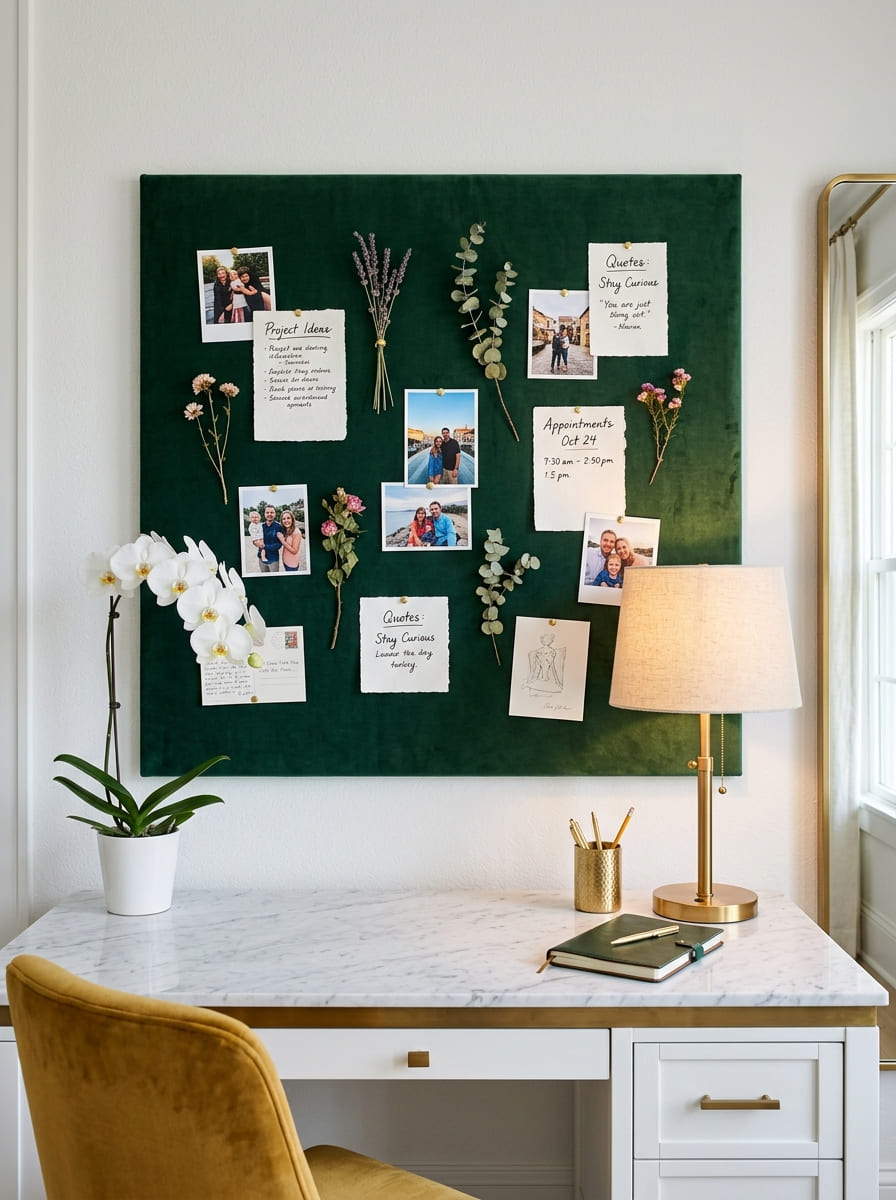
Velvet-covered pinboards turn a purely functional organizer into a luxurious wall decor feature. The deep, plush velvet surface adds richness and color depth that standard cork or linen boards simply cannot match. I’ve tried this in both home offices and dressing rooms, and the velvet version consistently looks more intentional, more elevated, and more designed.
Velvet pinboards suit home offices, dressing rooms, vanity walls, and creative studios where beauty and function need to coexist. You stretch velvet tightly over a foam-padded board and mount it directly on the wall. The gold pushpins sink into the velvet beautifully and hold items securely.
- Luxury velvet adds rich wall texture
- Functional and decorative wall art piece
- Deep green or navy velvet suits offices
- Gold pins complement velvet beautifully
- Solves wall organization stylishly
The color of velvet you choose sets the entire tone of the board and the room surrounding it. Forest green creates a sophisticated, library-like atmosphere. Dusty blush suits feminine dressing rooms. Charcoal velvet suits bold, dramatic creative studios with dark accent walls.
In my experience, a velvet pinboard is one of the rare DIY projects that looks more expensive than it actually costs. The materials — foam sheet, velvet fabric, a wooden frame — total under $30 at most craft stores. Your wall gains a feature piece that genuinely looks like a custom interior design decision.
Fabric Flower Wall Backdrop
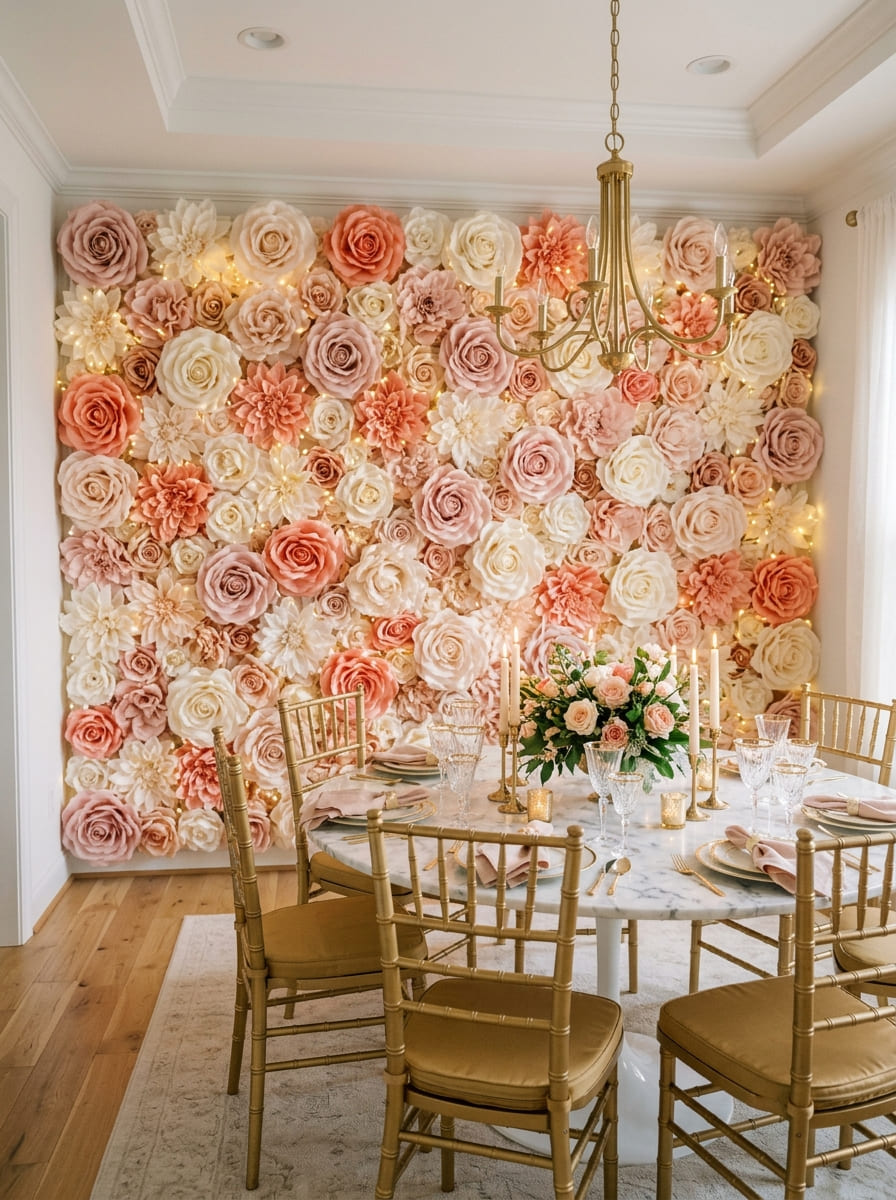
A fabric flower wall transforms any plain surface into a lush, romantic backdrop that looks straight from a luxury event venue. The three-dimensional handmade flowers create a depth and density that feels genuinely opulent. I’ve seen this style work as a permanent living room feature and as a special-occasion party backdrop — and it photographs stunningly in both contexts.
Fabric flower walls suit romantic dining rooms, master bedrooms, photography backdrops, and party spaces where maximum visual impact matters. You attach individually crafted fabric flowers in tight rows using hot glue on a fabric-covered foam panel. The result looks lavish but costs a fraction of fresh flower arrangements.
- Creates luxury floral wall art backdrop
- Perfect photography and party backdrop wall
- Blush and ivory suit romantic rooms
- Fabric flowers last indefinitely unlike fresh
- Great DIY fabric wall art project
Chiffon and satin fabrics produce the most realistic, billowing petal shapes for this style. Chiffon catches light softly and drapes like real petals. Satin adds a luxurious sheen that photographs beautifully under warm lighting. Mixing both fabrics within the same flower wall creates gorgeous dimensional variety.
That’s why many event stylists and wedding planners keep permanent fabric flower panels as reusable backdrops. You invest the time once and use the panel repeatedly for years. A well-made fabric flower wall actually improves with age as the blooms settle into a naturally layered arrangement.
Printed Fabric Map Art
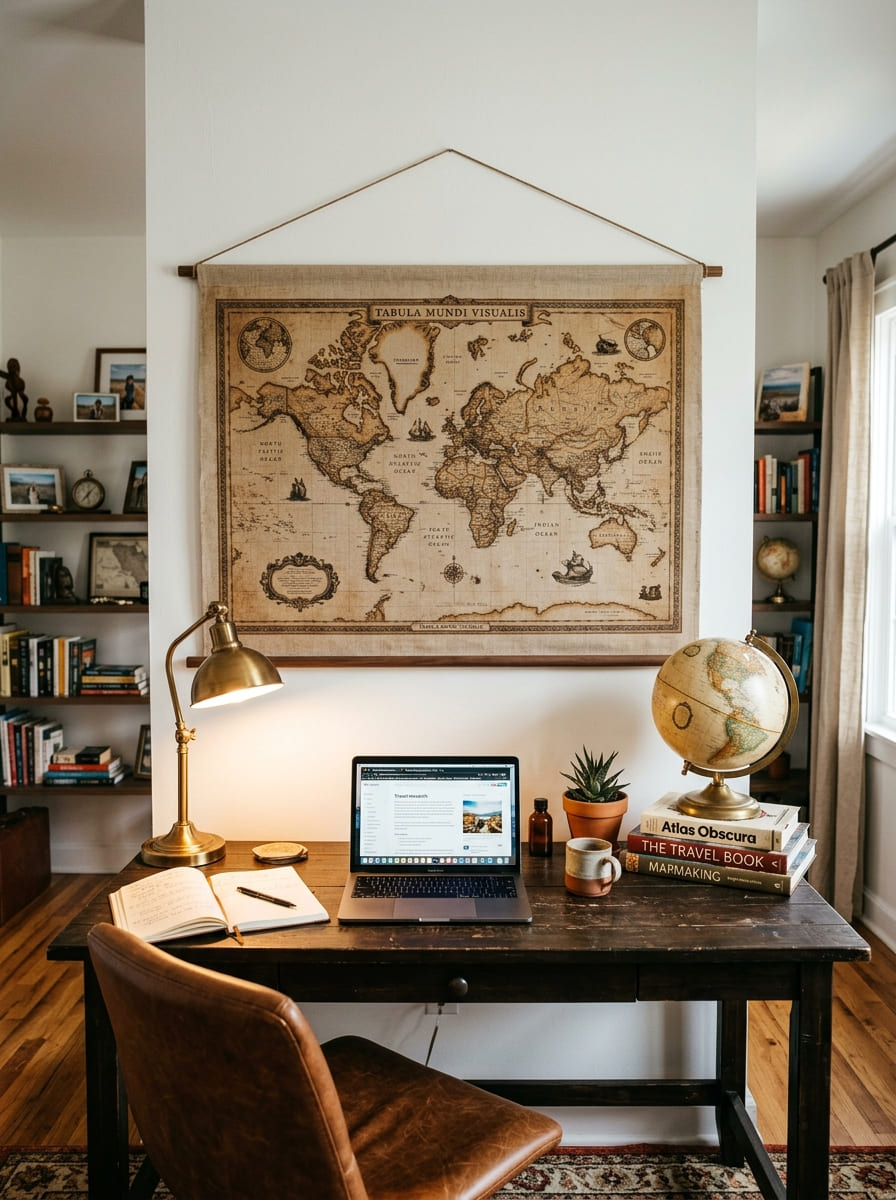
A printed linen fabric map brings geography, wanderlust, and intellectual warmth to a home office wall simultaneously. The aged, vintage-style printing on natural linen fabric looks far more sophisticated than a standard paper poster. I’ve noticed this piece type works as a conversation starter in virtually every home it occupies.
Fabric map art suits home offices, libraries, children’s learning rooms, and travel-themed living spaces beautifully. You mount the fabric between two wooden dowels for a clean, scroll-like presentation. The natural linen texture gives the map an heirloom quality that printed paper simply cannot replicate.
- Adds geographic warmth to office walls
- Linen fabric map looks vintage and rich
- Perfect home office wall decor idea
- Sparks travel conversations naturally
- Wood dowel mounting looks curated
You can find printable fabric maps at specialty print shops or order custom fabric prints online. Printing your favorite city map, a meaningful country, or a vintage world map at large scale creates a completely personalized piece. The room gains a story that belongs specifically to you.
That’s why many travel lovers and remote workers choose fabric maps as their primary home office wall art. The piece reflects personal history, curiosity, and ambition all at once. You look up from your desk and feel inspired rather than simply looking at generic decorative art.
Knit Fabric Wall Hanging
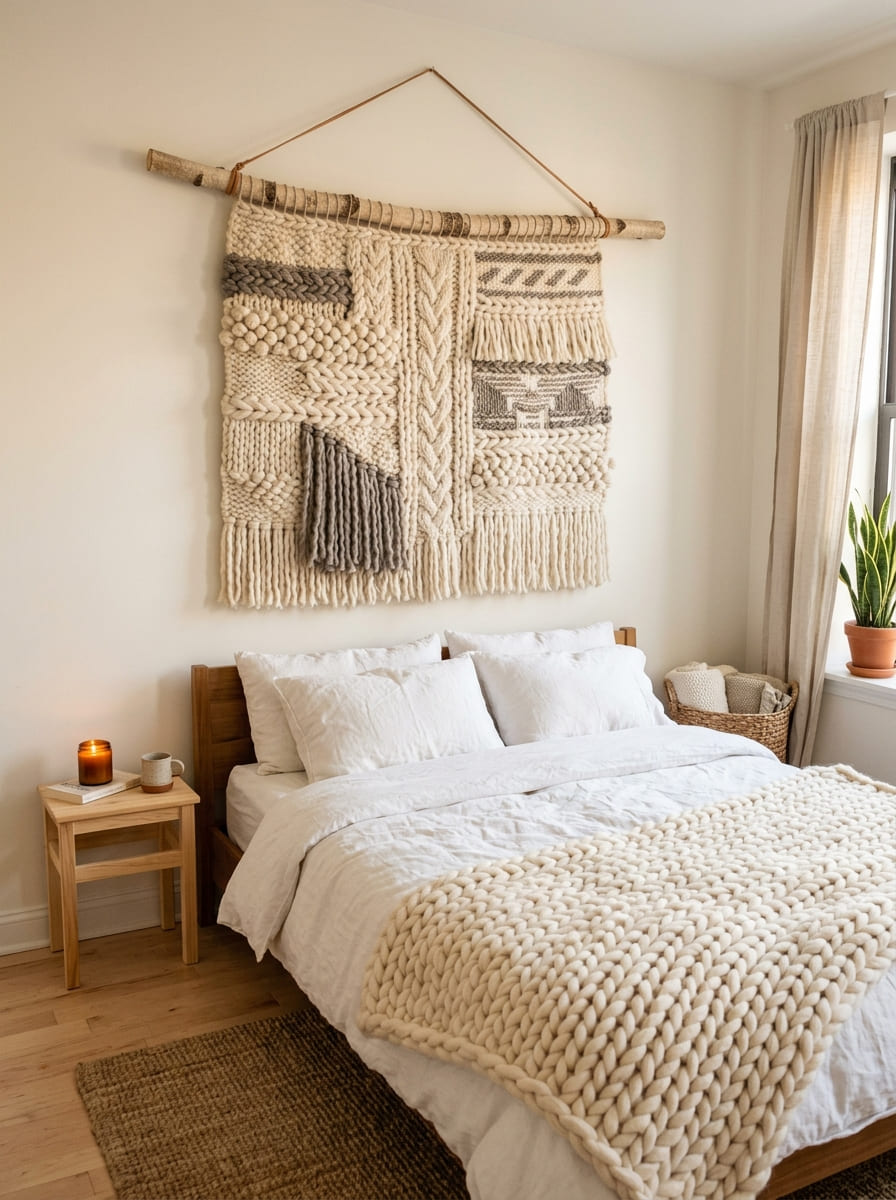
Chunky knit wall hangings bring a level of tactile warmth and hygge-inspired coziness that no printed art can approach. The thick, looped yarn rows create dramatic texture that makes the entire wall feel soft and inviting. I’ve tried thin-gauge and thick-gauge knit hangings — and the chunky version always wins for sheer visual and physical warmth.
Knit wall hangings suit Scandinavian-style bedrooms, cozy living rooms, cabin retreats, and any space designed around warmth, comfort, and natural materials. You knit wide rows on large needles and mount the finished piece on a thick natural branch. The organic branch rod becomes part of the display’s natural charm.
- Chunky wool adds maximum wall warmth
- Perfect cozy bedroom wall art idea
- Natural branch rod adds organic beauty
- Hygge aesthetic achieved immediately
- Beginner knitters can complete this easily
Arm knitting — using your forearms instead of needles — produces the chunkiest, most dramatic texture for this style. You can complete a large wall hanging panel in a single evening using arm knitting alone. The oversized loops look intentionally sculptural rather than beginner-made.
In my experience, hanging a chunky knit piece above a bed eliminates the need for any other bedroom wall decor. The piece is large enough, textured enough, and warm enough to anchor the entire room visually. You wake up every morning in a space that genuinely feels like a hug.
Fabric Art With Dyed Canvas
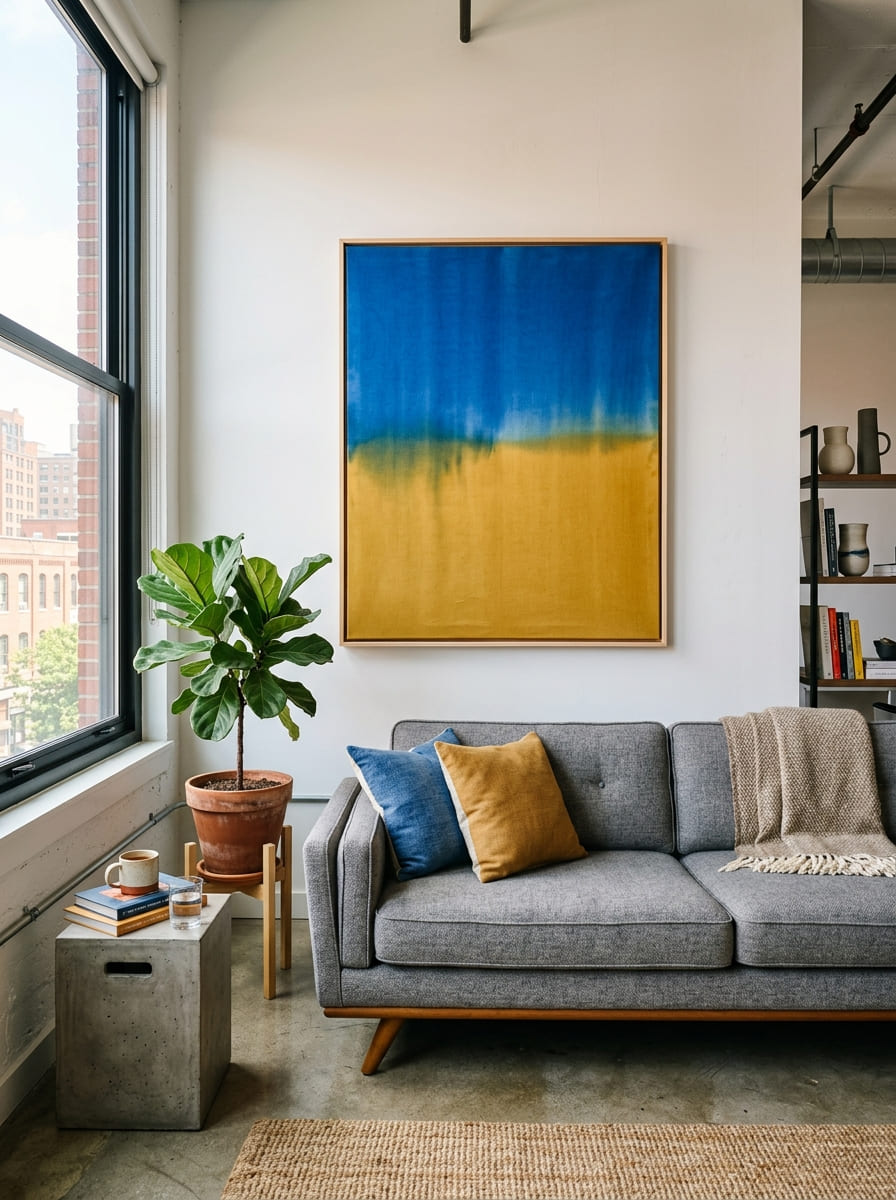
Hand-dyed canvas art lets you become the artist even if you have zero painting experience. The dye spreads, bleeds, and merges in ways you cannot fully predict — and that unpredictability produces genuinely one-of-a-kind results every single time. I’ve seen this technique produce pieces that look like abstract oil paintings worth hundreds of dollars.
Dyed canvas art suits modern living rooms, home studios, art-inspired apartments, and any space where bold color makes the first and strongest visual statement. You stretch the dyed fabric over a standard canvas frame. The taut surface gives it gallery-quality presentation immediately.
- Bold color makes instant room statement
- Every dyed piece is completely unique
- Suits modern and contemporary interiors
- Easy DIY fabric wall art for beginners
- Cobalt and mustard complement gray furniture
Cold-process fiber-reactive dyes produce the most vibrant, long-lasting colors on cotton canvas fabric. You mix the dye, apply it in sections or gradients, and let the chemistry do the rest. The results are always more beautiful and complex than any intentional painting attempt.
That’s why many art teachers use hand-dyed canvas fabric as a confidence-building project for people who believe they “can’t make art.” The dye removes the pressure of skill and replaces it with the joy of discovery. You end up with genuine wall art and genuine creative confidence at the same time.
Fabric Wreath With Seasonal Accents
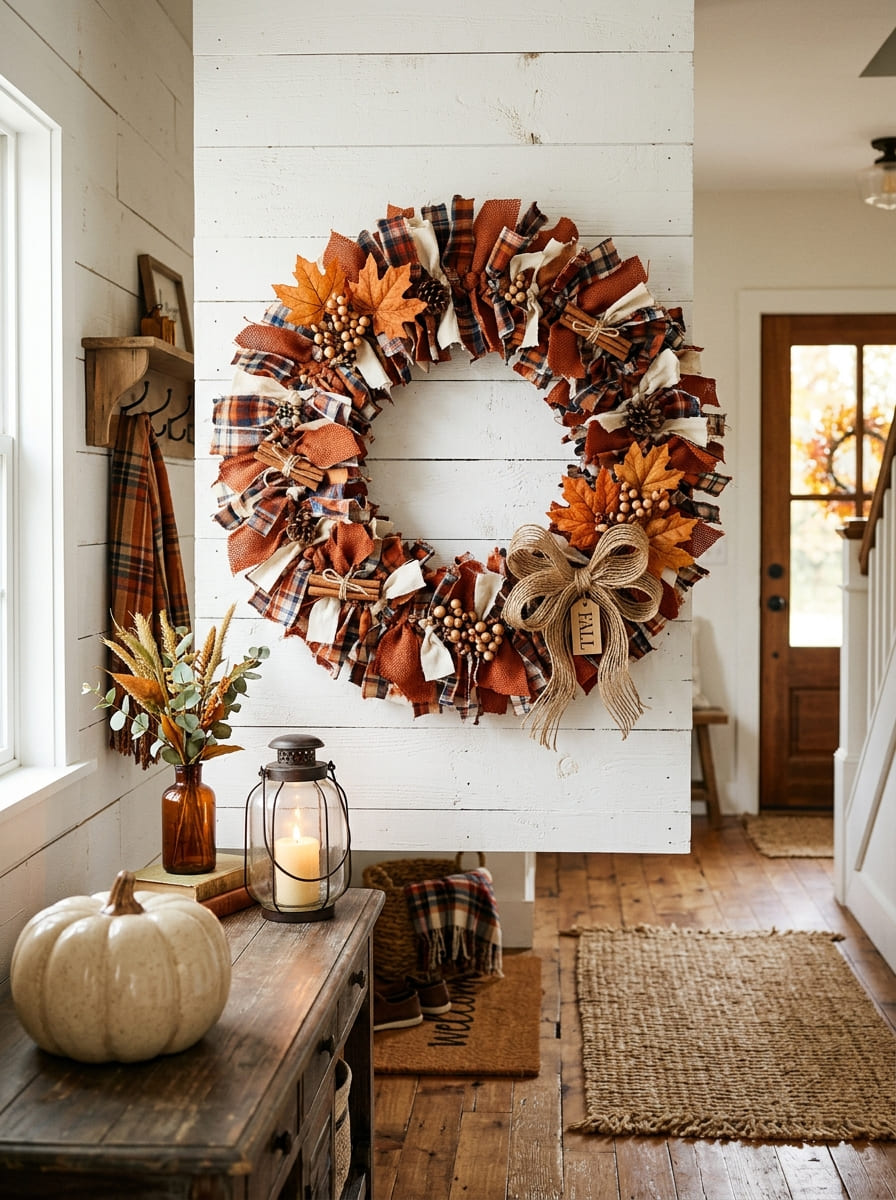
Fabric wreaths solve the seasonal decor challenge of wanting something beautiful, affordable, and endlessly refreshable on your entryway wall. Torn fabric strips tied onto a wire frame create a full, lush texture that looks far more handmade and personal than any store-bought wreath. I’ve made autumn, winter, and spring versions from the same basic wire frame — and each season brings a completely fresh look.
Fabric wreaths suit entryway walls, front doors, kitchen walls, and living room accent spaces where seasonal energy matters most. You change the fabric colors and attached accents with each new season. The base wire frame lasts indefinitely, making this one of the most cost-efficient recurring decor investments you can make.
- Seasonal fabric colors refresh easily
- Torn fabric strips create plush texture
- Perfect entryway seasonal wall decor
- Wire base reusable for all seasons
- Adds handmade charm to any door wall
Flannel and burlap strips work especially well for autumn and winter wreaths because their rough textures read as warm, rustic, and cozy. Lightweight cotton and linen strips suit spring and summer versions better because they feel airy and light. The fabric choice completely controls the seasonal mood.
That’s why many home decorators consider fabric wreaths the most versatile DIY wall decor project in their entire annual routine. You invest one afternoon building the base, then spend 20 minutes refreshing it four times a year. Your entryway always feels current, welcoming, and seasonally alive.
Indigo Block-Print Fabric Panel
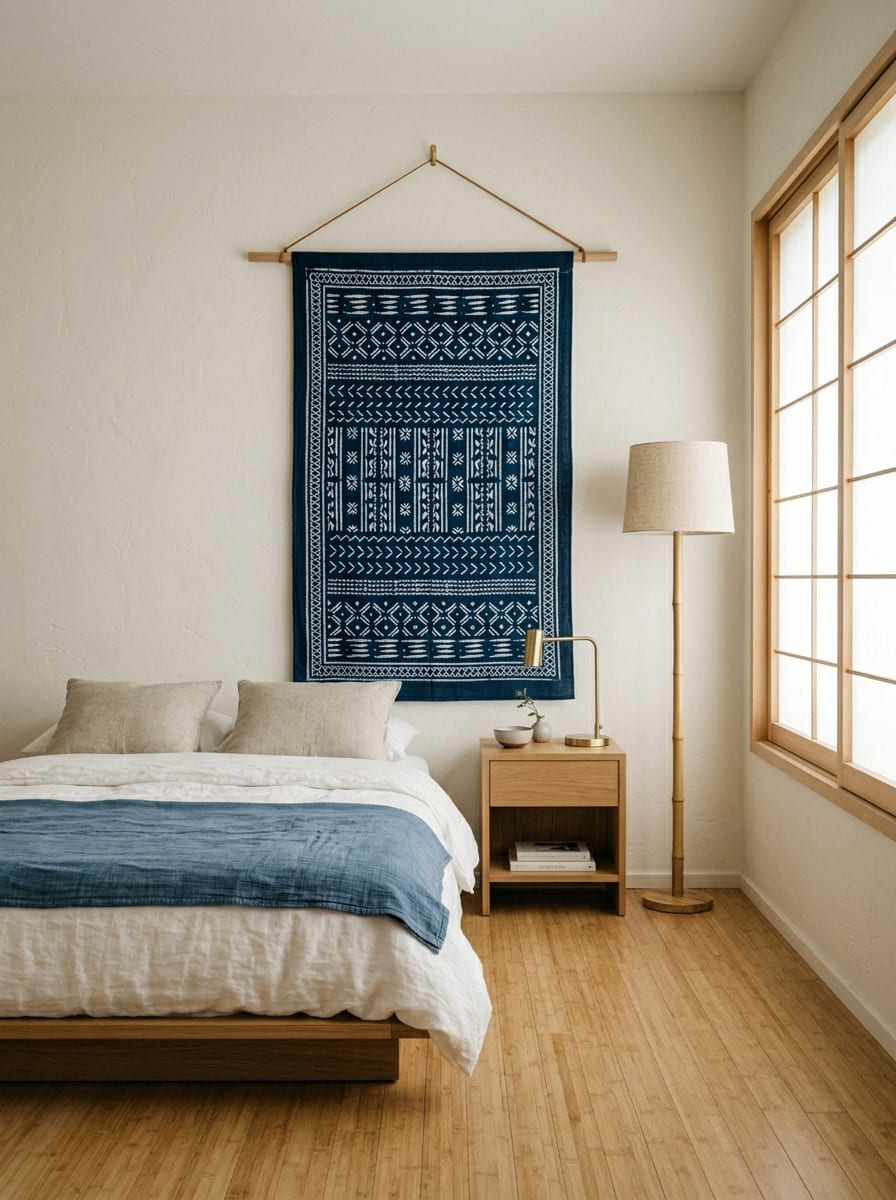
Indigo block-print fabric panels bring the ancient craft of hand-stamped textile art into modern rooms with striking simplicity. The deep navy patterns against white cotton create a graphic clarity that feels both traditional and completely contemporary. I’ve noticed this style bridges the gap between Japandi minimalism and globally inspired artisan decor more naturally than almost any other textile choice.
Block-print panels suit calm bedrooms, meditation rooms, Japandi living spaces, and any interior where quiet artisan detail speaks more powerfully than bold decoration. You mount the fabric on a slim oak dowel for a clean, understated presentation. The geometric patterns add visual interest without visual noise.
- Deep navy adds calm room authority
- Japandi and Scandinavian style perfect match
- Hand-stamped patterns feel authentic
- Artisan textile wall art with real history
- Pairs with natural wood and ceramic accents
The indigo dyeing tradition carries centuries of cultural history from Japan, India, and West Africa. Displaying block-print indigo fabric on your wall acknowledges that heritage while giving your room a deeply considered, globally aware aesthetic. Your space feels intelligent as well as beautiful.
That’s why many interior designers with a focus on intentional, slow-living aesthetics recommend indigo block-print fabric as a cornerstone wall piece. You build an entire room palette around the deep navy and natural white of the fabric. Everything else becomes beautifully simple by comparison.
Framed Fabric Botanical Prints
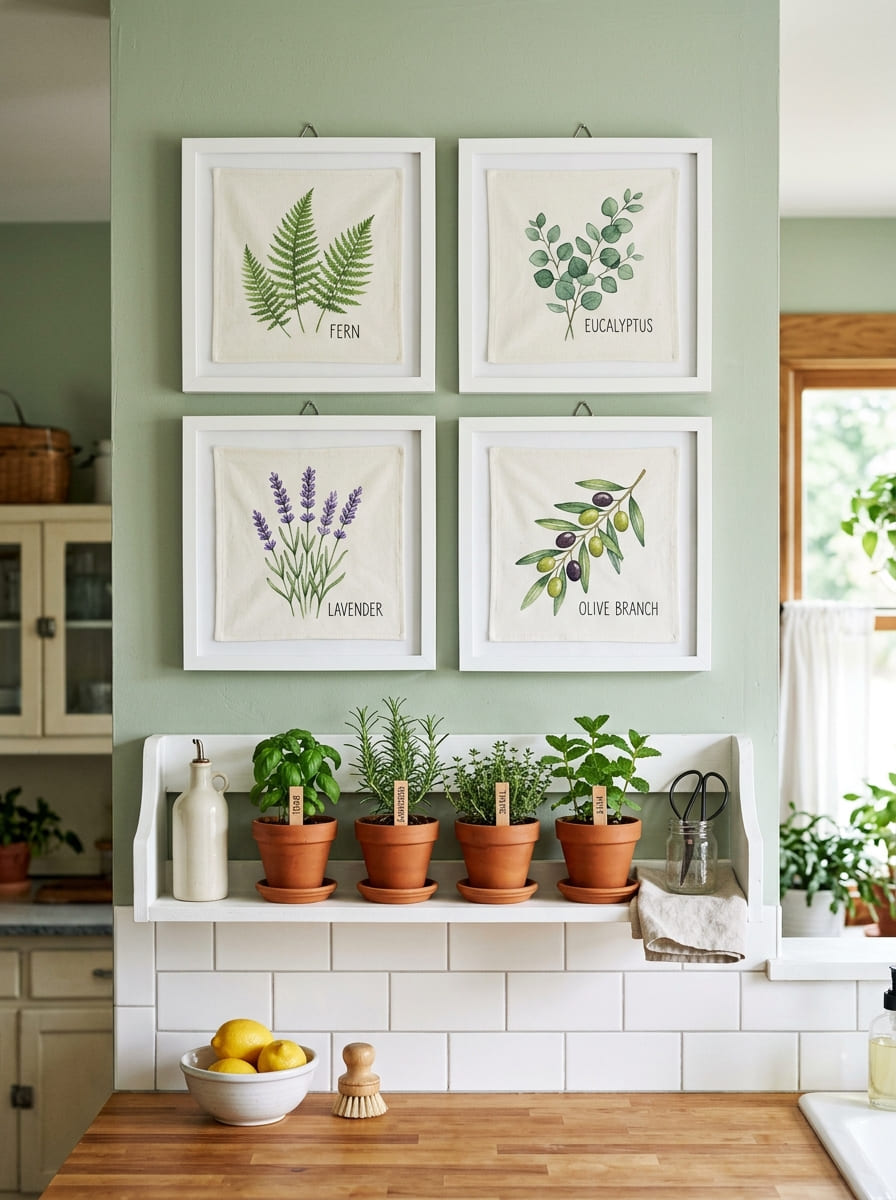
Framed fabric botanical prints bring the garden indoors with a softness and warmth that paper prints simply cannot replicate. The cotton fabric surface gives painted botanicals a slightly matte, organic quality that feels hand-pressed rather than commercially produced. I’ve tried both paper and fabric versions of the same botanical illustration — and the fabric version always feels more alive and more personal.
Botanical fabric prints suit cottage kitchens, sunrooms, bathrooms, and bedroom gallery walls where nature-inspired freshness matters most. You hang matching frames in a clean grid arrangement for a structured, gallery-quality display. The repeating grid format makes even a simple kitchen wall feel thoughtfully designed.
- Garden-fresh botanicals brighten kitchens
- Fabric surface adds warmth to prints
- Grid arrangement creates gallery structure
- Perfect cottage and farmhouse wall decor
- Four-piece sets suit medium wall spaces
Choosing botanicals that reflect your actual garden or favorite herbs makes this wall art deeply personal. A kitchen wall featuring painted rosemary, thyme, basil, and lavender connects your cooking space to the plants you actually use. That kind of intentional connection makes home decor feel genuinely meaningful.
That’s why many kitchen designers recommend botanical fabric art as the single best wall decor choice for food-centered spaces. The natural imagery reinforces the kitchen’s connection to fresh ingredients and seasonal living. Your kitchen wall tells a story about how you actually live and eat.
Mixed Fiber Abstract Textile
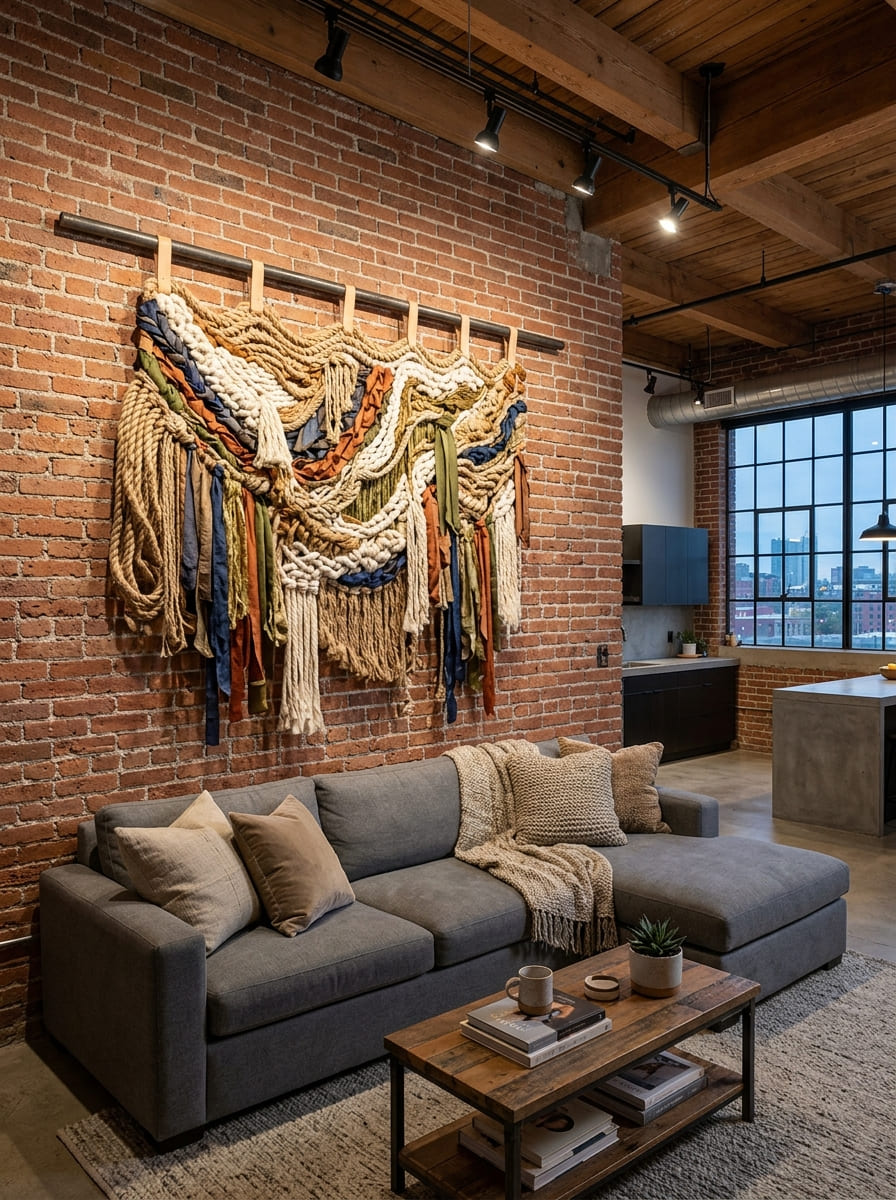
Mixed-fiber abstract textiles represent the most ambitious and rewarding frontier in DIY fabric wall art today. Combining jute, cotton rope, silk ribbon, and metallic thread in one piece creates a layered, multi-sensory surface that functions more like sculpture than flat wall art. I’ve seen one well-executed mixed-fiber piece completely redefine the personality of an entire open-plan living space.
Mixed-fiber textile art suits urban lofts, contemporary living rooms, creative studios, and any space bold enough to treat its walls as a genuine artistic canvas. You combine fibers intuitively — knotting, weaving, and layering — until the composition feels visually complete. No two people will ever create the same piece.
- Combines textures for maximum wall depth
- Metallic thread adds luxurious shimmer
- Perfect statement art for urban lofts
- Each piece is entirely one-of-a-kind
- Mixed fiber wall art for bold spaces
The metallic gold thread running through an otherwise organic, natural composition creates a beautiful tension between raw and refined. That contrast is exactly what makes the piece feel designed rather than accidental. You balance the roughness of jute with the luxury of silk in one cohesive surface.
That’s why many textile artists and interior stylists consider mixed-fiber work the natural evolution of DIY fabric wall art. You start with simple macramé or weaving, develop your instinct for texture and composition, and eventually create pieces complex enough to stand alongside professional gallery work. Your walls reflect exactly how far your creative confidence has grown.
Conclusion
Your walls deserve more than emptiness. Every fabric idea in this list proves that beautiful, meaningful wall decor doesn’t require a big budget or professional help. From chunky knit hangings to indigo block-print panels, these DIY fabric wall art ideas give every room a fresh, personal, and visually rich transformation.
I’ve seen how one well-chosen textile piece completely shifts the mood of a home. It adds warmth, story, and genuine personality in a way nothing else quite manages. Pick one idea that excites you and start there. Save this post on Pinterest so you can return to it whenever your walls need a refresh. Share it with a friend who’s been staring at bare walls for too long — they’ll thank you for it.
Frequently Asked Questions
What fabric works best for DIY wall art?
Natural fabrics like cotton, linen, and wool work best. They hold shape well, photograph beautifully, and drape cleanly on frames or dowels. Linen suits minimalist rooms. Chunky wool suits cozy, Scandinavian spaces. Cotton works for nearly every style.
How do I hang fabric on a wall without damaging it?
Use a wooden dowel threaded through a fabric sleeve, tension rods, adhesive strips, or curtain rings. All four options leave zero wall damage. Renters especially benefit from dowel and adhesive methods. You can remove and rehang fabric pieces as often as you like.
How do I keep fabric wall art from sagging or wrinkling?
Stretch fabric tightly over a canvas frame before mounting. For hanging pieces, use a dowel heavy enough to hold the fabric taut. Light starch spray removes wrinkles quickly. Heavier fabrics like canvas and denim hold their shape more naturally than lightweight sheers.
Can I make fabric wall art if I have no crafting experience?
Absolutely yes. Stretched fabric canvas, framed vintage prints, and tapestry hanging require zero crafting skill. You simply cut, stretch, and hang. Beginners consistently succeed with these three styles on their very first attempt without any prior experience needed.
How do I choose the right fabric color for my wall?
Pick a fabric that contains at least one color already present in your room. Pull from your existing pillows, rug, or furniture tones. Neutral fabrics like cream, linen, and sage suit almost every interior palette. Bold colors work best as a single statement piece on one feature wall.
How long does DIY fabric wall art last?
Most fabric wall art lasts 5 to 10 years when kept away from direct sunlight. UV exposure fades colors fastest. Natural fiber pieces like wool and cotton age gracefully. You can refresh the look by swapping seasonal accents or re-dyeing faded fabric panels with cold-water fabric dye.
Is fabric wall art suitable for small rooms?
Fabric wall art suits small rooms especially well. Vertical fabric panels draw the eye upward and make ceilings feel taller. Light-colored fabrics reflect natural light and open the space visually. Avoid very large, dark panels in tiny rooms as they can make the space feel compressed.